3 months ago
22
3 months ago
22
By Owen Richardson
November 9, 2025 — 5.00am
TRUE CRIME
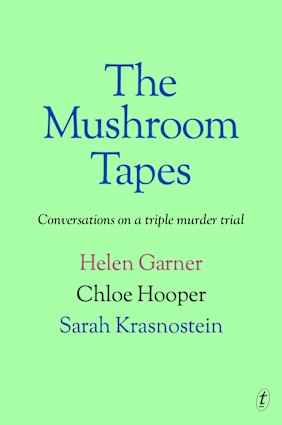
The Mushroom Tapes: Conversations on a Triple Murder Trial
Helen Garner, Chloe Hooper, Sarah Krasnostein
Text, $36
“None of us wants to write about this. And none of us wants not to write about it.” So it turns out that they – Helen Garner, Chloe Hooper and Sarah Krasnostein, this true-crime supergroup – both haven’t and have written about the Erin Patterson trial. They started recording their conversations and travelling down to Morwell without a firm idea of the result. A podcast was suggested but that fell over, and the recordings have now been transcribed, with linking narrative, to become this book.
Garner’s journalism, in particular, has always featured a good deal of reflexiveness: the process is included in the product. But here the transcript form really shows the work, the sifting and speculation, the day-by-day shifts in perception as the trial proceeds. As Hooper remarks, it’s “an external version of the arguments you have with yourself when you try to decide what to put on the page”. It also represents in high-grade microcosm the discussions that were happening wherever people were paying attention.
The Mushroom Tapes offers two spectacles in one: the Patterson trial, and famous writers hanging out together. Garner is the most known quantity, of course, and with her talk of women’s rage, not least her own, is the most able of the three to summon up some trace of empathy for Patterson. Krasnostein, a practising lawyer, contributes legal expertise. Hooper is cooler-eyed than the other two (“old tough boss”, Garner calls her), though she is also the one who voices the most concerns about the ethics of what they are doing.
Unsurprisingly, the book is sensitive and insightful, and funny at times (a few comments about beef Wellington aside, the humour is cordoned off from the murders themselves). Still, there is also some self-conscious significance-hunting, of the kind that separates the thing called literary non-fiction from straightforward reportage: “The fungal spores are always in the soil, and then the mushroom suddenly shoots out, just as there’s always murderous intent, and sometimes you can see it with the naked eye.” (Hooper) The mushroom metaphors sprout like mushrooms.
At the centre of it all is the black box that is Erin Patterson, and the two questions that were endlessly returned to: why did she do it, and how could she think she was going to get away with it? These two questions then merging into one: what kind of person is Erin Patterson? “A person who is overwelmed by her emotions … married into a family who knew how to discipline their emotions.” (Garner) “She’s well-spoken … she moves at a certain altitude. Plus, she’s clearly intelligent and apparently has a sense of humour.” (Krasnostein) “You expect to see a monster, and instead you get a broken person.” (Krasnostein) “I felt that the joke was on us – we thought we were going to get Medea and it was actually Karen.” (Hooper) One take follows another, more or less plausible in turn, but takes are all they are, and they can never be more than plausible. Patterson remains distant still.
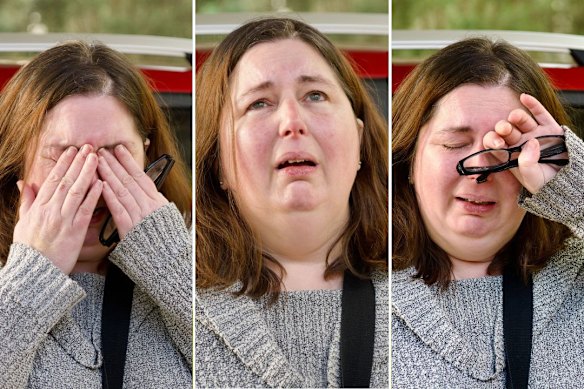
Erin Patterson, who was sentenced to life in prison with a non-parole period of 33 years.Credit: Marta Pascual Juanola
But why would they not want to write about it? For Garner, it seems largely a matter of not feeling up to covering a long trial; for Hooper, there is more ambivalence about the whole enterprise, more “squeamishness”, being unwilling to become part of the entertainment; with Krasnostein making a distinction between base schadenfreude and a more empathic, identificatory response. The book about the crime is also a book about true crime, that ever-burgeoning, disreputable genre: what kind of person is obsessed with the Erin Patterson trial? Should the three even be there?
When Garner and Krasnostein use high-minded phrases like “bearing witness”, Hooper briskly replies, with journalistic class-awareness: “But I guess the Daily Mail and the Herald Sun … will be bearing witness, too” – and many more besides. “Two-hundred-and-fifty-two journalists and outlets are on the court media’s daily email list, including representatives from 15 international media outlets.” When they go to look at Patterson’s house, the scene of the crime, a black SUV appears and seems to be watching them, like an emanation of their own bad conscience.
Loading
Once we see more of the ugly circus at the courtroom, this self-scrutiny almost seems beside the point, or a form of defensive othering: those hacks and gawpers and selfie-takers are callous and crass, but we, we are different. But despite all these scruples, someone directly affected by these horrible events well might not distinguish between the “hard-charging” male journalists, the perfectly coiffed TV reporters, and these “subtle, profound” women writers: they might all seem like different species of vulture.
And yet, and yet. Such a hard thought immediately provokes the reply (and yes, as a true-crime consumer, though not an obsessive, my feelings are also mixed): what would people be like if the public’s response to the mushroom murders had been merely to shrug and say, “that’s one for the police and the lawyers”, and go on minding their own business?
Would it mean we were more pure? Or just incurious? In any case, wouldn’t it just be strange?
The Booklist is a weekly newsletter for book lovers from Jason Steger. Get it delivered every Friday.
Most Viewed in Culture
Loading