3 months ago
28
3 months ago
28
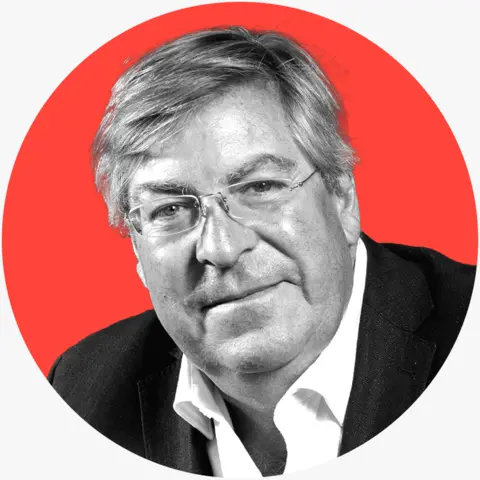
Edward Stourton
 BBC
BBC
The church of Holy Trinity is a solid red-brick presence at the top of Guildford's medieval High Street. There has been a place of worship on the site since at least the 14th Century, and today's Georgian building includes the tomb of an archbishop of Canterbury from the reign of the Stuarts. The pre-Christmas scene here could not be more traditional - children from the local Church of England school putting on a Nativity show of song, dance and drama.
But there is a quiet revolution unfolding at Holy Trinity. In defiance of the Church of England's current rules, the rector of Holy Trinity and St Mary's, Simon Butler, is conducting stand-alone same-sex blessings (blessings that are carried out individually, rather than as a small part of a normal scheduled service).
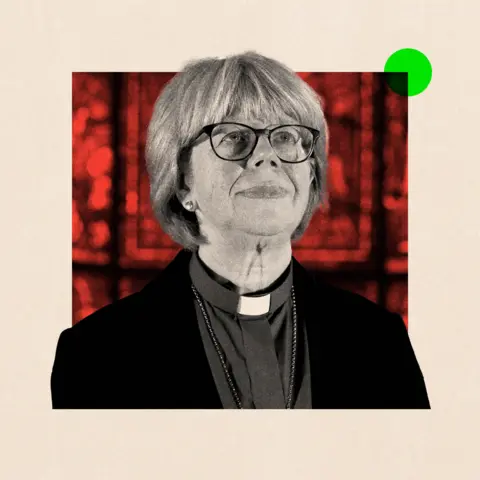
This quiet act of defiance is a metaphor for the state of the Church as a whole, as Dame Sarah Mullally, the Bishop of London, prepares to take over the C of E's top job on 28 January.
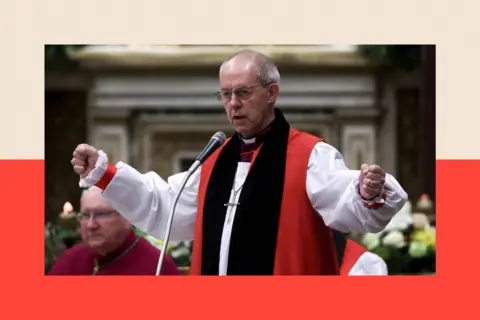
The sense of crisis facing the Church in the aftermath of Justin Welby's resignation this time last year has subsided. Archbishop Welby stood down after being accused of failing to follow up information about abuse committed by the late John Smyth, a lawyer who ran Christian camps here and in Zimbabwe.
 Corbis via Getty Images
Justin Welby (pictured) resigned over the Church's handling of John Smyth
While the process of finding a permanent replacement for Justin Welby has taken time, it has all been done by the book, and the choice has been welcomed by many, though not all.
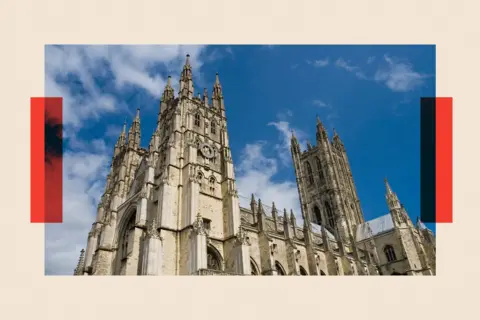
But beneath the smooth-sailing surface, the icebergs are still there. Many of the big issues that troubled Justin Welby's time in office remain unresolved, and the evidence suggests Dame Sarah is facing truly turbulent times when she is installed at Canterbury Cathedral.
Splits over same-sex couples
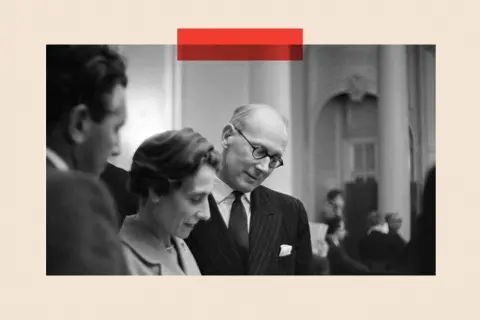
The debate over same-sex relationships has troubled the Church for decades. Sir John Wolfenden, whose 1957 inquiry concluded that sex between men should be decriminalised, was a committed Anglican, and his recommendation was couched in grudging terms.
"We do not see," he declared, "why this particular form of sexual behaviour, which we regard, most of us, as morally repugnant… should be a criminal offence."
The archbishops of Canterbury and York of the day (and in the 1950s the views of archbishops carried much greater weight) both supported the change in the law, but also both condemned homosexuality in moral terms. Michael Ramsay, then Archbishop of York and later of Canterbury, declared, "Christianity abhors the indulgence of lust, whether by fornication, adultery or homosexuality."
 Mirrorpix/Getty Images
Sir John Wolfenden's (right) inquiry concluded that sex between men should be decriminalised
In 2023 it looked as if the cycle of debate which had held the church in its clutches for so many years had been broken. The General Synod, the Church's parliament, voted to approve a set of prayers for blessing same-sex couples, and also decided that stand-alone blessing services should be trialled – even though many traditionalists argued that these are gay weddings in all but name.
The decision was, critically, endorsed by both the then Archbishop of Canterbury, Justin Welby, and his successor, Sarah Mullally.
But in October this year the Church's leaders performed what one of their critics describes as "a handbrake turn". After a private meeting in Berkshire, the bishops announced that trials of stand-alone services should only begin if the Synod voted for them by a majority of at least two-thirds.
One reason for their change of heart can be traced to the warnings – some called them threats – emanating from a group of conservative churches. "It was becoming increasingly obvious that this was a source of huge division within the Church of England," says Madeleine Davies, who writes for the Church Times.
"More traditional members of the Church, including conservative evangelicals, many of whom represent quite large churches… became increasingly vocal about what they might do if the blessings went ahead without this full approval procedure."
 PA Media
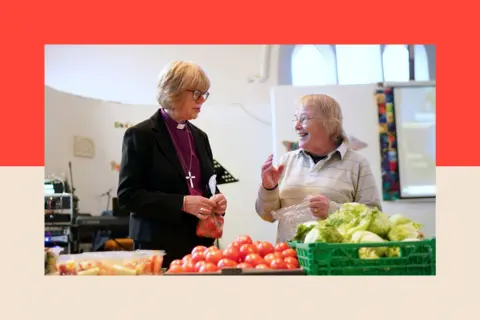
Dame Sarah Mullally, pictured here at a food bank in Kent, has been a prominent voice in the debate over same-sex blessings
Ian Paul, a conservative theologian and a member of the General Synod, denies that this amounted to "strong-arm tactics". He says that the bishops have simply recognised why opponents of the blessings feel so strongly. "This is sufficiently important to us to say that we will withdraw our support and our co-operation," he told me. "We will say that we are out of communion, out of step with our bishop. The reason for that is that these are churches who are committed to the doctrinal teaching of the Church."
Dr Paul believes that the bishops' ruling means "we have an opportunity… to draw a line under this process" at the next Synod meeting in February. He argues that if the "war of attrition" over sexuality continues then "it's going to harm the church. It's going to harm our witness. It's going to continue with this demographic crisis we're facing on clergy numbers, with dropping vocations, it's going to be very demotivating, and it's also going to continue to undermine trust."
Many on the other side of the argument would recognise his concern that this debate has become corrosive, but the idea that they will simply give up and accept defeat is fanciful.
At Holy Trinity in Guildford the rector, Simon Butler, is pushing ahead with his stand-alone blessings out of frustration with the bishops' recent announcement.
In the vestry, surrounded by racks of well-pressed white surplices and brightly coloured vestments, I met Ian and Paul, one of the couples he has blessed. Paul, a regular churchgoer from a family of Anglican vicars, spoke warmly about the service.
"I think it was something about being in that chapel, which has been there for over 1,000 years, with the priests, with the candles," he said. Both men felt they had been brought closer by the ceremony, especially by the promises they made to look after one another in times of sickness. "It was probably the covenants that were the important thing," Ian reflected, "because it was something that we were agreeing between us to do, which just binds us that little bit closer together."
Simon Butler argues that far from ending the debate about same-sex blessings, the bishops' decision to raise the bar for a trial of stand-alone blessing services will actually encourage campaigners on his side to push the even more contentious issue of same-sex marriage in church.
"The reality is that the hurdles that the bishops have put in place now means that it seems a rather pointless thing to do, to be arguing about stand-alone versus… existing services, when the option of having same sex-marriage, which requires the same majorities in General Synod… are the ones that I think many people will feel are worth going for now," he says.
If you can have the "full-fat option", he asks, why would you go for the "fairly thin gruel" on offer at the moment?
 Reuters
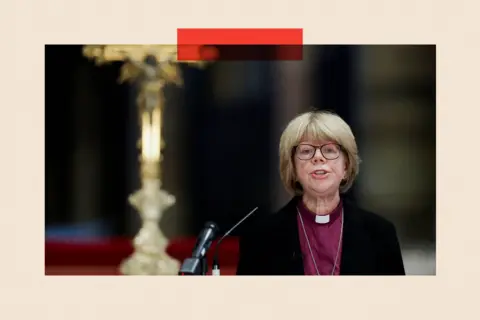
Dame Sarah Mullally will be the first woman Archbishop of Canterbury
Dame Sarah Mullally has been a prominent voice in this debate, and she has given every indication that she wants to move it on. As Madeleine Davies of the Church Times notes, "She has used these phrases about wanting to get her sleeves rolled up and being someone that likes to sort of fix things." But quite what she can do when the two sides are so far apart is difficult to see.
There are elections to the Church's General Synod during her first year in office, and it is already clear this issue will dominate the campaign.
The official announcement of Dame Sarah's appointment noted that her roles in her new job include being "primus inter pares – or first among equals – of the Primates of the global Anglican Communion, which consists of around 85 million people, across 165 countries".
In reality, her leadership of the wider Anglican world can no longer be taken for granted in the way that claim suggests.
How female leadership triggered divides
The fact that she will be the first woman Archbishop of Canterbury has been welcomed by many on her home turf. Coming just over three decades after the first women priests were ordained in the Church of England, it seems a natural development.
But in some of the countries where the Anglican Church claims a large and growing membership there are very different views. At a recent thanksgiving service in the Nigerian city of Lagos, for example, one priest told the BBC, "I find it difficult to believe that a female [can] lead any church." Another declared, "There's this feeling of the church sinking… going the way of the world rather than the way of God."
The formal opposition to her worldwide leadership role comes from a group of conservative churches – including Nigeria's – which at a 2008 meeting in Jerusalem established Gafcon, or Global Anglican Future Conference. The movement was a response to the consecration of a gay bishop in the United States, and the organisation holds firmly to traditional church teaching on sexuality. So Dame Sarah's past support for gay blessings crosses a red line.
 Getty Images
Dame Sarah is facing truly turbulent times when she is installed at Canterbury Cathedral early next year, writes Edward Stourton
Gafcon's chairman, Archbishop Laurent Mbanda of Rwanda, described her as "a leader who will further divide an already split Communion".
And when I spoke to the organisation's general secretary, Texas-based bishop Paul Donison, his challenge to Sarah Mullally's leadership of the worldwide Anglican communion was direct. "Now we really want nothing to do with the Canterbury structure," he said, "because it's failed to hold together any sense of biblical, historic Anglicanism." He described the new archbishop's appointment as "a profound split, profound breaking point".
Justin Welby devoted huge amounts of time and energy to preserving the unity of the worldwide Anglican communion, but that battle may be over before his successor even takes office.
Aftermath of sexual abuse scandals
Closer to home, the new archbishop will be faced with the task of restoring the trust the Church lost during the leadership crisis this time last year. The anger that erupted following the publication of a much-delayed report into the brutal abuse of young boys by John Smyth reflected a sense that the Church did not really understand the damage that abuse can do.
"Abuse is… about power being used wrongly in relationships over a long period," says Andrew Graystone, who interviewed many of Smyth's victims for his book, Bleeding for Jesus: John Smyth and the Cult of the Iwerne Camps. "And if there's to be any recovery or healing for the victim or survivor of abuse, it needs that power dynamic to be reversed and the messages that have been fed to that person to be to be reversed and countered, and you can't do that simply by making an apology or signing a check."
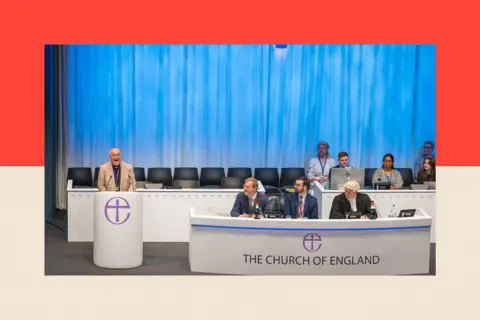
In the months since Justin Welby's resignation, the Church has been struggling to reform the way it deals with abuse, but the record has been patchy - partly because of the C of E's decision-making processes. At its meeting in February the General Synod debated advice from Alexis Jay, the academic who chaired the Independent Inquiry into Child Sexual Abuse. Prof Jay had recommended that the Church should transfer all responsibility for dealing with abuse to an independent body. But the Synod rejected that, instead voting for independent oversight at a national level, while the Church retains control in dioceses and parishes.
 Getty Images
The General Synod voted to put aside £150m for what it is calling the Redress Scheme, to which any victim of Church-related abuse can apply
In the summer, after years of debate, the Synod did finally pass a scheme for giving redress to survivors, but like all big Synod decisions it had to work its way through parliament because the C of E is the established church. And accusations that the Church has been dragging its feet keep coming. Only last month the Charity Commission ruled that the Church's efforts to reform safeguarding showed "insufficient urgency and pace" and imposed its own, faster timetable.
Joanne Grenfell, the bishop responsible for safeguarding, defends the Church's record. She told me, "I don't want to make any apology for trying to get the governance of this right. We've done this quickly once before, and got it wrong. To be really, really frank, we can't afford to do that again."
Andrew Graystone's verdict is that "the preventative safeguarding that happens in parishes and churches all around the country, with parish safeguarding officers and safeguarding training… is pretty good. What they haven't managed to do is find any ways to care for victims and survivors of abuse… Really, nothing much has changed."
It is a formidably challenging in-tray.
But here is a final thought that may cheer the new archbishop: the Church of England still seems capable of inspiring deep affection, even from those who feel it has wronged them.
I asked the gay couple who had been blessed by Simon Butler in Guildford why they wanted to be embraced by an institution that had shown such ambiguity – to put it at its mildest – towards their relationship.
Paul came back immediately: "We have to keep hope and keep with the Church of England," he said. "It's a great institution.
"It's part of the fabric of our country, and it's something we should cherish."
Top picture credit: Getty Images and Reuters

BBC InDepth is the home on the website and app for the best analysis, with fresh perspectives that challenge assumptions and deep reporting on the biggest issues of the day. You can now sign up for notifications that will alert you whenever an InDepth story is published - click here to find out how.