2 months ago
5
2 months ago
5
Dolphins with strong friendships age more slowly than their more solitary kin – and the quality of their connections matters more than the quantity.
Australian scientists made the discovery after studying male bottlenose dolphins off Monkey Mia in Shark Bay, Western Australia, including observing social bonds and measuring the ageing process.
Dr Livia Gerber, lead author of the article published in Communications Biology on Monday, said the group of dolphins had been studied closely for more than 40 years, which meant the researchers could recognise more than 1000 individuals by their unique dorsal fins, knew when they were born, and had a long-term video record of their interactions with each other.
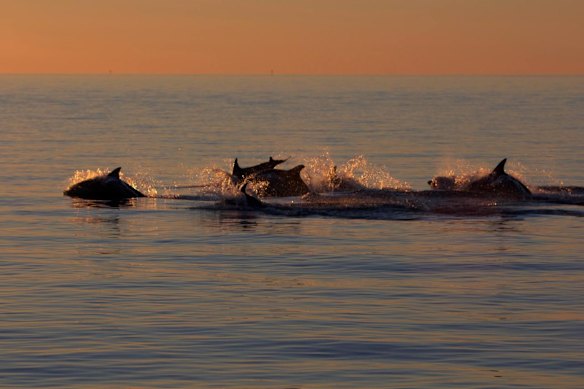
Dolphins with close friendships showed fewer signs of ageing on a cellular level than loners.Credit: Simon Allen
“If you look at two dolphins of the same chronological age, the one that has closer social bonds is the one that is ageing slower compared to the one that has fewer social bonds,” said Gerber, a CSIRO postdoctoral fellow who did the research in her former role at the University of NSW.
Gerber was inspired to do the study by her experience of isolation during the COVID-19 pandemic, and seeing similar research on humans. She believes the findings would hold true for other social mammals such as elephants, primates and wolves.
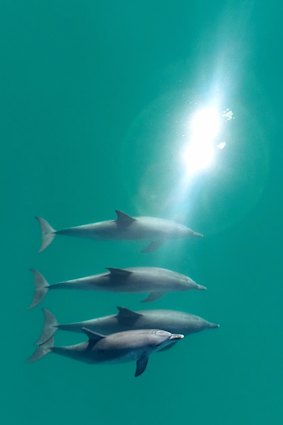
Dolphins cooperate to find mates, hunt food, and face predators, and they also play together.Credit: Simon Allen
Biological age is based on health, energy and other physiological factors, whereas chronological age is based on birthdate. For example, two people both aged 70 might have different biological ages, Gerber said, with one running marathons and one being frail and visibly older.
Scientists use “epigenetic age” – a measure of ageing at the cellular level determined by DNA analysis – because it maps closely to observed biological age.
As in humans, dolphins show signs of ageing such as reduced energy, wear to the skin, slower movement and fading sight. The scientists measured the animals’ epigenetic ages by analysing skin samples, which were collected with small, floating darts that did not harm the animals, she said.
Dolphin friends support each other in hunting and facing predators, team up to find mates, surf waves and play together, and even rest side by side.
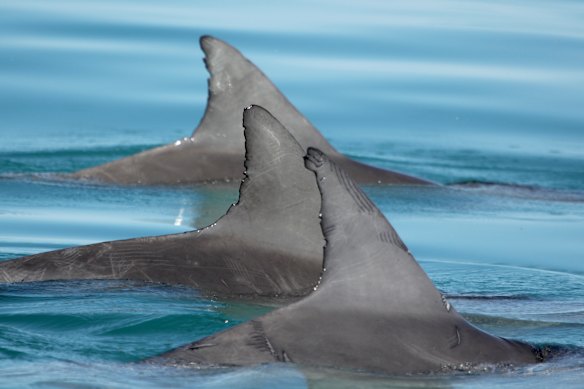
Quality over quantity: Scientists found dolphins with a few close friendships were better off than those in a large group.Credit: Simon Allen
Among the dolphins, the loners aged more quickly than those with strong social bonds, which the researchers believe is because of higher stress from facing threats or competing for mates solo.
Yet the scientists found a few close friendships was better than being part of a crowd.
“What was so surprising is that a lot of the dolphins in the larger groups actually age faster, and that probably has to do with [the fact that] in larger groups, you encounter more diseases, you encounter more competition, and those are all stressors that then mean that you accelerate ageing,” Gerber said.
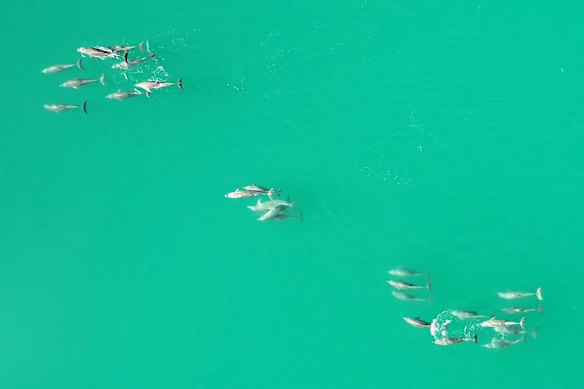
Social interactions between bottlenose dolphins at Monkey Mia in Western Australia.Credit: Simon Allen
“It doesn’t even matter how many friends you have, it’s really the quality of that social bond that affects ageing.”
The study did not distinguish between family and friends, but Gerber said previous research found most of the friends in a dolphin’s social network were not related.
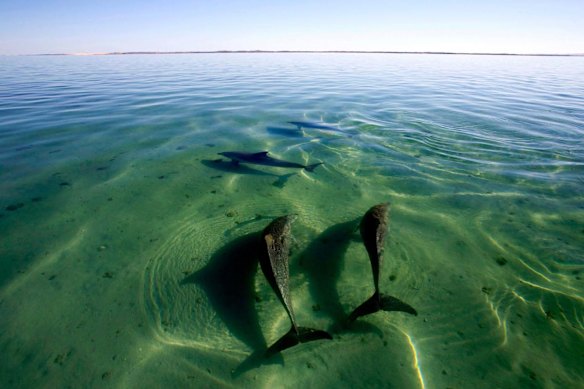
The bottlenose dolphins at Shark Bay have been studied for over 40 years.Credit: Simon Allen
The study focused on male dolphins, Gerber said, because there was a clear record of their friendships, with the animals forming close bonds with peers at age four and then sustaining the same relationships for decades.
Loading
Female dolphin friendships were also important, Gerber said, but tended to be more fluid, such as bonding with other mothers while their offspring were young.
Get to the heart of what’s happening with climate change and the environment. Sign up for our fortnightly Environment newsletter.
Most Viewed in Environment
Loading