3 months ago
8
3 months ago
8
Low-cost homewares and pantry essentials sold on the shelves of The Reject Shop will be quietly replaced with private-label goods from Canadian discount giant Dollarama amid an “aggressive” store rollout that could challenge the stronghold of Kmart.
Seven weeks after the Montreal-headquartered retailer took the reins of the Australian discount chain in a $259 million takeover, Dollarama chief executive Neil Rossy has confirmed plans to grow the store footprint in Australia from 398 to 700 by 2034, lower prices, and eventually rebrand all stores to Dollarama.
“We are now starting to selectively phase in Dollarama products across categories,” Rossy told Canadian investors on Friday. “We will be simplifying the price point structure including lowering the current pricing ceiling.”
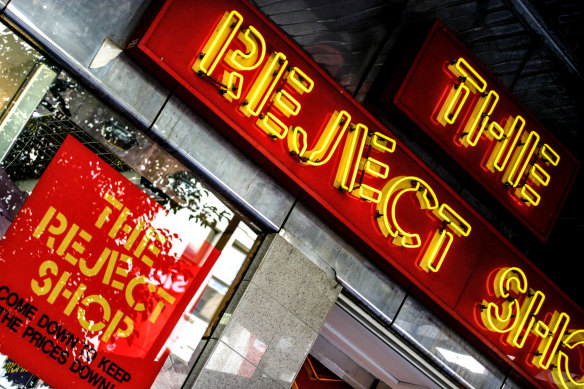
The Reject Shop’s shelves will be slowly restocked with Dollarama products.Credit: Gabriele Charotte
The sharp focus on lowering prices for Australian customers marks a potential shift in the dynamics of Australia’s discount retail landscape, where Kmart is by far the leading player. Kmart’s position as the destination for everyday affordable goods has been driven by the resounding success of in-house brand Anko, which represents 85 per cent of Kmart’s total sales of $11.3 billion.
Meanwhile, sister brand Target has been effectively rolled into the Kmart business, while Woolworths-owned Big W is unprofitable, fuelling speculation it could be eventually sold by the supermarket giant.
Loading
A key part of Dollarama’s global success has been its sourcing strategy of private-label goods, which command a higher margin. It also has its own ‘duping’ strategy of taking popular branded products and recreating them at a lower price, while delivering high quality.
“If many people are going to Kmart, and Kmart have a monopoly, there’s an opportunity for a smaller hyper-focused discount variety store operator that really gets private label right,” said retail consultant Trent Rigby.
Kmart has nailed its position as the home of affordable yet stylish merchandise, he added. “Consumers want value, particularly in this cost-of-living crisis, but they don’t want to buy crap,” Rigby said.
“It’s not just cheapness. Kmart have really carved out that sweet spot. You’ve got really strong brand trust as well with consumers, whereas The Reject Shop really struggles around inconsistent quality. Not that I go there much, but it’s very hit-and-miss.”
The first Reject Shop was established in 1981 in Melbourne’s South Yarra by founders Ron Hall and John Shuster. The company listed in 2004 with an explicit intention to stay out of clothing and “stay below the radar of the Big Ws and Kmarts”. The discount retailer posted $852.7 million in revenue in fiscal 2024 before delisting from the ASX in late July following Dollarama’s takeover.
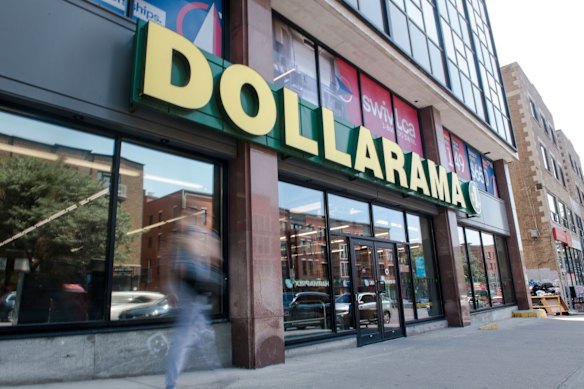
A Dollarama store in Montreal, Quebec, Canada, where the discount giant is headquartered.Credit: Bloomberg
Dollarama was founded in 1910 by Lebanese immigrant Salim Rassy, the great-grandfather of current chief executive Neil Rossy, who took the reins from his father Larry in 2016. With more than 1600 stores across Canada, Dollarama is the country’s largest and most dominant discount retailer, with a market share of 50 per cent. Its takeover of The Reject Shop is part of global expansion plans; Dollarama has a majority stake in Latin American discount chain Dollarcity, which has 658 stores across five countries.
Although Kmart’s Anko is wildly popular in Australia, its rollout across Target stores faced initial backlash from local customers, and it has struggled to gain a firm foothold overseas.
The Toronto Stock Exchange-listed value retailer is highly profitable, raking in revenue of CAD $6.4 billion ($7.1 billion) and a 14 per cent increase in earnings to $2.1 billion in the 2025 financial year, lifting sales and margins to an impressive 33.1 per cent at a time when retailers around the world are facing cost pressure and patchy sales.
Loading
A Reject Shop executive, not authorised to speak publicly, told this masthead Dollarama executives were highly confident its global business model would find success in Australia, with Dollarama’s product categories sharing many similarities with The Reject Shop’s. Dollarama would leverage their buying power to lower prices in Australia, they said.
Rigby pointed out that The Reject Shop’s store size tends to be much smaller than Kmart’s and stock fewer categories, and that the Australian chain had been losing its competitive edge in categories such as pantry goods to the likes of Aldi.
“The offer of The Reject Shop is quite narrow, in my opinion,” he said. “Dollarama do quite well I believe in pantry goods … if anyone can make it work, it will be Dollarama.”
While Dollarama is replacing Reject Shop products with its own and growing store footprint, new stores will still open as The Reject Shop, with rebranding set to begin in 2027 at the very earliest.
Rigby described the rollout as both aggressive and too slow. “If it’s called Dollarama in NSW or in one [shopping] centre, and it’s called Reject Shop in the other, it has that real risk of brand confusion,” he said.
“I suspect it’s probably more of a capital investment thing, that they don’t want to drop a whole heap of money.”
The Business Briefing newsletter delivers major stories, exclusive coverage and expert opinion. Sign up to get it every weekday morning.
Most Viewed in Business
Loading