3 months ago
21
3 months ago
21
American media is steeped in legendary tales of journalistic heroism. From exposing the horrific crimes of the Catholic Church in Spotlight to Woodward & Bernstein exposing the Watergate scandal in All the Presidents Men. Popular culture loves to extol the virtues of journalists achieving what they should, holding power to account.
But the flip side to that ideal, in all of its tawdry, unedifying glory, is currently unfolding in America. It’s the scandal that has Washington, DC, insiders and die-hard media watchers buzzing, with every new chapter highlighting why, at its worst, the access and power of journalism can absolutely corrupt.
Central to the scandal is Olivia Nuzzi, one of America’s young star journalists, and the dispatches that detail her “digital affair” with Health Secretary and heir to the Kennedy political dynasty, Robert F. Kennedy Jr.
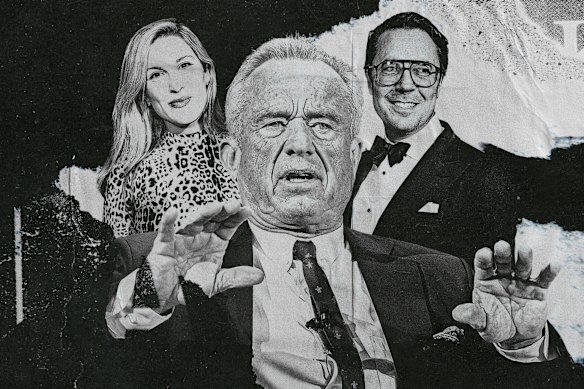
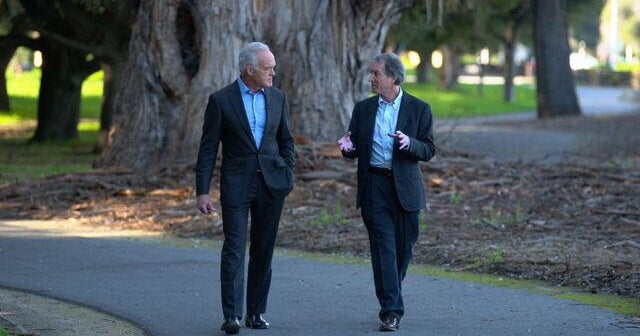
Olivia Nuzzi and Ryan Lizza (right) with Robert F. Kennedy Jr.Credit: The Age
At its heart, the scandal seemingly throws the key tenets of journalistic ethics - truth, independence, impartiality and managing conflicts of interests – into the bin.
The main cast of characters, and what’s the scandal about?
Robert F. Kennedy Jr is the best known entity in this story. He is the son of Robert F. Kennedy, a former presidential candidate who was assassinated in 1968, and is the nephew of John F. Kennedy, the former president of the United States, also assassinated. Now 71, RFK Jr aborted his 2024 run at the presidency, endorsing Donald Trump in return for an appointment to become Health Secretary, while being best described as an anti-vaxxer and sceptic of commonly held health beliefs.
He is also a magnet for bizarre stories, such as having a worm live in his brain, or dumping a bear cub in Central Park in 2014, a story which he broke himself, in advance of a profile in The New Yorker in the lead-up to the presidential election last year.
He met Nuzzi, a rising star of print journalism and media more generally in America in late 2023, when she was commissioned to write a profile of him for New York Magazine (a different publication), where she was then Washington correspondent.
Now 32, Nuzzi is a one-of-a-kind figure in American politics, and has clearly always had lofty ambitions. As a 16-year-old, she attempted to launch a music career via the song Jailbait, detailing the risks of illegal relationships with older men, something that has become a theme of this story (albeit, not illegal).
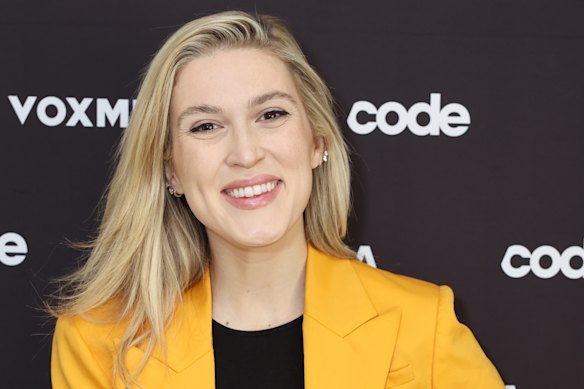
Olivia NuzziCredit: Getty Images
She later gained accolades as a young reporter covering Trump’s campaign while working for the Daily Beast in 2016, before she was hired as New York Magazine’s Washington correspondent aged just 24.
Over the course of her time at New York Magazine, she blurred the lines between journalist, media personality and star herself, making a cameo in the show, Billions, crossing into pop culture and co-writing a TV show.
During this period, she met Ryan Lizza, 51, a formerly respected political reporter, who was caught up in the 2017 #MeToo movement and sacked by his employer, The New Yorker. However, he retained influential positions at CNN, Rolling Stone and Politico.
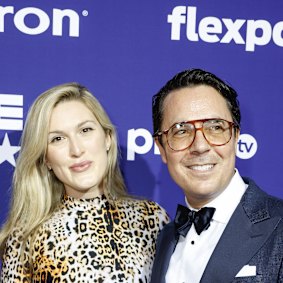
Olivia Nuzzi and Ryan Lizza attend a White House Correspondents’ Dinner after-party in April 2023.Credit: Getty Images for CBS News
A superstar duo, the pair previously signed a seven-figure book deal with Simon & Schuster to write about the 2020 presidential campaign, which turned into the 2024 campaign book that was also never written.
But in 2024, the pair split after it emerged Nuzzi had been engaged in an “emotional and digital” affair with Kennedy. Nuzzi left New York Magazine after it determined she had violated its standards around “conflicts of interest and disclosures”.
For Nuzzi, it was an embarrassing chapter, and for many, this would have been enough to sink a reporter’s career, especially one who was still producing impactful scoops on that campaign. She moved to the West Coast in Malibu. In April this year, after Lizza announced he had officially left Politico, he started up his own Substack.
Nuzzi apparently retained that book deal with Simon & Schuster, announcing American Canto the same month, a memoir and exposé on her relationship with “The Politician” (aka, RFK Jr). That book was released on Tuesday, to historically bad reviews. Its title alone suggests a type of narcissism which alienates everyday people, in depicting her own personal story as something of much higher importance to the American story.
With anticipation building, Nuzzi was given a no-costs-spared, gushing profile by the largest newspaper in the world, The New York Times, written by the son of Carl Bernstein, Jacob Bernstein, and an excerpt of the memoir was published by her new employer, Vanity Fair.
In response, Lizza, heavily conflicted himself, began drawing out the saga from his own perspective, knowing the full details from Nuzzi’s side were due to arrive on December 2.
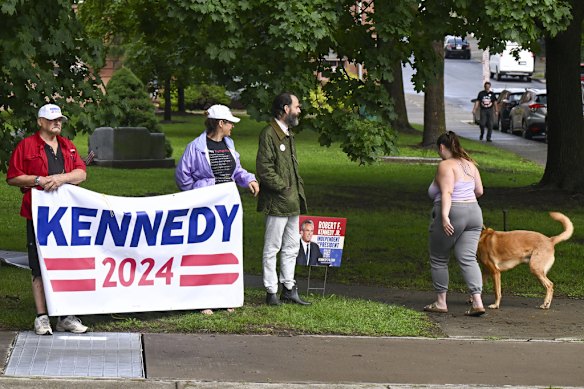
Nuzzi reported on, and allegedly aided, RFK Jr’s campaign.Credit: AP
He alleged in his series of stories that Nuzzi’s affair with Kennedy wasn’t her first with a subject, let alone a subject running for president, alleging she had an affair with South Carolina-based Republican Mark Sanford in 2019 after writing a profile about him for New York. A lawyer for Nuzzi has rejected this allegation as false.
Lizza then alleged that Nuzzi had acted as a “private political operative” for Kennedy’s campaign, including betraying confidential sources to feed information directly to Kennedy. This included attempts to bury the Central Park bear cub story, which a rival reporter had found out about and was preparing to go public.
He alleged, across four posts (so far) packed with vomit-inducing erotic details, that Kennedy had trained her to depend on him like his own ravens, feeding them morsels of food, written dizzying and grotesque poems, and she feared he would try to kill her if she betrayed him.
Ethics come last
In an information economy increasingly blurred by untrustworthy actors, AI content and biased news with challenged commercial incentives, reporters must do whatever they can to retain trust not only in the media, but in democracy as well.
The ethical problems are so obvious, they barely need explaining, says Richard Ackland, lawyer and former Media Watch host. Celebrities who think they’re journalists and journalists who turn into celebrities are a “recipe for disaster”, he says.
In this process, both Lizza and Nuzzi have sought to benefit from the whole affair. Nuzzi has written a book, which has received months of lead-in coverage, while Lizza, via his Substack, has demanded national attention for his blog posts about the scandal, some of which are locked behind his paywall.
No one can resist the sugar hit. Emily Sundberg, editor of Feed Me, another popular industry Substack, conducted an “Ask Me Anything” with Nuzzi, a former colleague on Tuesday, flagging her own personal conflicts in reporting on the story, before locking the majority of the post behind a paywall.
The key rule for reporters is to never become the story themselves, but it seems in this case, and with Nuzzi’s memoir, she seeks only to become the story.
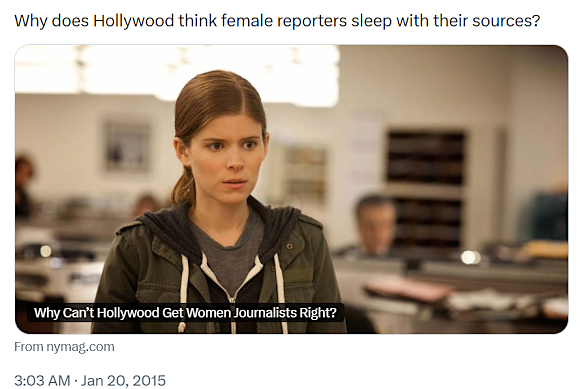
Olivia Nuzzi’s curious 2015 tweet.Credit: Twitter
The affair has caught the attention of America’s media class, shone a light on the murky relationship between politics and the media class, and how source cultivation can quickly blur to being compromised. For Nuzzi, life imitated art. A decade-old tweet referencing a relationship that breached ethical guidelines in Netflix hit House of Cards was uncovered in the process, in which she asked: Why does Hollywood think female reporters sleep with their sources?
But while the cartoonish nature of this story and its countless ethical breaches being aired in public is a special case, it speaks to why both politicians and journalists are some of the least trusted professionals in modern society. Both have a negative score, according to Ipsos’ most trustworthy professions in 2024. Politicians have a negative trustworthiness score of minus 43 per cent, while journalists rank at minus 8 per cent. Doctors, scientists and teachers lead at the other end.
It’s not limited to America. The Australian media is also full of conflicts. It is simply unavoidable, particularly with a smaller population.
There are countless journalists in relationships, friends writing about friends, journalists engaged in romantic relationships with members of the political class, and those offering advice to others while writing stories about them. For the vast majority, most abide by the rules and there are no issues. But if every story disclosed every potential conflict, trust in the media, and politicians, would be far worse.
The Business Briefing newsletter delivers major stories, exclusive coverage and expert opinion. Sign up to get it every weekday morning.
Most Viewed in Business
Loading