3 months ago
34
3 months ago
34

January 25, 2026 — 5:00am
While internet advice abounds with instructions about things you should squeeze into your suitcase, from packing cubes to ear plugs or even your own pillow, you’re seldom told what to take to impress the locals or make them feel comfortable.
Does it matter? Well, maybe not if you want to cause a stir. Wear your Bermuda shorts to a fancy restaurant or your bikini to the bar and see how you go, but be prepared to get turned away, fined or even arrested in some places.
It does matter, and not just because of basic respect for others. For a start, the choice of what you wear helps you blend in, which won’t only avoid offending people but will likely make you more relaxed. Most of us dislike being the odd one out.
Moreover, it might gain you a friendly smile, better service or even increased status. Far more rewarding than another monument is a pleasant interaction from locals who see you not just as another pesky tourist but a sensible human being.
Here are some of the things you should take with you, or at least consider packing. They won’t add much to your luggage but they may add to your gravitas, and enrich your experience.
Sign up for the Traveller newsletter
The latest travel news, tips and inspiration delivered to your inbox. Sign up now.
A statement scarf in Italy
Accessories are a great way to bring versatility to your limited travel wardrobe, but in Italy the scarf seems as indispensable as a pair of pants. It’s the must-have look for men and women, adding not just a dash of elegance and colour but providing an added layer in the cool season and evenings – and against those pesky draughts that terrorise Italians. Men wear scarves like a tie, loose around the neck with the ends flopping down the chest. Women knot them to one side, or wear them like a shawl for added colour or cover-up during church visits. The latest trend is to fold an oversized scarf in a triangle around the waist. You can also knot your scarf on your handbag strap. A silk scarf (cashmere is ideal in winter) is always stylish and as a bonus won’t take up much room or weight in your suitcase. A classic design from an Italian fashion house in neutral tones or pretty florals is the ideal but will anyone know if you wear a cheaper knock-off?
Long strides in South America
Yes, really. Except for some regions of Brazil and Colombia, shorts aren’t the norm on this continent unless you’re at the beach. True, the tradition is eroding among the young, but if you want to impress – or just blend in – then pack long pants. You’re expected to wear jeans or trousers even when it’s hot as Hades, or else be considered immature, unprofessional, too informal … or a mere tourist. Oh, and a nice pair of shoes won’t go amiss, either. Sneakers are considered undignified unless you’re on your way to the gym. Shorts are especially frowned upon in restaurants, theatres, nightclubs and the like. Even in shopping malls you’ll stand out in shorts. And if you need to visit a government office or pass through customs control you’ll get more respect and better service if your hairy shanks are covered up. Want to look the part in South America? Pack some nice polo shirts (don’t shy away from pastels), a serious belt, a scarf and a lightweight blazer or jacket.
Chopstick proficiency in East Asia
If you haven’t yet mastered chopsticks, get in some practice before you head north. Proper chopstick skills will impress the locals and, if you use your left hand, you’ll be lauded as a genius. Wait for the host or business superiors to pick up their chopsticks before you seize yours. Using your chopsticks in shared dishes is considered uncouth in China and anathema in Japan; use the serving chopsticks or spoon. Don’t hold your chopsticks while not eating, or point with them. Instead, lay your chopsticks neatly across the rim of your bowl, or place them on a chopstick rest. Anything else, such as chopsticks stuck into food, sticking out of your bowl or not laid side by side, is considered bad luck for its associations with funeral rituals. It’s considered inelegant to thrust your chopsticks into your mouth: don’t insert them beyond your lips. In China you may lift your bowl closer to your mouth at street stalls or in noodle shops but in restaurants – or anywhere in South Korea and Japan – this is considered low-class.
Basic greetings in the Mediterranean
A little phrasebook homework in advance goes a long way in foreign parts, and the greetings you memorise need only take up room in your head rather than your suitcase. Everyone everywhere responds well to visitors’ efforts to speak the local language but in Mediterranean countries it’s particularly important because locals in shops and offices and on hiking paths – even on footpaths in small villages – will expect a greeting. All those stereotypes of the French being unfriendly? Nonsense if you ever bother to say “bonjour”. The French do so at every opportunity, and if you don’t, you’re treated appropriately. The custom applies, too, in Italy, Greece and Spain where, as in France, you should also supply a cheery farewell. You’ll only have to remember five or so words depending on whether it’s morning, afternoon, evening or (in some places) an indeterminate time in between. On the other side of the Mediterranean a “salaam alaykum” (peace be upon you) will be very well received and save you from memorising multiple phrases.
A jacket for evenings in Europe
Although even Europeans are becoming far less fashion formal in everyday life, they’re still less-casual dressers than Australians, especially in the evenings. Why not participate in the local experience with the appropriate look? You may find your interactions with locals improve if you dress the part, since people do judge outward appearances. You may also realise that Europeans wear more, and so should you because evenings can get chilly. For men, a lightweight linen jacket will hold you in good stead – and is sometimes required – should you care to dine in upmarket restaurants, visit cocktail bars, go to the opera or theatre, or not feel out of place in a five-star hotel. For women, a jacket layered over a dress or worn with pants is common on evenings out. Women can get away with slightly edgier choices such as a leather jacket or blazer with jeans. European women will even wear cropped jackets with full-length gowns. Pick a neutral colour that you can match to several other items in your suitcase wardrobe.
A headscarf in the Middle East
A headscarf is rarely mandatory for female tourists except in a few destinations such as Saudi Arabia, but you’ll need one elsewhere to visit mosques and other venues where respect is expected, such as mausoleums. Some venues supply headscarves but it’s better, if not more hygienic, to bring your own. Go for a generously sized scarf so that it can cover your shoulders as well as your head. You might want to make the headscarf a permanent part of your suitcase collection because, beyond Muslim countries, you may well need it in churches, Buddhist temples and other places where, although you won’t have to cover your head, you may be asked to cover your shoulders or legs. Incidentally, men aren’t immune from dress codes. You should wear shirts that cover your shoulders and full arms to be taken seriously in the Middle East. You shouldn’t, however, wear the male version of a headscarf, the chequered keffiyeh or ghutrah, which may be considered cultural appropriation.
Family snaps in South-East Asia
Who doesn’t respond well to family photos? South-East Asians are particularly receptive to talking about family. Take out a few photos and you have a great way of breaking the ice with people you’ve chance-met on long-distance coaches, at street stalls or while on tour to villages. You probably don’t want to be handing your phone around. A few old-fashioned, physical printouts is the best way to go, slipped into a small plastic album that will take up barely any luggage space. Just remember that whatever you show should be considerate of local cultural sensitivities. Exclude shots of yourself in your bikini, eating pork or posing by Buddha statues. Dogs are seldom considered family pets to be cooed over. If you’re single and over 30, be prepared to explain your spouse-less state. If you have a modern family, be aware that, in conservative parts of South-East Asia, same-sex relations aren’t accepted. Photos are a conversation starter and you might end up introduced to your interlocutor’s family members. It’s such human connections that you’ll remember long after the sightseeing fades.
Business cards in Japan
Use of business cards is in steep decline but not in Japan, where they’re conjured up at every opportunity with earnest ceremony. As a holidaymaker you won’t really need them, but if you think you’ll be swapping contact details, bring along any cards you have mouldering in your desk drawer. If you’re going on business of any kind, don’t arrive without a plentiful supply. Hand over and receive cards with both hands as if you’re handling a priceless manuscript. A slight bow will impress. Your card should be face-up and facing your interlocutor so he or she can read it without turning it around. If you take someone’s card you should say thank you, make a show of examining it and be suitably impressed by the job title. Carefully put the card into a cardholder. Thrusting it into a pocket or shoulder bag will cause offence. A damaged or stained card is a big no-no. Similarly, do not damage or write on a Japanese person’s business card, which is considered disrespectful.
Charitable donations
The giving of small gifts to the underprivileged – especially children – in developing countries has become a vexed issue. You may see it as a form of gratitude or philanthropy but it may not be perceived that way and may cause unintended issues. Gift-giving can create dependency on handouts, rivalry in communities, or dental and health problems. The gifts you hand over may not be what communities need. Don’t hand out useless trinkets, toys, sweets or books in English. Fruit and practical items such as toiletries or basic sanitary and medical items (though, of course, not medicines) are more appropriate. It isn’t that you shouldn’t give gifts. Donating goods – or your time – is a useful way to aid underprivileged communities and can allow for enjoyable human interaction. However, give mindfully. Ideally, ask communities or schools what they need before you arrive, and pack accordingly. Donate to an authority figure such as a head teacher or monk, charity worker or village elder who can apportion the gifts appropriately, rather than to individuals, which only encourages begging.
The correct tip in the US
Yes, we know Australians detest tipping but the reality is that if you arrive in the States with no local cash or only large banknotes you’ll quickly be in a world of trouble. Dismay or confrontation might ensue if you don’t tip, and who needs that on holiday? Carry a stash of small notes in a rubber band and you’ll be better placed to meet the demands of mandatory American tipping. Siphon off your day’s supply into an easily accessible pocket so you can tip effortlessly like a local. Most tips are handed over directly, except to hotel housekeepers and bartenders – leave your tip on the counter. Don’t worry in restaurants, taxis and the like, where tips can be added to a charge card. But one- and five-dollar notes ought to be ready for distribution to porters, bellhops, room-service waiters, doormen for hailing taxis, parking valets, delivery people and tour guides. Phew. Factor in tips as a cost of your holiday. Don’t whinge. Accept tipping as a cultural habit, as you would any other while overseas. Your holiday will be more relaxed if you do.
Five things worth leaving at home
The baseball cap
Don’t tell me it protects you from the sun – a cap doesn’t even cover your ears or neck. What it does do is scream “tourist” and often (perhaps not ideally these days) “American tourist”. Certain Europeans disapprove of them, and Asians find them undignified. Invest in a fedora.
The medical kit
For many years I packed a medical kit that would have enabled me to amputate a limb or cure tropical diseases. I never used any of it. Sure, bring your regular medicines, a few Band-Aids and some headache tablets. For everything else there’s almost always a nearby pharmacy.
Flashy jewellery
Don’t wear anything you wouldn’t like to lose. And why would you want to attract pickpockets – or worse, potentially violent muggers? Leave your Rolex at home and strap on a Swatch. Basic wariness is the natural state of travellers but don’t let jewellery escalate it to constant worry.
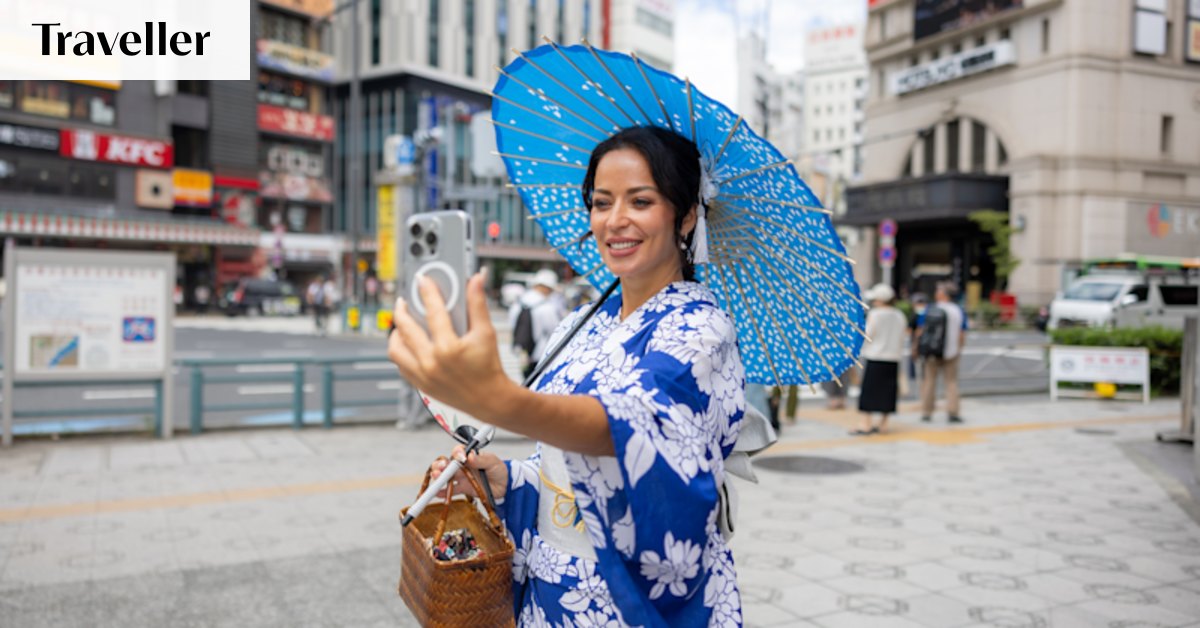
The selfie stick
Social-media posting is faltering and the selfie has had its day; Google says the word “selfie” has been declining since 2013. The tide has turned against self-absorption, and tourist venues are pushing back against annoying selfie posing. Use your arm or turn your phone towards the world.
Skimpy clothes
Unless you’re heading to Brazilian beaches or pride festivals, skimpy clothing has no place in the tourist world. Many cultures are conservative and at best you’ll offend sensibilities, at worst be banned from certain venues, or even fined. Leave arguments about your right to self-expression at home and cover up.
Five basics you shouldn’t travel without
Guidebooks
They’re bulky and weighty but analogue guidebooks – with actual pages – are unbeatable. Not ones with train timetables and hotel listings, which are more up-to-date online, but ones packed with background cultural information and detailed descriptions of sights. Enjoy on-the-spot expert knowledge, offline access and no pop-up scams or advertising. Even better, the likes of Lonely Planet these days have downloadable digitised guidebooks.
Document copies
Travel is all good until it goes wrong, after which bureaucracy ensues. But do you have a copy of your lost passport and visas, airline ticket or travel insurance with you? Did you back up hotel bookings before you lost your phone? You should, whether physically or digitally.
A Swiss Army knife
You’ll use the corkscrew and bottle-opener more than the knife, though that can be useful for hotel-room picnics. It takes up barely any room but provides dozens of tools, from tweezers to a toothpick. And who knows when you’ll need a saw or a wire stripper?
A travel power board
There’s nothing more useful than a mini-power board with a universal adaptor and several USB ports that enables you to charge everything – camera, laptop, phone – with ease. Some offer wireless charging. It’s the best $20 you’ll ever spend. Only downside: you can’t use them on cruise ships.
Moisturiser
Don’t forget it, or you’ll have skin like a crocodile and a phone that doesn’t recognise your fingerprint. Flights, air-conditioning, central heating and desert and winter climates are murder on your skin and lips, and you don’t want to resort to the oily, too-perfumed freebies you find in hotel bathrooms.