3 months ago
22
3 months ago
22
A home owner in a harbourside Sydney suburb has succeeded in claiming ownership of land next to his property under so-called squatter’s rights.
The NSW Supreme Court case is the latest examination of the law of adverse possession, which allows a person to acquire ownership of land in some cases when they have occupied it for many years.
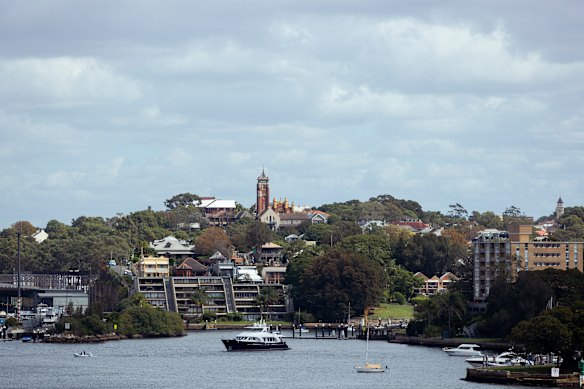
The home owner in Sydney’s Balmain won his fight to claim a strip of land.Credit: Dominic Lorrimer
At the centre of the case was a property in the inner west suburb of Balmain, which last sold in 2023 for $1.9 million following the death of its elderly owner.
Both the seller of the weatherboard cottage – the daughter of the former owner – and the buyer had assumed a 3.35 square metre triangular-shaped parcel of land adjoining the site was part of the property.
In an unusual turn of events, it transpired that it was not. That parcel of land, on which a small slice of the cottage was built, had never been converted under the modern Torrens title land registration regime, but remained under “Old System title”. The latter is now very rare across Australia.
The buyer of the property applied to have the slice of land converted to Torrens title and to be registered as its owner.
He argued that the elderly former home owner had assumed ownership of the parcel of land decades ago under the law of adverse possession, known colloquially as squatter’s rights, and that ownership passed to him when he bought the home in 2023.
Neighbours object
One of his neighbours objected to the application. They initially believed the land was part of their property. By the time of the court hearing, the neighbours were not parties to the case and did not maintain their claim.
Sydney barrister Patricia Lane, an expert in property law and a senior lecturer at the University of Sydney, said the case involved a “quite anomalous situation” because the “orphan parcel” of land was under Old System title.
“Old System title now is mostly converted to Torrens title, so is almost a dead letter, but pieces of it keep drifting to the surface in cases like this,” she said.
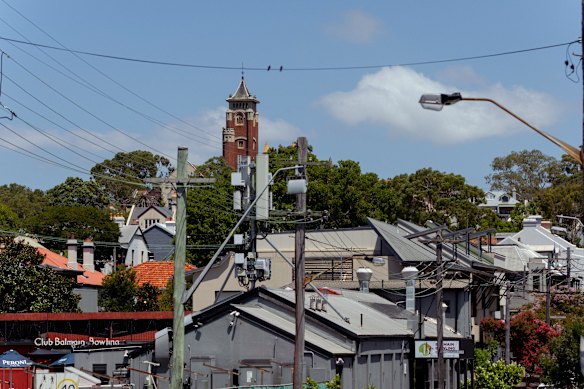
Balmain, in Sydney’s inner west, is populated with historic homes and public buildings.Credit: Dominic Lorrimer
An ‘unusual’ case
She said the only “parcels [of Old System land] that are left are likely to be anachronistic old slivers like this one”.
The applicant in this case engaged a specialist land title searcher who was able to trace the former owners of the land “all the way back to the late 1800s … which was quite an effort,” Lane said.
“This is what makes it very unusual,” she said. “Mostly land is surveyed to ensure boundaries match up without gaps, but this tiny parcel remained unnoticed for decades.”
The searcher was able to piece together information leading to the discovery of a current living legal representative of the historical owner. The parcel of land was originally part of a larger block.
Squatter’s rights
Under NSW adverse possession laws, a person who occupies a property continuously for at least 12 years without force or secrecy – meaning it is done openly and visibly – may be entitled to ownership of the land. In this case, an older period of 20 years applied.
The land must be occupied without the owner’s permission. Doing things an owner would do, such as occupying a home on the site and paying rates, is consistent with adverse possession.
Under the Torrens title system, a person typically cannot claim adverse possession of a strip of land. It must be a whole parcel of land. But this is not the case under Old System title.
“This is just an overlooked little pocket of land that everybody seems to have thought was incorporated in the Torrens [system],” Lane said.
Lane said the court noted that the elderly former owner of the property had “a bit of their kitchen over that land”. His daughter gave evidence that her family did not change the footprint of the cottage.
“It was pretty clearly the case that the deceased person had actually possessed the whole of that strip. There was not really much question about that,” Lane said.
Adverse possession in operation
The former owner bought the house in 1965 and lived in it continuously, first with his family and then alone, until 2020.
HOUSE RULES
- Adverse possession, sometimes called squatter’s rights, allows a person to claim a vacant property in some circumstances. They must occupy the land continuously for at least 12 years, and do so without: (a) force, (b) secrecy, and (c) the landowner’s permission.
- There is also a 30-year period that extinguishes the original owner’s claim even if the 12-year limitation period can’t start running for various reasons, such as if the owner has a mental incapacity or it was difficult to discover with reasonable diligence that someone had moved in (e.g. a remote or inaccessible property).
- In this case, longer limitation periods applied under older law.
- A dispute between neighbours over a Redfern “dunny lane” and cases about houses in Bankstown and Gymea Bay are among recent cases in Sydney on squatter’s rights.
This was more than enough time to establish adverse possession in the circumstances.
The court declared that the former owner of the home “obtained title to the [strip of land] ... in 1985 by reason of adverse possession for a period of 20 years from 1965”. The historical owner’s title was extinguished at that time.
Justice Kate Williams made orders to allow the triangle of land to be converted to Torrens title and for the current owner of the home to be recorded as its owner.
Start the day with a summary of the day’s most important and interesting stories, analysis and insights. Sign up for our Morning Edition newsletter.
Most Viewed in National
Loading