3 months ago
24
3 months ago
24
Free speech advocates and civil liberties and religious groups are urging the Albanese government to halt and substantially rewrite its proposed expansion of hate crime laws, warning the legislation risks inflicting lasting damage on free expression if rushed through parliament in the aftermath of the Bondi terror attack.
Experts argue the omnibus bill goes well beyond what is required to respond to the atrocities at Bondi, lowering criminal thresholds, reversing long-standing legal protections and expanding executive power in ways likely to chill legitimate political debate and produce unjust outcomes.
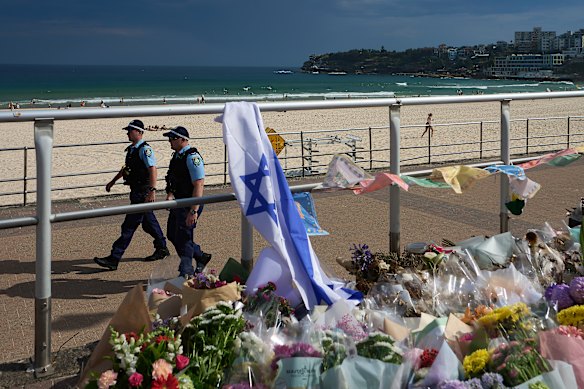
Police patrolling Bondi Beach after the terrorist attack last month.Credit: Flavio Brancaleone
They warned the government was recalling parliament next week while still in the heat of national trauma, with inadequate scrutiny of far-reaching reforms.
The concerns have also drawn international attention, with a senior US State Department official criticising the proposed laws as “clumsy”, warning they could lead to perverse outcomes by criminalising legitimate opinion while allowing extremists to exploit exemptions written into the legislation.
Opposition is also expected to widen in coming days, with media and technology groups understood to be concerned the new offences could capture public-interest journalism, online commentary and user-generated content, while exposing publishers and platforms to legal risk under vague and untested standards.
Loading
At the centre of the controversy are new criminal offences for racial vilification and “inciting hatred”, punishable by up to five years’ imprisonment. Civil liberties groups warn the bill’s language – including prohibitions on “promoting hatred”, glorifying past acts or conduct that might cause “fear or intimidation” – is alarmingly broad and risks criminalising mainstream political speech.
They argue a social media post questioning multiculturalism, immigration policy or religious practices could fall foul of the laws, encouraging widespread self-censorship among Australians fearful of prosecution. Critics say the bill risks emulating the United Kingdom’s approach to online speech, where arrests over contentious posts have become increasingly common without addressing the underlying drivers of extremism.
Professor Anne Twomey, emerita professor of constitutional law at the University of Sydney, has warned the bill is likely to collide with the implied freedom of political communication protected by the Constitution.
Writing in this masthead, Twomey said not all statements that promote or incite racial hatred would be regarded as political communication, “but many potentially could be”. If challenged in the High Court, she said, the fight would centre on whether the burden imposed on political communication was proportionate to the benefit of protecting people from harm.
Twomey identified the most contentious area as public communication – particularly on social media or at public demonstrations – about acts of violence, terrorism, war crimes or atrocities committed by people of a particular race, national or ethnic origin.
“Any communication of what happened, even if completely accurate, is likely to promote or incite hatred against that group, causing them fear for their safety,” she wrote.
Although the bill includes a defence for publishing in good faith a report or commentary on a matter of public interest – which may protect professional media – Twomey warned it was unlikely to protect people discussing such events on social media, where much modern political communication now occurs.
Nationals senator Matt Canavan on Tuesday night warned he was concerned that legitimate criticism of migration policy or integration could easily be construed as racist, leading to prosecution.
Legal groups warn the combination of vague definitions, reversed burdens of proof and mandatory jail terms is highly likely to produce unjust outcomes, forcing individuals to prove their innocence for educational or journalistic purposes and undermining the presumption of innocence.
Loading
Further concern has been raised about the bill’s expansion of already broad migration powers. Under the proposed changes, visas could be refused or cancelled if a person is assessed as posing a risk they “might” engage in conduct such as inciting discord in Australia. Civil libertarians argue this dangerously lowers the threshold into the realm of speculation, granting ministers sweeping discretion with limited safeguards.
Dr Reuben Kirkham, co-director of the Free Speech Union of Australia, said the legislation represented an unacceptable response to terrorism in a liberal democratic society.
“In a liberal democratic society, what we do not do is respond to terrorism by undermining our freedoms,” Kirkham said, describing the bill as “UK legislation on steroids”.
“At least in the UK, it has to be likely to stir up racial hatred. Here the standard is so low that someone merely might fear being harassed,” he said.
The Executive Council of Australian Jewry said while the draft legislation was “a significant step in the right direction” but that “significant shortcomings” would limit its effectiveness.
Australia’s top Muslim body has also raised red flags about key aspects of the legislation, adding to widespread disquiet across Australia’s faith communities about multiple contentious points within the bill.
Australian Federation of Islamic Council president Rateb Jneid said the body was committed to engaging constructively but had “serious concern” about the “extremely limited 72-hour consultation process” that undermined the principles of democratic engagement.
“We further question who, if anyone, the government consulted from within the Muslim community before drafting these proposals,” he said.
Several Christian groups expressed misgiving, with Anglican bishop of South Sydney and Freedom for Faith chair Michael Stead warning the racial vilification laws set the bar too low.
Loading
“If my conduct would make a reasonable member of a target group apprehensive of facing harassment, then I am within the scope of [the new law],” he told the parliamentary inquiry on Wednesday. “This is an unwarranted limitation of freedom of thought, conscience and belief, and also of freedom of expression.”
NSW Council for Civil Liberties president Timothy Roberts accused the federal government of conducting the inquiry in bad faith, allowing only two days for submissions, while Liberty Victoria president Gemma Cafarella said it was particularly troubling the government was pressing ahead with sweeping new offences while announcing a royal commission into the causes of the Bondi massacre and antisemitism.
“There is no evidence these laws will enhance community safety,” Cafarella said. “Extremist violence and social cohesion are complex issues. Laws that inappropriately limit freedom of speech, religion and association are only going to drive further division.”
Most Viewed in Politics
Loading