3 months ago
19
3 months ago
19
The Victorian government remains on track to deliver its first operating surplus since the pandemic, with the release of its mid-year budget update showing an unexpected $1.5 billion in additional revenue in the state’s finances.
However, the Allan government has again shown no signs of reining in spending, with recurrent government expenses now projected to reach $109 billion this year, up from the $107.7 billion forecast when the budget was handed down in May.
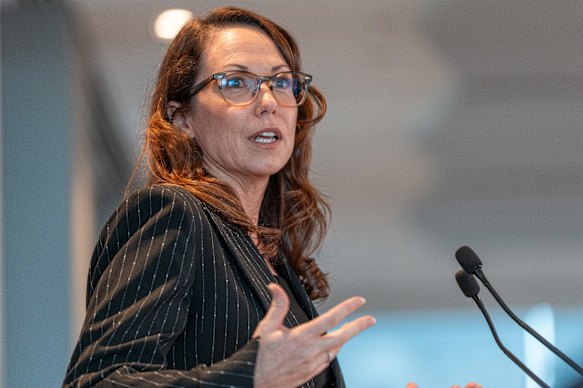
Victorian Treasurer Jaclyn Symes.Credit: Getty
The government wages bill – a focus of the Silver review of the public service released on Thursday – also continues to climb, with employee expenses forecast to top $39 billion.
The budget update reveals that investment property owners have been given an unannounced Christmas gift. They had been expecting a $139 increase in the deeply unpopular Emergency Services and Volunteers Fund next year, but will now be spared the additional impost until after the November state election.
This charge was scheduled to increase from $136 per household on July 1, 2026 to $275 but this change has now been pushed back until July 2027.
This will cost the government $133 million in foregone revenue, which the budget update said would “provide time to finalise and test information sharing arrangements”.
Tax hikes for farmers have also been pushed back until after next year’s state election.
The government is also expecting to generate less revenue from its expanded congestion tax than it originally anticipated, after it introduced a concession for the new charges on retail parking spaces to placate furious members of the Shopping Centre Council of Australia.
The 2025-26 total tax take of $42 billion is up from the $41.7 billion forecast in the May budget. Cost of the state’s interest repayments on its total borrowings has eased slightly from $7.72 billion to $7.57 billion.
Loading
The revised forecast operating surplus of $700 million is a marginal improvement on the $611 million forecast in May but remains a touch-and-go proposition for Treasurer Jaclyn Symes as she heads into an election year.
Once the cost of the government’s massive capital works program is taken into account, Victoria remains deep in the red, with a cash deficit of nearly $14 billion – up from the $10 billion forecast in the May budget – for 2025/26.
The budget update suggests the government has brought forward about $4 billion in infrastructure costs from 2026-27 into the current financial year.
Over the forward estimates of the updated budget the state will spend $40.46 billion more than it generates in revenue. This is forecast to add $41.75 billion to the state’s debt pile.
Despite this, growth in state net debt will be slower than anticipated six months ago, with this year’s figure to come in at $165.8 billion and climb to $192.6 billion by June 30, 2029.
Victorians, on average, will continue to grow poorer under the government’s economic forecasts, with the state economy forecast to grow 1.25 per cent this year, which is slower than the expected 1.7 per cent increase in population.
Start the day with a summary of the day’s most important and interesting stories, analysis and insights. Sign up for our Morning Edition newsletter.
Most Viewed in Politics
Loading