2 months ago
20
2 months ago
20
What in the World, a free weekly newsletter from our foreign correspondents, is sent every Thursday. Below is an excerpt. Sign up to get the whole newsletter delivered to your inbox.
Singapore: It’s been the hangman’s busiest year in decades; 17 lives so far, all but two of them drug offenders. Singapore marched three people up to the Changi prison gallows in the last week of November alone.
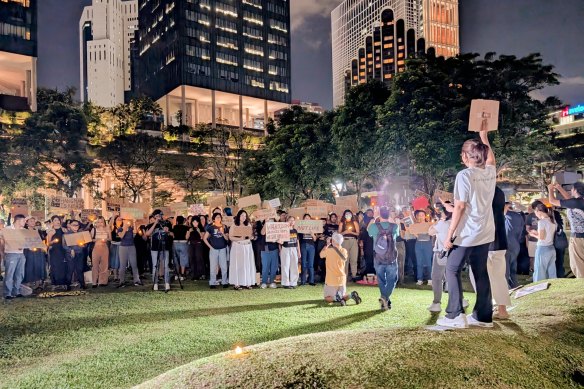
A tightly regulated protest against Singapore’s liberally dispensed death penalty.Credit: Zach Hope
These numbers – the most since 2003 – aren’t up there with the heady days of the 1990s (76 people in 1994, for example) when justice-lusting Singapore was said to be the per capita execution capital of the world.
But the trend over the past few years has been shooting upwards, according to figures compiled by Amnesty International, and this greatly troubles Singapore’s small band of activists. To them, mandatory death for drug offences is a barbaric throwback unbecoming of a modern nation.
A handful of them recently lodged a constitutional challenge to the sentencing laws. A judge shut it down this week. Singapore, a semi-authoritarian state and dominated by the same party all of its independent history, seems unlikely to shift gears any time soon.
Some readers will remember the case of Australian man Van Nguyen. This month marks 20 years since he was hanged in Changi for being caught with 396 grams of heroin during a stopover from Phnom Penh, in Cambodia, to Australia. The case garnered widespread attention at home in Australia.
Lex Lasry, his lawyer at the time, told a recent dinner for the Capital Punishment Justice Project how the Singapore government chose to inform Nguyen’s mother, Kim, of the execution date by snail mail. It was, he said, a demonstration of its “indifference to the suffering they were causing to Van and his family and friends”.
“Early in our campaign to save Van’s life between 2002 and 2005, in the public media I described the behaviour of the Singapore government as grotesque. It was then and still is,” Lasry continued.
“Singapore needs to be pressured and shamed by the international community into retreating from its policy of capital punishment. Polite diplomacy and respectful commentary won’t work.”
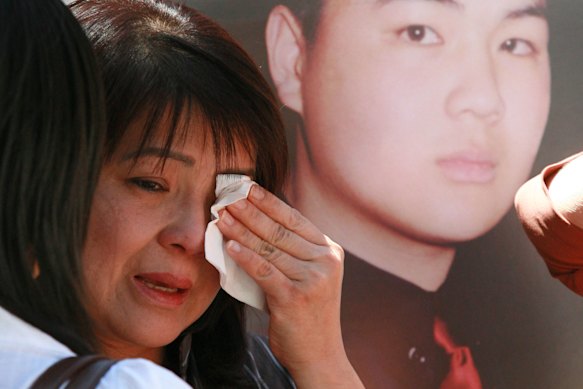
Kim Nguyen weeps in front of a poster of her son, Van Nguyen, in 2006, one year after her son was executed.Credit: Jason South
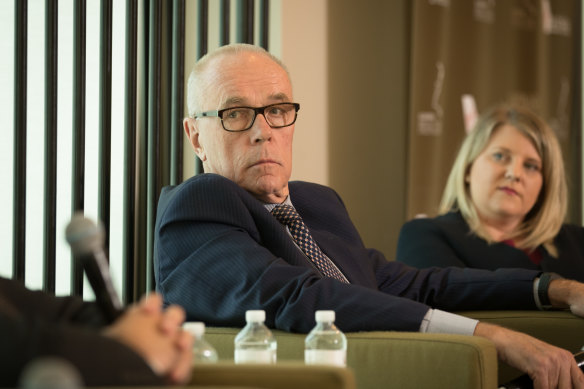
Former barrister and Victorian Supreme Court judge Lex Lasry, pictured in 2018.Credit: Simon Schluter
Later, on X, Lasry told Australians, “Don’t go to Singapore for a holiday. Don’t go there at all unless you have to. Injustice continues to flourish in that country.”
It takes only 15 grams of heroin to send a person to their death in Singapore. This is small-fry by Australian standards: media releases from the Australian Border Force tend to deal in seizures measured in tens or hundreds of kilograms.
Loading
The Singapore government says its hardline stance is a necessary price for keeping the country one of the safest in the world. Coordinating Minister for National Security K. Shanmugam has said that 15 grams of heroin is “enough to feed the addiction of 180 abusers for a week”.
“While we seek to help abusers, we take a tough approach against drug traffickers,” he said.
“We have zero tolerance for those who destroy the lives of others, for money … The evidence shows clearly that the death penalty has been an effective deterrent.”
Singapore is hardly the biggest state killer. Amnesty estimated that China executed more than 1000 people last year. Iran and Saudi Arabia had tallies in the hundreds.
Loading
But Singapore, a staunch and mild-mannered friend of Australia, a safe and well-ordered holiday destination, an island of prosperity and stability shining forth from an often tumultuous region, occupies a more elevated sphere in the Australian psyche than these other places.
The last time I wrote about this issue, the country’s high commissioner to Australia, Anil Nayar, responded with an op-ed titled “Singapore’s approach to drugs works for Singaporeans”.
He detailed the very real harms of drugs, how even relatively small quantities can have devastating impacts on individuals and communities. Further, he said Singaporeans overwhelmingly supported the death penalty.
And this is true, but there is context here as well. Critics say the government, with cosy ties to the nation’s mainstream media, has inundated the public with pro-death, pro-war-on-drugs propaganda.
Loading
The CIVICUS monitor, a global freedom tracker, meanwhile rates Singapore as “repressed” – the same as its Indo-Pacific neighbours Cambodia, Bangladesh, India and Thailand. One of the factors the monitor cites is Singapore’s Protection from Online Falsehoods and Manipulation Act, a tool allowing the government to order journalists, academic publications and opposition politicians to publish “corrections” to information it deems incorrect.
While the rationale is to protect citizens from lies that could upset civic harmony, critics say it extends to information or views the government doesn’t like.
One of the organisations hit by a POFMA, as the directions have been termed, is the Transformative Justice Collective (TJC), the leading anti-death penalty group in Singapore. The top of its homepage now opens with the government-supplied statement: “Multiple falsehoods have been communicated on this website”.
TJC, which chose to suspend publishing new material on its site until the designation as a “declared Online Location” expires early next year, called the move “oppressive”.
In March, I reported from a vigil staged by activists for the condemned drug trafficker Pannir Selvam, a Malaysian national who was caught at the overland Woodlands checkpoint with 52 grams of heroin in 2014.
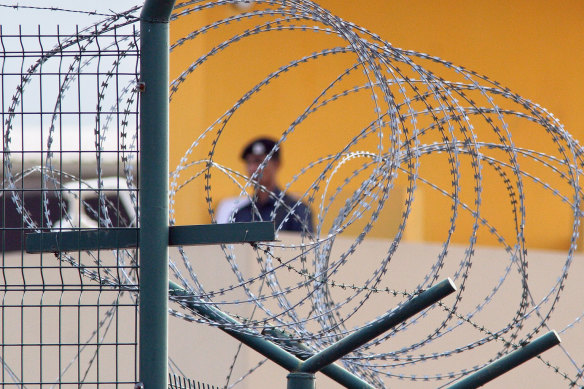
Singapore hanged three people at Changi prison in the last week of November alone.Credit: Getty Images
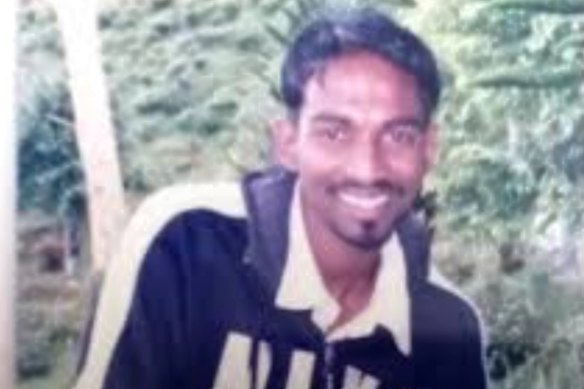
Pannir Selvam was caught with 52g of heroin in 2014.Credit: Facebook
The vigil was held at Speakers’ Corner in Hong Lim Park, as this is the only place in Singapore where people can demonstrate without special permission. Even in this safe space, there are strict conditions on what can be said and distributed.
Pannir, whose supporters said was a naive young man duped by another Malaysian, was scheduled to be hanged at dawn. Those gathered sang songs and recited poetry he had written from prison. As the small crowd readied to sing We Shall Overcome, word filtered through that Pannir had been granted a last-minute stay. People cheered, cried and hugged.
Singapore hanged him in October.
Get a note directly from our foreign correspondents on what’s making headlines around the world. Sign up for our weekly What in the World newsletter.
Most Viewed in World
Loading