2 months ago
18
2 months ago
18
To Ellen Burbidge it was as though the whole world was on fire.
This was during the terrible summer of 2019. Before Christmas, she’d visited a home in Gympie, north of Brisbane, and found herself helping to fill buckets of water in precaution as smoke appeared through the trees. Then she drove home, a thousand kilometres to the far south coast of NSW. All the way, pyres from conflagrations consuming the eucalypt forests of the Great Dividing Range bled across the sky.
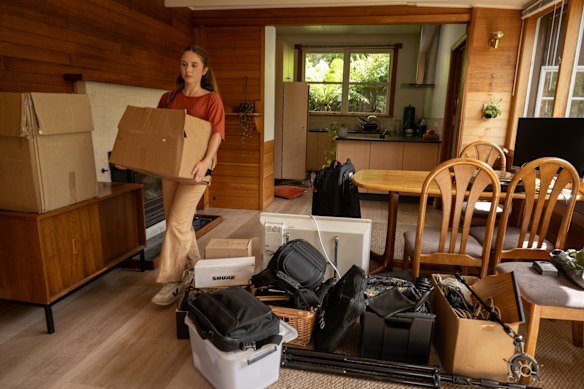
Actor Ellen Burbidge, pictured here packing to move between houses in Hobart, sought refuge in Tasmania after surviving the 2019 fires on the NSW south coast.Credit: Matthew Newtown
On New Year’s Eve, she was evacuated from a campground at Mystery Bay near Tilba after her brother shook her awake in the early morning. The sky was pitch black, and only hours later would it penetrate the pall to become a dull red orb.
She packed up and moved on to her parents’ home in Narooma, where the family listened to emergency reports on the ABC until the power failed. She recalls her four-year-old nephew’s fear and how she’d put on a brave face. Don’t be scared, she’d told him, but stay close.
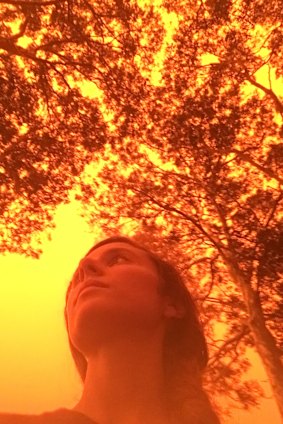
Ellen Burbidge in Narooma during the 2019 fires.Credit: Ellen Burbidge
They gathered her parents’ valuables and moved on to her grandfather’s place further in town. They left her grandmother’s ashes. She remembers how they stood in the driveway to say goodbye to her childhood home. “Look after the place Nan,” she said.
That night she crammed into a single room with her partner and her sister and her young family. They shut the doors and windows against the smoke and Burbidge remembers the air being close and thick.
They took turns staying awake that night, patrolling for falling embers and spot fires.
Burbidge hunkered down in Melbourne during COVID, and when the lockdowns ended moved to Tasmania with her new partner Edward, seeking refuge from a warming world.
“Hobart is almost famously known for its cooler climate, and we thought that it would be a safe place to go to if climate change gets worse, where we could put down roots and maybe start a family,” she says.
Burbidge is not alone.
New research by Charles Sturt University’s Professor Clive Hamilton shows that 14 per cent of Australians who have moved over the past six years say climate change influenced their decision. Of those who plan to move home in the coming year, 22 per cent say their decision is influenced by climate factors. When you ask people who have lived through extreme weather events the number rises to a third, according to the research, which is based on a Roy Morgan survey of 2000 respondents.
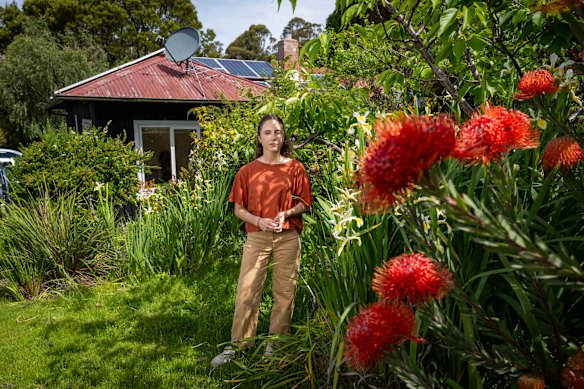
Burbidge at home in Hobart.Credit: Matthew Newton
Hamilton found that people who live in NSW, Brisbane, and regional Queensland are more likely than others to be driven to leave due to climate, and that 41 per cent named Tasmania as the state they thought would be safest in a warming climate, far ahead of other states.
Their views are consistent with the federal government’s own climate risk assessment of Australia, which finds the nation’s south-east to be safer as temperatures rise.
Hamilton believes his new research highlights a blind spot in the government’s response to climate change. When our leaders do address the climate crisis their focus is on mitigation – reducing greenhouse gas emissions to help slow global climate change. This is crucial, says Hamilton, but it ignores the fact that much warming is already locked in, and that Australia cannot protect itself with its own carbon pollution reductions.
“They are not talking about the change that is already coming down the highway,” he says. He believes the government should be making climate adaptation more central to the national debate. Absent government leadership, he says, some people – those with means and climate education – are beginning to adapt their own way.
Some, Hamilton’s research shows, are already on the move, seeking refuge in parts of the country that are cooler, and in which they hope to be safer. (He admits he is among those who have bought land in Tasmania out of concern for the changing climate.)
It is a process Hamilton expects will only accelerate, with profound demographic implications for Australia. The data illustrates striking differences in attitudes towards climate change in the community, he says.
Loading
“If there’s half the population who are very worried about climate change, that is starting to take action in response, then you’ve got perhaps a quarter of the population who don’t think it’s real and are therefore not going to do anything about it, you start to think about the implications.
“We might see Australians sorting themselves into different kinds of communities, ones that take climate change much more seriously, that build resilience in how they live in their homes, in their town planning, in their infrastructure, in their communities, and others where climate change is not taken seriously and which are therefore more severely buffeted by the extreme events that will increase in the coming decades.
“We may well see a kind of reshuffling of the Australian population where people who are more alert and more aware move towards climate safe areas whereas others remain in places that are far more prone to the stress of climate change.
“When the exodus from the mainland to Tasmania comes, it will be led by people who are most worried about climate change, well-educated and left-wing.”
Jessie Bodor worked for a big law firm and lived on Sydney’s lower north shore in 2019. She didn’t feel any immediate threat when she saw singed leaves floating down on her from a sepia sky, but a terrible disquiet. When the following summers grew hotter she decided to move to Tasmania.
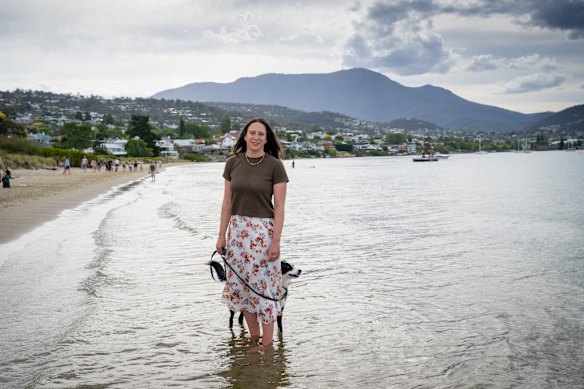
Jessie Bodor, pictured with her dog George at Nutgrove Beach, Sandy Bay, in Hobart, moved south as Sydney’s summers grew hotter. Credit: Matthew Newton.
“I think [a climate reshuffling] is already happening here. People are building highly connected communities where they share their experiences and their knowledge about climate,” says Bodor, who now works for the Tasmanian Land Conservancy, a charity that buys and manages land for environmental protection.
She says she has no regrets about leaving a lucrative job in a big law firm. In Tasmania, she says, she has not only escaped more intense heat, but with the TLC has found work relevant to climate action.
Launceston mayor Matthew Garwood says the phenomenon of climate refugees, from what he cheerfully calls Tasmania’s north island, is both well known and welcomed. “It started as a movement of grey nomads coming down here for the climate that they felt would be more comfortable than Brisbane or Sydney, but it is now young professionals and families too.
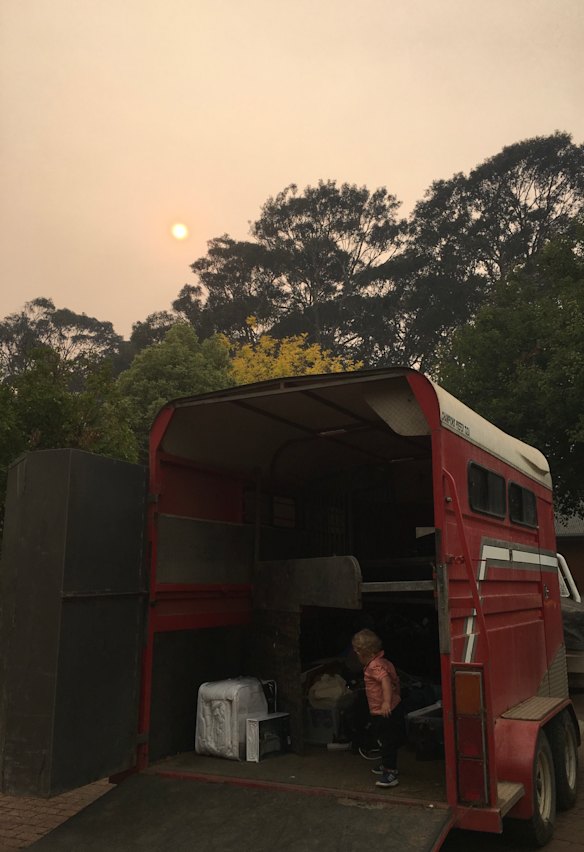
Ellen Burbidge’s nephew during the family’s evacuation from Narooma.Credit: Ellen Burbidge
“We find that once people have decided they want to come here they also want to contribute to the community; it is beneficial. They are bringing their skills, bringing their families.”
Peter George, a former journalist who is now an independent MP in the Tasmanian state parliament, is not surprised by Hamilton’s findings. George, who moved to Tasmania from Sydney in 2011 to escape ever-hotter summers, counts among his friends climate refugees from Western Australia and South Australia as well as the east coast states.
He says the influx will benefit Tasmania because climate refugees not only bring new wealth and new demand for services, but also new ideas to a political culture he believes has been stunted by closed networks holding power in the state’s parliament and bureaucracy.
But George also sees evidence of tension. “Like any change it will be uncomfortable, and at times confrontational.”
When you have run as far south as you can, you are brought face to face in the end with what is destroying our world.
Richard FlanaganIsland communities can be resistant to changes driven by outsiders, says George, and like other Australian capitals, Hobart is in the grip of a housing crisis. In Cygnet, the town south-west of Hobart where he lives, he knows families who have cashed-in, selling off sections of farm land to mainlanders seeking refuge in cooler air as property prices surge, but who still feel discomfited by the social changes caused by the influx of newcomers.
Burbidge, an actor who now works with Bushfire Survivors for Climate Action, is glad to have settled in Hobart, but confesses she does not feel entirely safe from climate change. The waters around Tasmania are warming faster than those to the north. The great kelp forests that once famously fringed the state’s coast are largely dead, and as the sea warms Tasmania is growing dryer and hotter. In 2016, trees that had survived a thousand summers were lost to fires that incinerated ancient rainforests.
Loading
This year the fires came early, with emergencies declared and homes lost on Tasmania’s east coast last week. “I thought that I would feel safer, but I don’t know if I do. I don’t think really anywhere is safe from the impacts of climate change,” she says. She loves the rich bushland around her new home in South Hobart, but the gum trees don’t bring the same joy they once did.
Sometimes on windy nights she still wakes gripped by the fear she felt sheltering from the firestorms around Narooma. She weeps as she says she has not yet started the family she hoped for when she first moved south. It is a decision she and Edward wrestle with as they consider the hotter future.
Asked what he thinks of his home state becoming a climate refuge, the author Richard Flanagan, a fierce environmental advocate, is blunt. “You can run, but when you have run as far south as you can, you are brought face to face in the end with what is destroying our world – and then you have no choice but to decide where you stand.”
Most Viewed in Environment
Loading