2 months ago
5
2 months ago
5
Rob Reiner, who has died aged 78 in a stabbing attack in his home in Los Angeles alongside his wife Michele, was one of the most influential and successful figures in American screen comedy in the last 50 years.
Reiner had comedy in his veins, being born in New York in 1947 to writer-producer-actor Carl Reiner, who created and appeared in The Dick Van Dyke Show, and singer Estelle, who would utter the famous line “I’ll have what she’s having” in her son’s 1988 rom-com When Harry Met Sally.
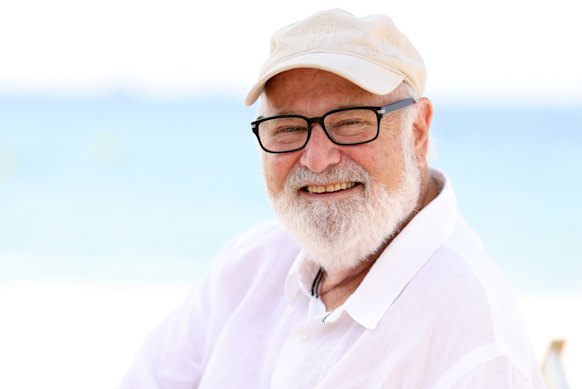
Rob Reiner and his wife Michele Singer Reiner were found dead in their Los Angeles home on Sunday (Monday AEDT).Credit: Getty Images
His showbiz career started as an actor, first in theatre and then with small roles on TV. His screen debut came on a show called Hey Landlord, co-written by Garry Marshall, who would go on to create Happy Days (on which Reiner briefly worked as a writer), and whose sister Penny (star of Laverne & Shirley and, later, a successful director in her own right, including of the features Big and A League of Their Own) became Reiner’s first wife in 1971.
“I played Guy Number One or Guy Number Two or something like that,” Reiner said in a 2009 interview for the Television Academy. “I think I was 19 … I did a lot of television shows when I was young.”
He had small parts in Gomer Pyle, USMC and The Beverly Hillbillies and Batman – “I was delivering room service to The Penguin,” he told the Academy – but it was the Norman Lear sitcom All in the Family, in which he played Michael “Meathead” Stivic, the liberal son-in-law of working-class grouch Archie Bunker (Carroll O’Connor), that made him a star. Based on the English series Till Death Do Us Part, the sitcom was the most-watched show in the US for five years straight, and won Reiner two Emmy awards.
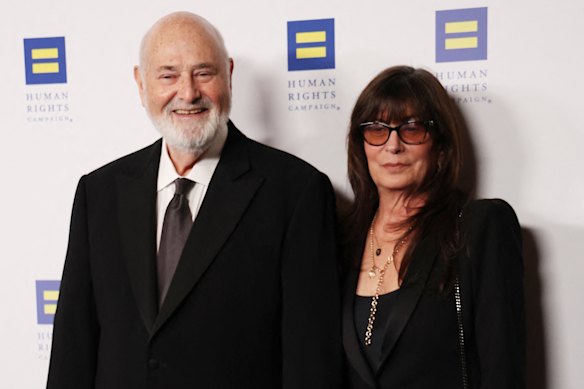
Rob Reiner and wife Michele Singer Reiner at a function in Los Angeles in March.Credit: AFP
It was as a director, though, that Reiner made his greatest mark.
His 1984 feature debut This Is Spinal Tap wasn’t the first mockumentary, or even the first rock-mock, but it was the film that set the benchmark, and did more than any other to establish the conventions, of this quirky sub-genre.
The film about the trials and tribulations of a slightly past-it English hard rock band on tour in the US was so successful in aping the style of legitimate music docs, in fact, that many viewers at first took it to be the real thing. Entirely improvised, the comedy became a bona fide classic of the genre, and this year spawned a belated sequel, Spinal Tap II: The End Continues, as well as a memoir, A Fine Line Between Stupid and Clever.
I interviewed Reiner in September for the 40-years-in-the-making sequel, and found him generous, cheery and humble about the contribution he and his co-creators Christopher Guest, Michael McKean and Harry Shearer had made to the culture.
Loading
“We had no idea,” he said when I asked if they had any inkling that they were onto something. “We were making fun of documentary films and also making fun of rock ’n’ roll, so it was two things going on. We had no idea that there would be, you know, Parks and Recreation and The Office and Abbott Elementary and all of these other kinds of docs that they do with this form. We had no idea that’s what we were doing.”
Reiner was no one-trick pony, though. In rapid succession he directed a string of classics: the nostalgic coming-of-age drama Stand By Me (1986), starring a young River Phoenix and based on a Stephen King story; the fantasy romance The Princess Bride (1987); the romantic comedy When Harry Met Sally (1988), starring Meg Ryan and Billy Crystal as a pair of friends who spend years resisting the attraction they clearly feel for each other; Misery (1990), a psychological thriller based on another Stephen King story and for which Kathy Bates won a best actress Oscar; and the courtroom drama A Few Good Men (1992), starring Tom Cruise as a young military lawyer and Jack Nicholson as the commanding officer who famously tells him under cross-examination: “You can’t handle the truth!”
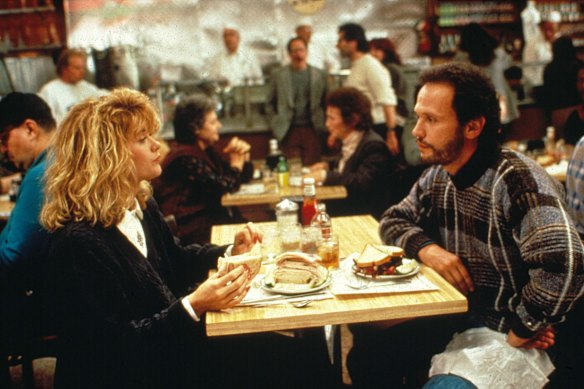
The famous diner scene from When Harry Met Sally.
It was a remarkable run of commercial and critical success that few others in the business could equal at that time.
Reiner continued to write and often appeared in small roles in his films (in the Spinal Tap movies he plays the clueless documentary filmmaker Martin DiBergi) as well as the films of others. He also produced his own work.
In 1987, he co-founded the production company Castle Rock, named after the fictional town that features in many Stephen King stories. Its prodigious output includes the feature films The Polar Express, The Shawshank Redemption, The Green Mile and Michael Clayton, as well as the long-running sitcom Seinfeld. He and Michele remained active with the company at the time of their deaths.
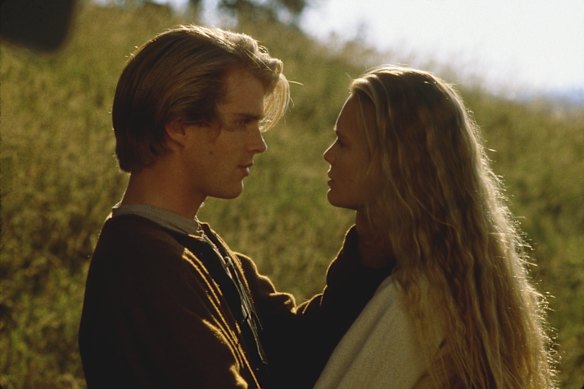
Cary Elwes and Robin Wright in Reiner’s The Princess Bride.
Though few would count it among his greatest efforts, the 2016 film Being Charlie might rank as his most personal.
Co-written by his son Nick Reiner, the movie is the story of an addict attempting to get clean and reconnect with his family. It starred Nick Robinson as Charlie, the son of a famous former actor now running for California governor (The Princess Bride star Cary Elwes). It drew heavily on the younger Reiner’s own experiences of addiction, homelessness and rehab.
“It’s not my life,” Nick Reiner told People in 2016, “[but] I went to a lot of these places, so I had a lot of these stories.
“I was homeless in Maine. I was homeless in New Jersey. I was homeless in Texas,” he said, during an interview that took place in his father’s office in LA. “I spent weeks on the street. It was not fun.”
Reiner was a lifelong advocate for liberal political causes. He was a co-founder of the American Foundation for Equal Rights, which fought for the legal recognition of same-sex marriage, was involved in the taxing of tobacco products to fund early childhood services (he was also a strong anti-smoking advocate), and campaigned against Donald Trump.
A long-time Democrat, in 2006, he was touted as a possible candidate for California governor (to run against Arnold Schwarzenegger) but ultimately decided not to run.
Most Viewed in Culture
Loading