2 months ago
17
2 months ago
17
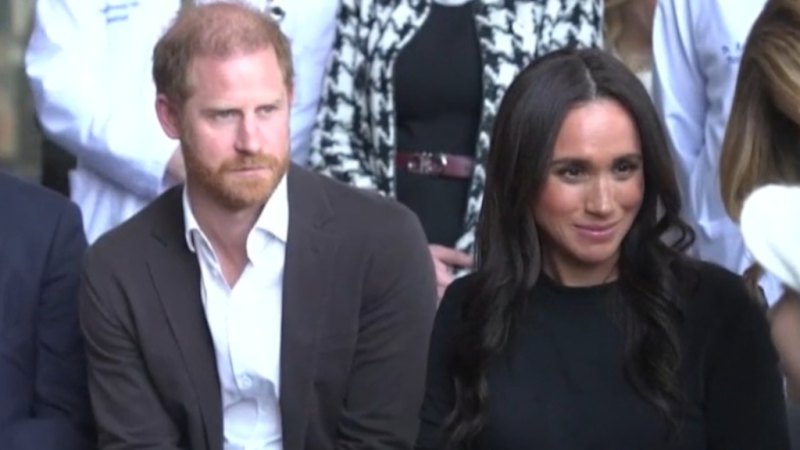
Prince Harry and Meghan, Duchess of Sussex have praised Australia’s world-leading under-16s social media ban – but they also say it’s only a “Band-Aid” solution and doesn’t address how social media can be a “lifeline” for marginalised communities.
“We celebrate Australia’s leadership for seeing and acting on how these technology companies are negatively impacting young people with little to no recourse or accountability, and feeble efforts from the companies to stem the flow of harms,” the statement, released on the couple’s Archewell Foundation website, reads in part.
“This bold, decisive action to protect children at a critical moment in their development sends a strong signal that a child’s mind is not a commodity to be exploited. It buys young people valuable time back in their childhoods, but it doesn’t fix the fundamental issue we all still face with social media platforms.”

Prince Harry and the Duchess of Sussex, pictured in April on a trip to New York City to advocate for stronger protections for children from the dangers of social media.Credit: Getty
The duke and duchess, who resigned as senior working royals in 2020 and have since pursued advocacy work through their non-profit organisation while fulfilling their obligations to their reported $US100 million ($150 million) Netflix contract, said the ban is an “effective measure to stop imminent harm”.
“But ultimately [it] only works as a band aid that does not address tech’s broken design and exploitive [sic] business incentives, requiring us to protect young people in the first place,” part of the statement read.
Loading
“For LGBTQ+ young people and those suffering mental health emergencies we’ve spoken with, it can be a genuine lifeline. These platforms have immense potential for good, connection, and hope. But when there’s no option to opt out of the harms, the very lifeline they might depend on, can become the very thing that kills them.”
Parents who lost their children to suicide were among the crowd at Sydney’s Kirribilli House when Prime Minister Anthony Albanese, Communications Minister Anika Wells, and eSafety Commissioner Julie Inman Grant officially launched the ban on Wednesday.
Bathurst mother Emma Mason notably flew to New York City with Albanese, Wells and Inman Grant in September to speak about the legislation at the United Nations.
Mason’s 15-year-old daughter Tilly took her own life after being relentlessly bullied by classmates on social media, and the bereaved mother received a standing ovation by the world leaders gathered for her speech describing how she had turned tragedy into a determination to create policy change.
Politicians and influential figures from across the globe, including Oprah Winfrey and veteran independent senator Bernie Sanders, have praised the ban for its courage and potential to change children’s lives for the better.
A common criticism, however, is the fact that it cuts off children who live in regional and rural Australia, and those living with disabilities or who belong to the LGBTQIA+ community, from the communities they have built online in lieu of being able to do face-to-face.
Counselling service Kids Helpline has seen a “noticeable increase in contacts” in the past three to four weeks due to the social media ban, virtual services manager Tony FitzGerald told this masthead.

Wyatt Thompson, 11, who lives in Broken Hill, says his main way of contacting his friends is through social media.Credit: Em Jensen
“Some of the themes we’re seeing in the contacts from young people are concerns about their loss of access to their friends and their community,” says FitzGerald.
“Particularly kids who are living in rural communities, remote communities, and kids who have come from marginalised backgrounds who use social media as a really positive tool to maintain connection with other kids who have gone through similar experiences that they have.”
The real enemy is the algorithm, a secretive set of rules that platforms use to organise content and decide what users can see on their social media feeds, and the order the content is presented in.
Loading
It’s a key contributor to why some, including Harry and Meghan, call social media platforms including TikTok, X (formerly Twitter), and Meta’s Instagram “addictive”.
Chanel Contos, chief executive and founder of Teach Us Consent who also travelled to the United Nations in September for the social media ban’s spruiking on the world stage, says it’s an important first step to prevent young people from harm, but there is opportunity to do more.
Former prime minister Malcolm Turnbull, activist against men’s violence Tarang Chawla, and media personality Abbie Chatfield are among almost 6000 people who have signed Teach Us Consent’s “Fix Our Feeds” open letter, which calls for the federal government to introduce an opt-in feature for social media algorithms.
“Algorithms are fuelling misogyny, which contributes to our National Crisis of gender-based violence in Australia. We can’t ignore the research,” says Contos.
“There’s a common misconception that young men and boys are seeking out misogynistic content. But the reality is that, for the most part, they’re being targeted by predatory algorithms promoting extreme material.”
Loading
In 2022, privately funded advocacy group Reset Australia called for lawmakers to force social media platforms to share details about their algorithms after research found YouTube’s recommendation engine pushed men towards misogynistic content.
An experiment conducted by this masthead on TikTok in August revealed sexualised content, misogynistic messaging and videos themed around death appeared within the first three minutes of scrolling.
Harry and Meghan have been vocal about the harmful effects of social media previously, with the Duke of Sussex saying “life is better off social media” in April, when he travelled to New York City to unveil a memorial dedicated to children whose families believe harmful online material contributed to their deaths.
“The easiest thing to say is to keep your kids away from social media,” Harry said at the event, per the BBC. “The sad reality is the kids who aren’t on social media normally get bullied at school because they can’t be part of the same conversation as everybody else.”

Chanel Contos (centre) travelled to New York City with Communications Minister Anika Wells and Prime Minister Anthony Albanese in September. The trio were there to promote the social media ban at the United Nations.Credit: Dominic Lorrimer
In their joint statement issued this week, the Sussexes said they hope Australia’s social media ban is “only the start of a reckoning between society and the tech companies that built these platforms with growth as their first principle instead of safety”.
“We look forward to the next step to hold tech accountable for its design choices and hope leaders of new technologies learn the lessons of failing to prioritise the well-being of young people,” they said.
“The world is watching to see if they’ll finally take responsibility and make the changes the world so desperately need.”
More social media ban stories
Your questions answered: How will age verification work? Why are X so silent? Where does my social media account go? Can I reactivate it? And much more. We have answered your most asked questions.
A family talks the ban: ‘Tech bros have stolen my family’ v ‘Dad sits in bed watching Youtube’. A family has a very honest conversation about the impact of social media on their lives.
Parents helpline: Everything you need to know about the social media ban, how to stop your child getting around the ban, then how to help them navigate their new world.
New apps. Old tricks: Big names such as Instagram, Snapchat and Reddit dominate the social media banned list. That means some teens are jumping on new apps. What are those apps? And what is the government’s plan?
Most Viewed in World
Loading