3 months ago
35
3 months ago
35
Video games are a unique, converged art form that has evolved over the past 50 years to take in a huge diversity of visual, audio, technical and design disciplines.
Today games of all sizes – from multimillion-dollar productions made by thousands, to experiments created by a single person – are enjoyed by billions of people around the world. As commercial products, they also generate more revenue than the film, music, and television industries combined.
The money has attracted tech giants and huge global corporations into the space, and while there are undeniable growing pains – ballooning costs, 10-year development cycles, unsafe working environments – gaming’s popularity continues to increase.
In 2026, another side effect of this expansion will be felt most keenly: the erosion of the walls that used to keep individual consoles (PlayStation, Xbox, Nintendo) and platforms apart.

Several franchises owned by Microsoft or Sony will be playable across all platforms this year. Returning in 2026: Marathon, Halo, GTA, Tomb Raider, Resident Evil.
The consoles wars are over, for now
The idea of a console war, where players are split by their allegiance to certain platforms, was essentially left behind in the 90s. But the culture has persisted in some sense, since many players don’t have the time, funds or inclination to support multiple platforms, meaning they miss out on games that are exclusive to certain consoles.
But in 2026, the battle appears to be over. Sony, Nintendo and Microsoft now offer three totally different propositions, and could hardly be said to compete at all.
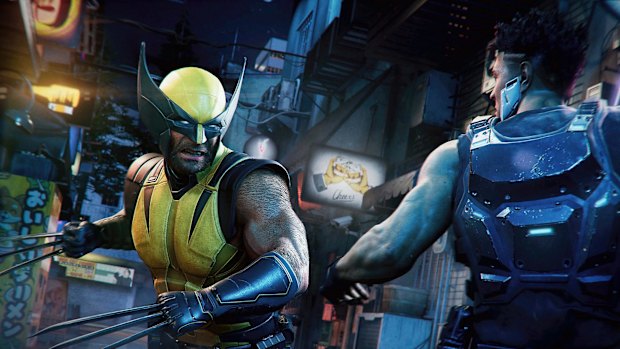
Marvel’s Wolverine is a major PlayStation 5 exclusive slated for this year.
Sony’s PlayStation still largely follows the path that served it well through the PS2, PS3 and PS4 generations. The PS5 is the de facto mainstream home console, hosting games from all major third-party publishers and thousands of indies as well as marquee releases from Sony’s own studios. The company has begun publishing its own games on PC and including them in its PlayStation Plus subscription, albeit not right away, and is even experimenting with publishing on Xbox and Switch.
Sony’s once-celebrated stable of owned studios has stalled somewhat recently, as the company flailed while attempting to pivot to live service online games following Fortnite’s success. Its latest hardware releases, including PS5 Pro, PS Portal and PS VR2, seemed to come and go without major support or marketing. But the PS5 is so entrenched and competition from Xbox so non-existent that these events haven’t been the disaster they might have been in a console war era.

A remake of Halo, the game that made Microsoft’s original console a hit, is coming in 2026 to Xbox, PC and PlayStation.
After 25 years in the console business, Xbox enters 2026 in an unprecedented state. Its collection of owned studios are the strongest it’s ever been, with an incredible slate of recent and upcoming releases. But that has largely come as a result of an outrageous level of investment from Microsoft. As a result, the tech giant is now no longer content with the Xbox being a console contender; it wants a return on its billions, and it knows that there’s more money in being the world’s biggest game publisher than in owning one platform.
All of Microsoft’s games go to PC on day one, almost all of them go to PS5 and/or Switch, and they’re all available on the Game Pass subscription for Xbox, PC or streaming from the cloud.
The result is that PC or PlayStation gamers can now enjoy Xbox games without needing to buy an Xbox. The big Halo, Gears, Forza and Fable releases due this year will be available on all platforms, even smart TVs. That’s a net positive for many people, but it does also mean the erasure of a characteristic Xbox culture, and some commentators have warned that an overbearing Microsoft could be destructive for the brand or even the industry. The company is expected to reveal new consoles this year which are essentially Windows PCs, paving the way for Sony games to appear on Xbox as well.
As for Nintendo, it continues to chart an entirely separate path. Its expansion has not involved putting its properties and games onto other platforms, but turning them into broader entertainment franchises.

The power of the Switch 2 means more blockbuster games, including Resident Evil Requiem, will come to Nintendo’s system in 2026.
This year we’re due a second Super Mario animated movie, and will likely get the first glimpse of 2027’s The Legend of Zelda live action film, as the company also continues to expand into toys, lifestyle tech and real-world experiences. On the game side, there’s a significant crossover in libraries between the Switch and PS5, but the devices are so distinct that they hardly compete.
Last year’s launch of the Switch 2 was successful, but this year Nintendo will need to furnish plenty of its own games to keep interest up.
With the increase in power allowing for more blockbuster games on the platform, Nintendo could offer an alternative to the PS5 or PC for players who want their games on the go and don’t mind a visual downgrade. As the oldest continuous console platform-holder, Nintendo also continues to mine its history for its retro game subscription, which this year will include the failed 1995 VR accessory Virtual Boy.

James Bond will return in 007: First Light, scheduled for May.
The 15 biggest games coming in 2026
Though it would be a miracle for none of them to be delayed to a later year, here are the 15 games from the biggest publishers and franchises currently slated for 2016.
- 007: First Light – A cinematic James Bond origin story from IO Interactive, the creators of the Hitman series, featuring sneaking, shooting and driving.
- Control Resonant – Sequel to 2019’s surreal psychological masterpiece Control, from Alan Wake’s Remedy Entertainment.
- The Duskbloods – A multiplayer action game from Elden Ring developer FromSoftware, exclusively for Switch 2.
- Fable – A long-gestating and serially delayed reboot for Xbox’s iconic fantasy RPG, from Playground Games, which promises sardonic British humour and player choice.
- Fire Emblem: Fortunes Weave – Nintendo’s anime-inspired and relationship-centred battle tactics series enters the 4K era with a gladiatorial vibe.
- Forza Horizon 6 – Microsoft’s celebrated open-world racing series, also from Playground, heads to the Japanese countryside.
- Gears of War: E-Day – A prequel for the original cover-based shooter, from Microsoft’s The Coalition, marks the return of much-loved duo Dom and Marcus.

After several delays, GTA 6 is now slated for November 19.
- Grand Theft Auto VI – Rockstar’s follow-up to the highest-grossing entertainment product ever is set in a fictionalised Florida.
- Marvel’s Wolverine – From Insomniac, creators of the recent Spider-man games, this adventure promises to be much more brutal and gory.
- Marathon – The first game from Bungie (Halo, Destiny) under Sony ownership, this online extraction shooter is a reimagining of the developer’s 90s sci-fi franchise.
- Resident Evil Requiem – The ninth main entry in Capcom’s zombie franchise series features two heroes and blends the horror of RE2 with the action of RE4.
- Saros – Sony’s arcade shooter experts Housemarque follow up 2021’s Returnal with another offbeat rinse-and-repeat game, heavy on story to unpack and colour-coded bullets to dodge.
- Star Wars Galactic Racer – A surprise revival of the N64 racing franchise, from a team made up of former Need for Speed and Burnout developers.
- Tomb Raider: Legacy of Atlantis – his reimagining of the 1996 original is also the first game from Crystal Dynamics as part of a commercial deal with Amazon.
- Yoshi and the Mysterious Book – Nintendo platformer with an illustrated visual style, where Yoshi has to suss out various creatures and lifeforms.
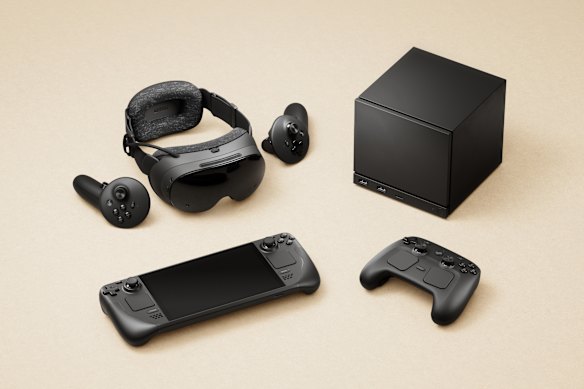
Valve is expanding its PC-based hardware in 2026 following the success of the Steam Deck (bottom left). This year it will launch a VR headset, a controller and a console.
Rise and rise of the popular platforms
While console gaming is still big business, it hasn’t really grown in terms of player numbers or revenue during this hardware generation. Instead, much of the expansion has come from gaming on PC and mobile; casual players already have those devices for productivity purposes so can play without an additional console, while new phone and PC hardware is making high-end play more accessible too.
Valve, the company behind PC game marketplace Steam, has had great success with its Steam Deck handheld which matches the flexibility of PC with the streamlining of a console. In 2026, it will release the Steam Machine, a similar but more powerful device designed to be used in the loungeroom or at a desk. It’s not impossible that it will go head-to-head with the new Xbox in terms of price and capability.
On the mobile side, Apple continues to push processing power to the point that new blockbuster games can run on iPhones, while popular online and live service games work on any device. Accessory makers including Backbone and Razer make controllers designed to turn any phone into a game console when players are on the go.
Loading
There’s also potential for the popular platforms to power a switch from local processing to streaming, which would allow any internet-connected device to play any game.
Xbox is the current leader in this area after Google abandoned its Stadia platform in 2023, but Sony operates its own streaming system in certain regions (not Australia). Late last year, Netflix activated a streaming game element on its service, allowing subscribers to play party games using their TV and smartphones.
Nvidia, the richest company in the world, also runs GeForce now, a service that lets players stream games using the company’s latest graphics hardware.
As the console wars disappear, the new frontier looks likely to be a fight for content across all entertainment media, with Netflix, Amazon, Microsoft, Apple, Meta and others spending billions to acquire game content for their own streaming apps.
Get news and reviews on technology, gadgets and gaming in our Technology newsletter every Friday. Sign up here.
Most Viewed in Technology
Loading