3 months ago
32
3 months ago
32
Australia’s olive oil industry is booming, as the Mediterranean diet’s popularity coincides with a global supply crisis that has led to soaring demand, including premium offerings of wine-style tastings and pairings with gelato and coffee.
The momentum of Australia’s olive oil sector reached new heights in the past fortnight with news that ASX-listed heavyweight Cobram Estate had bought US producer California Olive Ranch in a $259 million deal that had been 11 years in the making.
Cobram, which has a market capitalisation of more than $1.8 billion and has groves in Victoria and the United States, sells under a range of brands that also includes Red Island, with products stocked in Coles and Woolworths and increasingly exported.
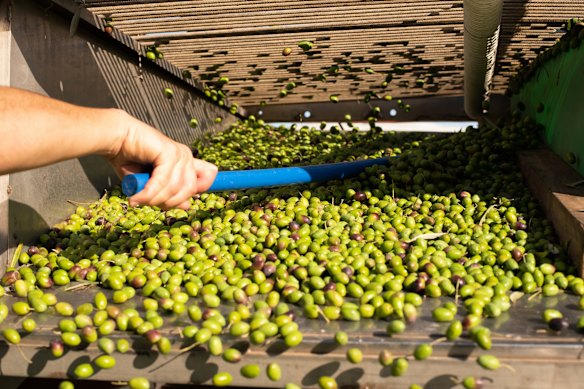
Harvesting of olives in Victoria to be pressed by Mount Zero Olives to produce its extra virgin olive oil. Credit: Mount Zero Olives
The acquisition comes as Australian producers ramp up their output in response to an olive oil rush brought on by shortfalls out of Mediterranean countries.
Olive oil makers in Italy, Spain and Greece – which have traditionally been responsible for more than two thirds of global production – are still reeling from years of severe heat and drought conditions that started in 2022.
Spain, which typically produces about 1.4 million tonnes of olive oil each year, saw harvests plummet to below 700,000 tonnes.
“Southern Europe has been hit by two extremely difficult seasons, and while production is improving, it remains well below earlier highs,” Gerry Karam, ANZ’s head of food, beverage and agribusiness, said.
Prices eased through 2024 from record levels – at one point reaching about $15,000 a tonne – but appear to be climbing again, Karam said. ”That volatility has been challenging for consumers, but it has created genuine opportunity for newer producers such as Australia,” he said.
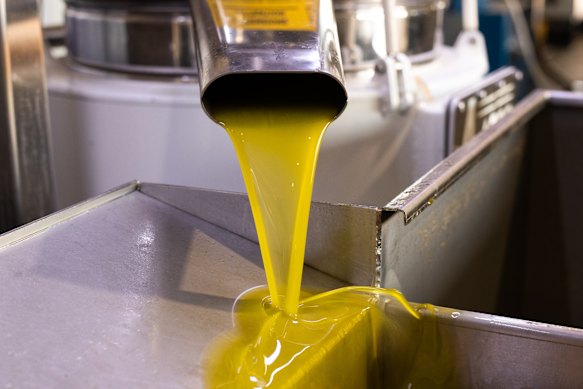
Extra virgin olive oil being pressed by Mount Zero Olives during the 2025 harvest. Credit: Mount Zero Olives
Australian olive oil has a reputation as a premium, more expensive product, but the shortage has seen restaurants turn their searches to the local sector, Karam said.
This past season, local production was roughly 20,000 tonnes, supplying about one third of domestic consumption. That contribution is expected to grow further, ANZ’s latest Food for Thought insight report found.
“Global production will eventually normalise, but the market has fundamentally changed,” Karam said.
‘No longer a niche ingredient’
Australia’s olive oil industry’s focus remains on high-quality extra virgin oil (EVOO), the highest grade made with just one pressing, and without the need to refine the product to remove defects.
Beyond its status as a gourmet cooking oil, EVOO has emerged as a health food. Its high polyphenol content – an antioxidant that helps reduce inflammation and improve cholesterol, among other benefits – is proving to be a lucrative attribute for EVOO producers.
This was acknowledged by Cobram Estate when announcing its Californian expansion. Chairman Rob McGavin told the Australian Financial Review ″every day there are articles on extra virgin olive oil and its benefits”.

Richard Seymour, general manager of Mount Zero OlivesCredit: Mount Zero Olives
Health conscious consumers come from all walks of life. “For older consumers it may be seen as improving heart health and moderation, while for younger ones it ties in with natural eating, wellness and authenticity,” ANZ’s insights found.
Karam said the publicity of olive oil as a health food has meant it’s “no longer a niche ingredient. It is part of daily cooking, supported by health trends, and the appeal of the Mediterranean diet.”
“That shift is driving interest in provenance, freshness and trusted brands – areas where Australian producers excel,” Karam said. Adding to the appeal is that Australia’s counter-season harvests come to market just as northern hemisphere stocks run low.
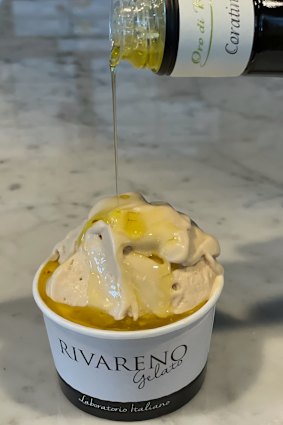
Gelato paired with extra virgin olive oil at a collaboration event between Bottega 1900 and Rivareno gelato.Credit: Rivareno Gelato
Mount Zero Olives, which draws produce from Victoria’s Wimmera and Grampians, has been “flooded by inquiries”, said general manager Richard Seymour.
“When the European supply really suffered, we noticed this almost insatiable demand to inquire about Australian olive oil,” said Seymour, whose premium olive oil business has largely moved to sourcing and pressing the fruits after his family sold properties where it previously farmed groves.
“Suddenly we were going from hatted restaurants, our bread and butter for years, to pubs and all kinds of eateries we thought we’d never supply,” he said.
Business is so strong, Mount Zero now has to reject some inquiries from restaurants to ensure they meet demand for long-time customers. However, Seymour cautions that while revenue might be up due to price rises, cost-conscious chefs and consumers might look to buy less in volume terms and move to alternatives if prices climb further.
Seymour also notes the relatively small yield from each olive when making EVOO means margins are tight.
“If you’re making grape juice, 90 per cent of the juice out of a grape is marketable, but with olives, it’s somewhere between 10-20 per cent,” he said. To make a standard 500ml bottle of EVOO can require as much as 5 kilograms of olives.

Enea La Mantia, of Sydney’s Bottega 1900 and Olive Oil Hub, tasting extra virgin olive oil
Early harvesting of the fruit leads to a smaller yield but more complex taste, while the producers of lower quality, flatter tasting products might wait for groves to mature to get higher yields from each press.
Despite prices that are slightly higher than mid-market products stocked in major supermarkets – two litre bulk containers of Mount Zero’s oils of various olive varieties such as picual, frantoio and coratina sell for $58 - Seymour said numbers of non-restaurant customers driven by gourmet tastes and health benefits are growing.
“It has this triple whammy, it increases the hedonistic value of what you’re doing because it’s so tasty, adds to the health value, and the sustainability of it,” he said.
Lattes, gelatos and olive oil tastings
The surging popularity of EVOO has taken it well outside the kitchen, with olive oil lattes and cocktails popping up on menus in Melbourne, ANZ’s insights found.
Alice Massaria, a Sydney-based Italian grocer and importer is among those catering to a more savvy clientele. Together with her partner Enea La Mantia, Massaria runs a premium EVOO shop and information website, Olive Oil Hub. They also run Bottega 1900, a store in Sydney’s Brookvale selling EVOO alongside specialty balsamic vinegars and wines.
Massaria, who imports largely from Italy and sells them with listings of their polyphenol content, said that awareness and interest in specialty EVOO has taken off in Australia in the past few years. As a qualified sommelier and wine director in Sydney’s restaurant scene, she is hoping to bring the same level of integrity to olive oil.

Enea La Mantia at a recent extra virgin olive oil tasting event run by Bottega 1900 in Sydney.Credit: Bottega 1900
Since launching in 2020, Bottega 1900 also organises olive oil tasting evenings, similar to wine-style events. Initially it was chefs and specialised customers most involved with tastings, but Massaria said this has expanded.
“Reactions [at tastings] are often revelatory for people,” she said. “They show that premium extra virgin olive oil isn’t limited to the kitchen bench…many Australians are only just beginning to discover its true potential.”
Massaria – who spoke from Italy, where she is visiting producers ahead of new season European harvests arriving in Australia for sale from February – has previously collaborated with gelato chain Rivaereno in pairing different olive oils to drizzle over frozen scoops. One of its fine-dining restaurant customers also added EVOO-topped gelato to its menu.
These unorthodox pairings let the various flavour profiles of EVOO shine through, something she believes Australians are clocking onto.
“Green, grassy notes, subtle pepperiness, and light bitterness, sensations that can initially feel unfamiliar … are increasingly recognised as positive sensory indicators rather than flaws,” Massaria said.
The Business Briefing newsletter delivers major stories, exclusive coverage and expert opinion. Sign up to get it every weekday morning.
Most Viewed in Business
Loading