3 months ago
18
3 months ago
18
The number of homes sitting empty across Melbourne surged by 16 per cent last year, despite a housing crisis and the government increasing taxes on unused properties.
The biggest increase in unoccupied homes was in the booming Hume, Merri-bek and Boroondara council areas, according to an annual audit of residential water use in all council areas across the city.
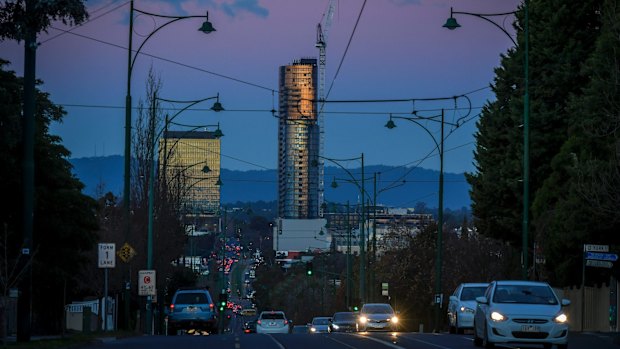
Skyscrapers in Box Hill, which contributes to a high number of unused properties in Melbourne.Credit: Eddie Jim
Independent economic think tank Prosper Australia’s annual Speculative Vacancy report shows the number of empty dwellings across Melbourne rose from 27,408 to nearly 32,000, increasing the proportion of vacant properties from 1.5 per cent in 2023 to 1.7 per cent in 2024.
The think tank defines an empty dwelling as a property in which no water had been used for the year.
The report says owners are engaging in “rational behaviour” by leaving a house or apartment empty, despite the demand from the housing crisis, and choosing to lose out on rent now in exchange for a bigger, tax-friendly profit later when they sell.
“Melbourne added enough totally empty homes last year to effectively wipe out one in every nine new dwellings,” said Prosper Australia advocacy director Rayna Fahey.
“Housing vacancy is a symptom of a wider problem of speculation in the housing market. We clearly need to build more homes. But if new builds continue to push up against the obstacle of empty homes, we need to understand why.”
Prosper Australia advocates for taxing land over income, often called the Georgist tax remedy, which it claims would eliminate the financial incentive to “hoard” land and property.
Unlike in other Australian capitals, all residential properties in Melbourne have individual water meters, making it possible to map usage across 1.9 million dwellings across Greater Melbourne.
When combined with “underused” homes, where water use is less than 50 litres a day (which is a quarter of the average 200-litre-a-day household in Melbourne), the total number of what Prosper calls “long-term vacant” properties has increased by 3 per cent since 2023 to 100,945.
The number of unused and underused properties combined could theoretically house everyone on the Victorian social housing waiting list twice over.
Melbourne’s total dwelling stock grew by 41,265 over the year of the audit, while 4482 more homes sat empty and 60 per cent of those were concentrated in 10 of Melbourne’s 31 council areas.
Whitehorse in Melbourne’s north-east – which takes in the skyscrapers of Box Hill, where there has long been a concentration of empty apartments – recorded the highest number of empty homes overall at 2677 (3.3 per cent of its total homes). Whitehorse City Mayor Kirsten Langford attributed the high rate to the significant student population shifting away from the area to the CBD since the COVID pandemic.
The inner-north council of Merri-bek, where mid-rise apartment buildings are proliferating, followed with 2404 vacant dwellings (2.9 per cent). Boroondara, in the inner east, registered 2382 empty dwellings (2.9 per cent).
Hume City Council, on the city’s northern fringe, taking in the sprawling green field estates of places such as Craigieburn, had the sharpest increase over the year at an increase of 1338 empty homes. Merri-bek and Boroondara also took second and third spot respectively on this measure.
A Hume council spokeswoman said the council’s only reaction to the data was “we note the information, and will watch over time to see if it becomes a trend”. Merri-bek Mayor Nat Abboud said the figures for her area were “incredibly disappointing”.
“Secure housing is a fundamental human right, and is necessary for individuals, families and communities to thrive,” Abboud said.
Boroondara questioned the data, pointing out that there could be many reasons for low water consumption including extended holidays, the use of water tanks, unsold and unoccupied apartments, or plots of land awaiting redevelopment following demolition.
Regardless, Mayor Wes Gault said he encouraged local home owners to consider renting out empty properties and the council supported more low-cost housing in the area.
Tenant advocate Jordan van den Berg, known online as “purplepingers”, tracks vacant properties across Melbourne. He said the report showed “the criminal failure of a system in which the basic human need for shelter is subordinated to the profiteering of wealthy investors and developers”.
“Increasing numbers of people are dying on the streets, and politicians who despite knowing about this issue have stood by while the problem has grown worse should hang their heads in shame,” he said.
A Victorian government spokesperson defended its policy direction and cast doubt over the report’s methodology, saying it used “sophisticated data-matching techniques” to detect vacant properties that need to pay vacant residential land tax (VRLT) rather than looking at utilities use.
The government pointed to ongoing measures, stating that Victoria has introduced changes to the VRLT this year, including a 7.5 per cent levy on short-stay accommodation bookings, with all revenue directed to Homes Victoria to support social and affordable housing. They also highlighted the expansion of vacant residential land tax to undeveloped land from 2026 to spur construction.
“Victoria continues to build and approve thousands more homes than any other state, and we have introduced measures to return homes to the market and encourage more owners to make their dwellings available for rent,” the spokesperson said.
Get the day’s breaking news, entertainment ideas and a long read to enjoy. Sign up to receive our Evening Edition newsletter here.
Most Viewed in Politics
Loading