2 months ago
15
2 months ago
15
The legislated emissions reduction targets in NSW are under serious threat from the state’s coal mining sector as a new report from the Net Zero Commission warns that continued mine expansions are “not consistent” with climate goals and require urgent regulatory intervention.
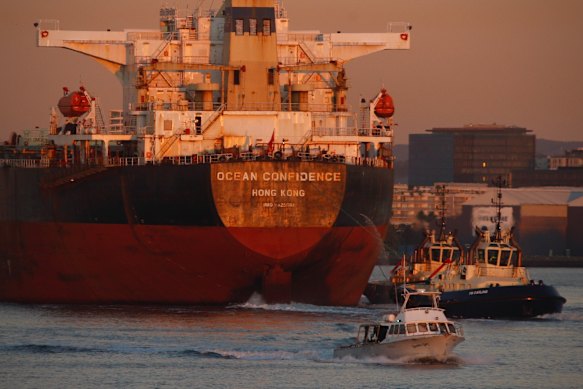
A bulk carrier departs Newcastle Harbour, the world’s largest coal export port, in 2024.Credit: Dean Sewell
The Coal Mining Emissions Spotlight Report calls on the state government to consider greenhouse gas emissions and their impacts “in all planning decisions, including those for additional coal mining”.
It finds that fugitive methane emissions from coal mines, which account for 96 per cent of the resources sector’s emissions, are projected to climb by almost 50 per cent by 2026-27 if coal project extensions currently in the planning pipeline are approved.
The commission, a government agency established to give expert advice on the state’s path to net zero, warns that NSW is not on track to meet its legislated emissions reduction targets for 2030 and 2035.
“Continued extensions or expansions to coal mining in NSW are not consistent with emissions reduction targets in the Climate Change Act or the Paris Agreement temperature goals it gives effect to,” it says.
There are 18 proposed coal mine expansions under active consideration in NSW, according to anti-fossil fuels group Lock the Gate.
Loading
Climate Change Minister Penny Sharpe said the government would consider the commission’s advice, “along with advice from other groups and agencies”.
The commission found that while coalmining emissions had dropped by more than 40 per cent since 2004-05, this was due to mine closures, not successful measures to cut methane emissions from operating mines. Only three NSW mines have enforceable, absolute limits on emissions imposed by their development consents.
Methane, a potent greenhouse gas with a warming potential 30 times greater than carbon dioxide over a 100-year time-frame, makes up 91 per cent of fugitive emissions from coalmining in NSW, the report found. Five top-emitting underground coal mines are responsible for 44 per cent of NSW’s fugitive coalmining emissions.
“On-site abatement at existing mines is essential, particularly to reduce fugitive emissions. Additional regulatory measures will be required to achieve measurable on-site abatement,” the Commission finds.
The Commission urged government agencies, including the Environment Protection Authority and the Resources Regulator, to collaborate more effectively to streamline safety approvals and mandates for abatement technologies.
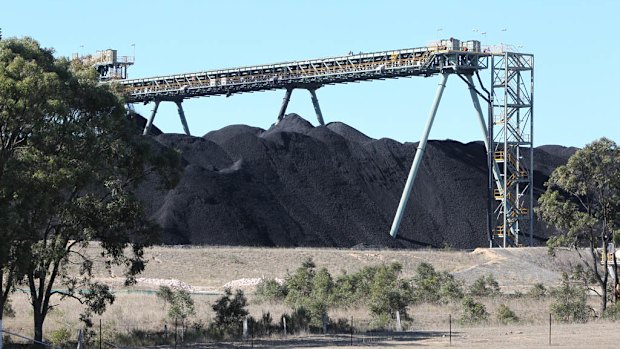
Coalmining operations in the Bylong Valley.Credit: Peter Rae
The report says though the NSW planning framework requires consideration of greenhouse gas emissions, only three mines have had enforceable emissions limits imposed by their consents. “Instead, conditions of consent have required mines to implement Air Quality and Greenhouse Gas Management Plans. These plans have lacked ambition, clear goals and enforceability.”
The commission calls for planning law reforms to require a more rigorous assessment of emissions, and says consent authorities should consider how mining project’s direct emissions affect progress towards NSW’s legislated targets, and the impact of emissions created when coal is burned overseas.
As 87 per cent of NSW coal is exported, the vast majority of associated emissions are indirect “Scope 3” emissions. While these are accounted for overseas, the report notes their impact is “felt both globally and locally in NSW” by driving climate instability.
The report warned that the state’s coal sector, which earned $33.1 billion in export revenue in 2023-24, is vulnerable to declining demand, its major customers having made their own net zero pledges.
Modelling from the Commonwealth Government Treasury projects national coal production to drop by between 42 per cent and 51 per cent by 2035.
Net Zero Commission chairman Nick Rowley said the NSW government needed to better prepare for the decline of coal extraction.
“Coalmining has made a significant contribution to our economy and regional communities for
generations,” Rowley said. “Given global demand for thermal coal is likely to decline; we owe it to those communities to plan for a just transition.”
Loading
The NSW Land and Environment Court last month granted consent orders to cancel a large coalmine approval on climate grounds, invalidating the state approval for a two-year extension of the Ulan thermal coal mine near Mudgee to dig up an extra 18.8 million tonnes of coal.
This followed the Court of Appeal overturning the 2022 approval of MACH Energy’s massive Mount Pleasant mine in the Hunter Valley in July, which set a precedent that the local impacts of global change must be considered. MACH Energy has been granted leave to appeal to the High Court.
Get to the heart of what’s happening with climate change and the environment. Sign up for our fortnightly Environment newsletter.
Most Viewed in Environment
Loading