2 months ago
13
2 months ago
13
It may have cost nearly $70,000, but the event Australia hosted at the United Nations in September to promote its social media ban was a modest affair by Manhattan standards – a breakfast of muffins and fruit.
Communications Minister Anika Wells had emceed the function, while Prime Minister Anthony Albanese gave a speech. Afterwards, they assembled on a balcony overlooking the East River for a press conference to praise the advocates who had contributed to Australia’s world-first policy.
The reporters were not as interested. All but one of their questions were directed at Albanese, and they focused on other issues dominating the day – the war in Gaza, Palestinian recognition, US President Donald Trump and climate change.
That’s not to say there weren’t questions for Wells. But they were being asked 16,200 kilometres away, back at home. Both Coalition and Greens MPs wanted to know why the communications minister was in New York while the Optus Triple Zero outage linked to four deaths was still a hot issue.
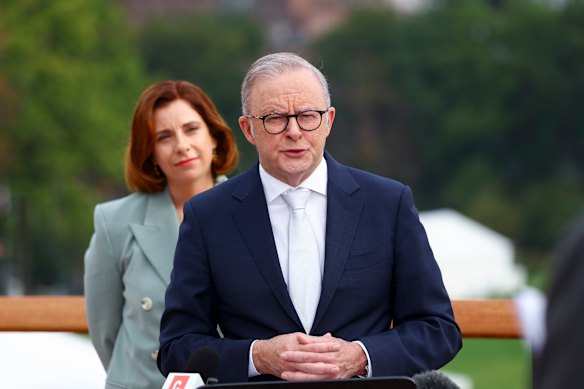
Anthony Albanese and Anika Wells at the United Nations HQ in New York City.Credit: Dominic Lorrimer
Their questions didn’t stop there. The opposition had singled out Wells as one of Albanese’s promising but less experienced cabinet ministers, and decided to put her to a pressure test. A few weeks later, Liberal senator Sarah Henderson requested details about Wells’ New York travel costs, meetings and itineraries from department officials during a Senate estimates hearing.
The answer delivered the Albanese government its first expenses scandal and put a spotlight on the minister for the wrong reasons during one of the most important weeks of her career.
It was given to Henderson two months later, last Tuesday night, in the final hours before its deadline. Contained in a document that included a dot point list of Wells’ agenda were figures the opposition seized on: airfares listed at $34,426.58 for Wells, $38,165.86 for her staffer, and $22,236.31 for an accompanying public servant.
The headline number for flights alone came to $94,828.75.
Wells was due to front the National Press Club in Canberra the next day. Abiding by the event’s format, she would give a half-hour speech about the government’s social media ban, before standing at a podium to take half-an-hour’s worth of questions from press gallery reporters. It was to be broadcast live on the ABC.
The opposition wanted the numbers in the news before Wells stood up. They sent the document that had been quietly uploaded to the committee website to news.com.au, which published a story about 8pm. But the article was quickly scrubbed from the internet, as this masthead reported, due to concerns from editor-in-chief Mick Carroll that it jarred with News Corp’s advocacy for the social media ban.
The story was revived the next morning, when 2GB host Ben Fordham raised the issue on his breakfast show. At lunchtime, Wells fielded two questions on the matter from journalists attending her keynote speech on social media. She defended the travel, saying it had helped build global momentum. But there was no explanation, and her snipe back to one reporter – “I’ve answered your question” – was broadcast, then clipped for social media, where it racked up millions of views and thousands of comments.
The opposition sniffed its opportunity.
Coalition MPs already had Wells in their sights when parliament returned after the election, singling her out as a potential weak link in Albanese’s line-up of more experienced senior ministers.
Wells had spent the previous term in the aged care and sports portfolios, as a junior minister under Health Minister Mark Butler. She had laid the groundwork for the Albanese government’s aged care reforms, making the case that Baby Boomers would need to pay more for higher-quality care in an ageing Australia. But the pointy part of that task – landing a deal with the Coalition – was shored up by Butler and Wells was moved on from the aged care portfolio before the changes came into effect in November, when she would have had to answer for the rollout. (That baptism of fire was saved for new minister Sam Rae.)
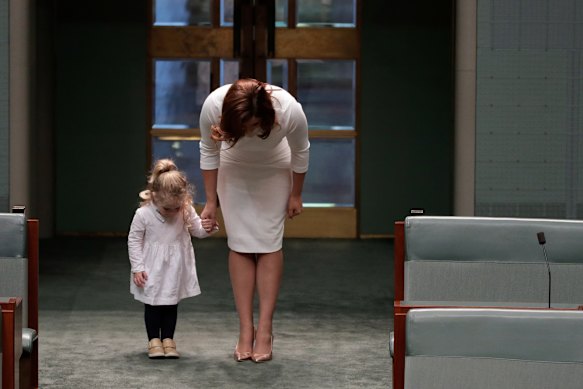
Anika Wells with daughter Celeste ahead of question time at Parliament House in Canberra in 2019. Credit: SMH
Meanwhile, her status soared: Wells, now 40, was promoted to cabinet in January this year, when Bill Shorten’s departure left a vacancy, and then elevated to run the complex communications portfolio in the May ministerial reshuffle. Many of her cabinet colleagues were unsurprised, given Wells has the prime minister’s support, and is talked about as a performer with leadership potential. Like all rising stars, though, Wells has accrued detractors: the ambitious MPs clipping at her heels, for example, or frustrated stakeholders who find it hard to get a meeting with her.
Her first test in the new role came early, with the Optus Triple Zero fiasco. She was still getting across the brief, but on the hook for the fallout. Wells did her job in keeping blame pointed at Optus, not the government, but exposed herself by saying she was “still a new minister”.
The opposition attacked. “She only has a training wheels on?” said Opposition Leader Sussan Ley. MPs targeted her in question time. Ley and her frontbencher, Melissa McIntosh, tried to cast Wells as a self-promoting jet-setter. The minister stood her ground without major slippages, as she defended the UN trip, saying she travelled with parents who lost children to suicide to talk about how important Australia’s reforms would be.
The social media ban was Wells’ chance to make her mark. She had been handed carriage of one of Albanese’s most ambitious policy reforms months before the start date. While Wells wasn’t there at the beginning, she added her stamp when she put YouTube on the blacklist. Here was a Millennial mum leading a policy being talked about by millions of parents and teens at home, and by world leaders abroad. It was a huge opportunity to build her profile, and, if handled deftly, her career.
Then the news broke about the cost of her trip.
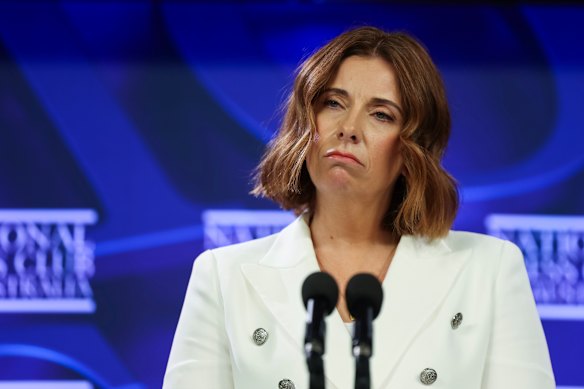
Anika Wells at the National Press Club in early December.Credit: Alex Ellinghausen
Wells’ patchy performance at the press club gave her opponents ammunition. She stumbled through inevitable questions about gambling reform and, when asked to explain the sky-high New York flight prices, she boasted about being transparent but offered only that they were not first-class tickets.
The Coalition was ready to fire. It’s common practice for the major parties to compile dirt sheets on their opponents during an election year. These files are often given to the media, by both sides of politics, with their contents then verified and reported. Months earlier, the opposition had used the freedom of information process to collect information about Wells’ spending during her trips to Paris for the Olympics, and had counted the number of free tickets she’d been gifted during her time as sports minister. However, the information had never come to light.
After last Wednesday, there was fresh interest. Opposition staffers and journalists started poring over Wells’ expenses and register of interests, and stories started appearing daily across media outlets. It started with reports on Thursday that Wells charged $3681 for a work trip to Adelaide that included a Labor friend’s birthday party. On Friday, receipts revealed Wells charged taxpayers $1750 for one night of dinner and drinks in Paris for four people. By the weekend, there were reports she charged $1389 for her husband and two children to join her at Thredbo’s ski fields while she was there for a work event.
Wells threaded the needle in a Sky News interview last Sunday, saying she understood people had a gut reaction to the figures, but she didn’t make the rules. It wasn’t enough. The story kept unravelling.
It moved on from New York and landed closer to home, with Wells’ use of entitlements in the sports portfolio. She had billed taxpayers more than $10,000 to fly her husband to prestigious sports events, such as the AFL grand final and Boxing Day Tests, often for one-day trips. On other occasions, she had left government Comcars waiting outside while she watched the tennis or NRL, racking up bills of $1000.

Wells at the 2024 AFL grand final.Credit: Instagram
Some of these stories were dug up by the opposition as it reconciled Wells’ travel claims with major events and the free tickets she’d declared. But not all of them. More troubling for Wells was that tips about her attendance at weekend birthday parties and Labor fundraisers – trips for which she had also claimed travel allowance – came from either Labor colleagues or stakeholders who knew she had been at those events.
For six days the coverage was relentless. From the outside, some observers said it looked like a campaign to torpedo a minister and distract from policy on the eve of a major reform.
But it was more coincidence than conspiracy. A routine Senate estimates question happened to land an explosive figure on the night before Wells’ televised press club address. The government had cleared its agenda so it could focus on the social media ban, meaning there was a vacuum in the news cycle. Wells just happened to be the minister in charge, which guaranteed she would front media, when other MPs would have been taking off on holidays.
“Sometimes you get lucky in politics,” said one opposition source.
Some of Wells’ colleagues in the government have been incensed. They see a gendered pile-on directed at a female minister with young children, forced to spend long patches away from home for her job. A widening probe into MPs’ expenses revealed Wells was not the parliament’s biggest spender – an analysis of family reunion expenses by this masthead ranked her 28th since 2022. Her allies point out the only MPs to come undone by expenses scandals in recent times have been women, Bronwyn Bishop and Sussan Ley, both of whom resigned from their posts.
Loading
But others in the Labor caucus concede it simply didn’t pass what they call the “front page” test: it’s not just about what’s in the rules, but how it would look in the papers. Keeping a Comcar running for hours outside sports events was cited as one of the more egregious examples. They thought Wells could have owned up sooner or paid back some of the money.
One senior Labor figure said Wells was smart and respected but had been promoted rapidly – before she acquired the experience that leads to wiser judgment calls, or was dragged through a scandal that would teach her the importance of caution.
“She needed a kick in the shins,” they said.
By the time Wells tried to draw a line under the fiasco on Tuesday night – by referring herself to the Independent Parliamentary Expenses Authority (IPEA) on the eve of the social media ban – a full week had passed. The story moved on, but too late.
Parliament’s expenses scandals bubble up every few years, but they don’t stick to a single MP for long. They spill over to other politicians and other parties. All of a sudden, there’s open slather over material that has been sitting on disclosure logs and registers of interests for years. At full boil, they can claim a few scalps, or change the rules.
Tony Abbott’s Coalition government ran into an expenses scandal early on, in 2013, when several members of the frontbench and Abbott himself repaid taxpayers for allowances they had claimed to attend weddings. In the wash-up, it emerged Labor frontbencher Wayne Swan had charged taxpayers $12,000 to fly him and two of his children to the AFL grand final by VIP jet in 2010. Abbott at first resisted demands to rein in MPs’ entitlements, but ended up tightening the travel rules for politicians and their families.
Family reunion travel rules
The obligations of MPs when determining whether they can claim family reunion expenses.
- Dominant purpose: Under family reunion rules, an MP’s family can accompany or join them at Commonwealth expense while they are conducting parliamentary business. Travel must be for the “dominant purpose” of facilitating the family life of the parliamentarian.
- Value for money: MPs are required to use public resources for parliamentary business in a way that achieves value for money. MPs can have family members travel to Canberra under a cost-based limit per year, and can claim up to three return business-class airfares for family to travel elsewhere in Australia.
- Good faith: MPs need to act ethically and in good faith when using, or accounting for, public resources. They must not seek to disguise personal or commercial business as parliamentary business.
- Personal responsibility and accountability: An MP is personally responsible and accountable for their use of public resources and should consider how the public would perceive their use of these resources.
- Conditions: An MP must not make a claim, or incur an expense, in relation to a public resource if they have not met all of the conditions for its provision.
Then another came around: the Bronwyn Bishop “choppergate” scandal of 2015, when the then-speaker charged taxpayers for a $5000 helicopter flight to a Liberal fundraiser. It spilled across the aisle, and Home Affairs Minister Tony Burke, who helped prosecute the case against Bishop, was soon embroiled by claims he charged taxpayers $12,000 in a business-class trip to Uluru for his family. (Burke repaid $8600 in 2020.) Again, Abbott moved to act, launching a review into entitlements that eventually led to IPEA being established.
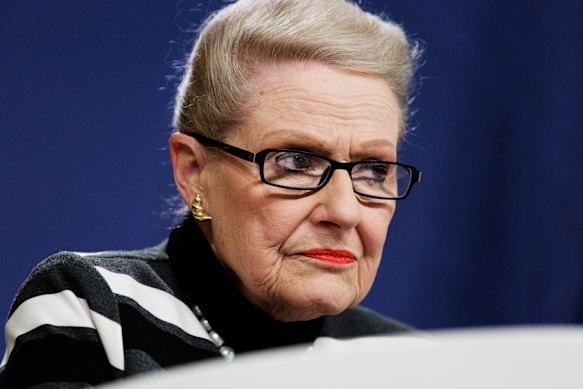
Bronwyn Bishop answering questions about her chartered helicopter flight from Melbourne to Geelong for a Liberal Party fundraiser in 2015.Credit: SMH
This week followed the script. As attention focused on the use of family reunion travel allowances – which are uncapped for senior politicians – MPs across the parliament found themselves in headlines. At the top of the list were Queensland Nationals MP Andrew Willcox and independent WA senator Fatima Payman, both of whom regularly bring their partners to Canberra to assist them with their parliamentary duties. (Abbott banned MPs from employing their relatives in the 2013 sweep.) Greens senator Sarah Hanson-Young was stung for charging taxpayers $49,902 to fly her husband, lobbyist Ben Oquist, to and from Canberra, where he works, since mid-2022. Attorney-General Michelle Rowland on Friday asked IPEA for advice about a week-long Western Australia trip in 2023, for which she billed $16,050 for three family flights.
Labor’s top spender is Trade Minister Don Farrell, who has racked up more than $116,000 on family reunion flights since Labor came to government, including trips to AFL grand finals, Australian Opens, dinner at Uluru and the opera in Sydney. It’s Farrell, as special minister of state, who is responsible for the measures governing politicians’ travel expense entitlements.
Once again, there are calls for the prime minister to fix the system.
Albanese is in a different position from Abbott, whose leadership was under pressure during the Bishop scandal. The prime minister is proud to have avoided ministerial scandal, and wants it to stay that way. Albanese defended Wells on Sunday, insisting her spending was within the rules. He bristled on Thursday, when asked if the rules were fit for purpose. “I’m not the finance minister,” he clapped back, insisting that IPEA would do its job at arm’s length.
But IPEA exists to provide advice and enforce the rules – it does not set them. The review that Abbott initiated in 2015 recommended the system face scrutiny every three years. The last time that happened was 2022. The government last year pushed out the review to every five years, delaying the probe until 2026, The Australian Financial Review reported. Then, in March this year, it delayed it again to late 2027.
“The current rules clearly don’t meet community expectation and the government should review and update them,” independent ACT senator David Pocock said. Ley has offered to meet Albanese to hash out bipartisan reforms.
By Friday, the government’s line had softened. It was Health Minister Mark Butler who came out to relay the message. He said entitlements needed to reflect the unusual nature of politicians’ jobs, but be used in a sensible way.
“I for one, will welcome the authority not just looking at the claims that Anika Wells has referred to them … but looking at whether their system is meeting those two standards,” Butler said on morning television.
“We would welcome that advice and recommendations. If they then have to be enacted through legislation, I’m sure, that’s what we would do.”
with Paul Sakkal and James Massola
Read more on Wells’ expenses
- Comcars and sports events: Wells billed taxpayers for a car to wait for hours at tennis and flew her husband to Boxing Day Tests and AFL grand finals
- James Massola analysis: This week was supposed to be a triumph. Instead, it is a trial
- Thredbo ski trip: Nearly $3000 was charged to bring Wells’ husband and two children to resort
- Birthday party: Wells attended friend’s soiree during $3600 taxpayer trip
Cut through the noise of federal politics with news, views and expert analysis. Subscribers can sign up to our weekly Inside Politics newsletter.