2 months ago
24
2 months ago
24
Major push for the key change that led to record audiences in London’s West End
We’re sorry, this feature is currently unavailable. We’re working to restore it. Please try again later.
West End-style tax incentives to supercharge Australian theatre and live music will be a NSW “priority” as state governments across the country build a case for major federal arts tax reform.
NSW claims it now has the support of the other five states and the two territories – after enlisting the Queensland Coalition government – to pursue a shake-up of the nation’s tax system and help Australia’s struggling culture sector.
NSW Treasury is fleshing out and modelling a shortlist of five priority reforms to take to a February meeting of state cultural ministers and pursue these with the Albanese government.
These incentives include the abolition of taxes on arts and music prizes and the extension of current screen and digital gaming tax incentives to theatre and live music.
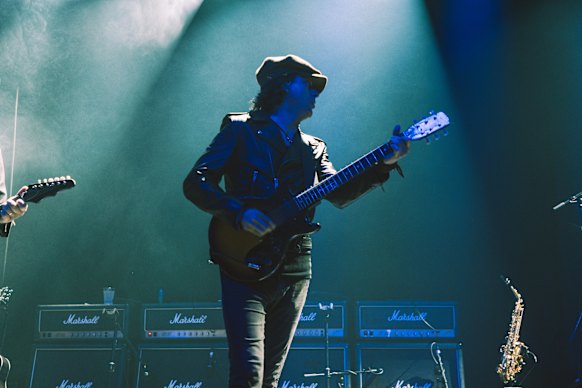
Proposed rebates for live music and theatre have received the backing of NSW government. Credit: RICHARD CLIFFORD
Both ideas emerged from September’s historic arts tax meeting, convened at the Sydney Opera House, and attended by arts ministers from NSW, Victoria, South Australia and Western Australia.
In a keynote address on Friday, NSW Arts Minister John Graham said extending the tax offset scheme to live theatre and music venues would have “high impact” benefits. Changes to the UK’s tax relief scheme introduced in 2021 have been credited with the West End’s record-breaking audiences in 2023 and 2024, but an Australian version would most likely be limited to majority-owned Australian entities and local stories.
Loading
“The objective will be to structure this so that offsets incentivise new Australian work, thereby creating and retaining more Australian intellectual property and talent,” Graham told sector leaders at the Committee of Sydney event. “This isn’t just about supporting Australian stories; it is about protecting and developing opportunities for stories to be developed in Australia and ensuring that Australian creatives and companies own the production of these new works.”
NSW foreshadowed it would also seek support from other states to back proposals allowing artists to deduct more of their losses against income from “day jobs’, and increasing the range of items arts workers can deduct from their income.
Expanding fringe benefits tax concessions could offer more competitive remuneration packages and benefits for arts workers, helping a sector known for lower salaries, persistent financial insecurity and irregular income patterns. On the philanthropy front, the NSW has embraced a proposal to increase the minimum annual distribution from philanthropic trusts to charities and arts organisations to enlarge the funding pool. Currently, 5 per cent is distributed, but foundations are banking almost twice that in investment earnings every year.
Loading
Federal Arts Minister Tony Burke said the government would consider tax breaks when its national cultural policy, Revive, comes up for review next year.
Victoria and NSW have embraced taxation reform as their arts funding allocations have stagnated or declined in real terms since peaking in the first year of the COVID pandemic.
Massive arts infrastructure programs are also weighing heavily on both states’ budgets, including NSW’s $1.4 billion Powerhouse Museum project and the $1.7 billion overhaul of the Melbourne Arts Precinct, which includes a refurbishment of the State Theatre in Victoria.
Modelling prepared for Live Performance Australia – the peak body for the live arts and entertainment industry – suggests a 40 per cent tax offset lowering pre-production costs would support the creation of more than 4000 new jobs and add almost half a billion dollars in industry value via 168 new theatrical productions in the commercial and not-for-profit sectors.
“We’re pleased that ministers from around Australia have recognised the proposal is a high-impact measure that will stimulate more and new investment in live performance by commercial and not-for-profit producers,” said LPA president Richard Evans. “The production incentive is a proven model that works in our screen and digital games as well as internationally.”
“It means more jobs for Australian creatives, more economic activity in our regions and cities driven by arts and cultural activity, and more opportunities for Australians to create and share stories for audiences across our community.”
Start the day with a summary of the day’s most important and interesting stories, analysis and insights. Sign up for our Morning Edition newsletter.
Most Viewed in Culture
Loading