2 months ago
6
2 months ago
6
The Queensland government has announced a pipeline to deliver thousands more hospital beds and improved health infrastructure across the state, but it could be years before issues plaguing the public system are brought under control.
The Crisafulli government’s $18.53 billion Hospital Rescue Plan includes an additional 2600 hospital beds within the next five years and revised construction timelines to deliver new facilities and major upgrades for hospitals in Townsville, Redcliffe, Coomera, Toowoomba and Bundaberg.
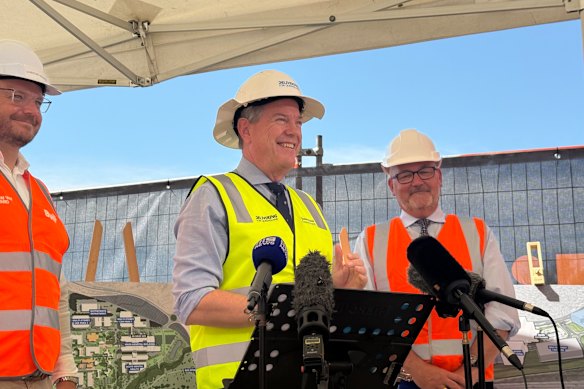
Health minister Tim Nicholls announced the Crisafulli government’s plans to deliver 2600 hospital beds across Queensland. Credit: Courtney Kruk
It comes after an independent review of the former Labor government’s hospital expansion program, headed by infrastructure consultant Sam Sangster, found significant budget blowouts and delivery delays of between three and five years for some projects.
Health Minister Tim Nicholls said the revised plan offers a “sensible pathway that has been properly worked through” to meet the needs of the growing state.
“Our plan provides realistic deadlines and realistic time frames for the staged delivery of hospital beds up to 2032,” he said.
Loading
“This is a believable plan that realistically sets out, given the challenges in the building industry, a proper time frame.”
The new direction will increase capacity across south-east Queensland with 93 new overnight beds at Princess Alexandra Hospital, 210 at Redcliffe Hospital, 112 at Logan Hospital and 112 at QEII Hospital, expected by 2028.
Construction on the new Coomera Hospital will begin next year, with 400 beds and expanded acute and specialist services to be delivered by 2031. A further 200 beds will follow in 2032.
The announcement comes amid ongoing negotiations with the federal government to secure greater public hospital funding, with Queensland rejecting an offer put forward last week.
Prime Minister Anthony Albanese offered the states an extra $3 billion, on top of $20 billion already pledged, over the next five-year term to help alleviate the number of stranded elderly and NDIS patients stuck in public hospitals, in turn reducing ambulance ramping and freeing up hospital beds.
Nicholls said the offer does not meet the state’s requirements and said the federal government must commit more to improved aged care and disability services.
“The ramping crisis is being driven by the inability to move older Australians out of our hospital beds and into residential aged care, and to younger Australians who can’t access NDIS packages,” he said.
“If we could move just 10 to 15 per cent of those stranded patients into the care that they need, we would have a lot more capacity in our hospitals.”
Most Viewed in National
Loading