2 months ago
10
2 months ago
10
For actor Madeleine West, sharing photos or information about her children online has always been done with caution.
“I’ve always held the stance that I have chosen a profession that requires some degree of public exposure, but my children haven’t, and it’s my responsibility as a parent to safeguard their privacy,” she says.
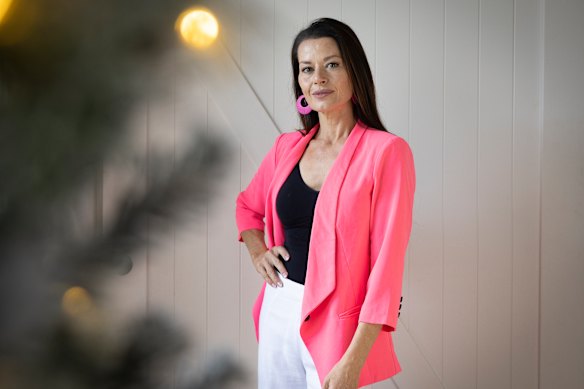
Actor and mother of seven, Madeleine West, says the decision to keep her children off her social media accounts is for their safety.Credit: Danielle Smith
West, a survivor of child sexual abuse who now works with organisation Ctrl+Shft as lead educator and child safety adviser, says that her personal and professional experiences have shaped and “further fortified” her perspective.
“In child protection and online safety education, I’ve come to realise that, inadvertently, in doing what we often do as parents, by wanting to celebrate our children because we are proud of them, by posting these on social media, we are potentially putting them at risk.”
While parents sharing their children’s image on social media, also known as “sharenting”, has long been a hotly debated topic, Australia’s social media ban aimed at protecting children under 16 from online harm prompts the question: is it time for parents to stop posting images of children under 16 altogether?
Loading
According to West, the answer is a simple, straightforward “yes”.
“Once their image is put into the public arena, it can go anywhere, and once their personal information has been posted, it becomes public property,” she says.
While most parents aren’t intentionally trying to put their children at risk when they share images of them, West says photos and information are being misused, leading to issues like identity theft, sexual grooming, AI deep fakes, scams, and fraud.
“A digital footprint, thanks to our technology, is stored forever, and we never know how that might pop up,” she says.
An eSafety spokesperson says that sharing images of your children online without their knowledge or consent when they are younger may also lead to problems for them down the track.
“[This can range] from embarrassment to developing a poor understanding of consent and respecting themselves.”
Legally, there are no laws or official guidelines in Australia about what parents can and cannot post about their children online.
And according to a spokesperson from The Office of the Australian Information Commissioner (OAIC), who developed the Children’s Online Privacy Code (a special set of rules to help protect children’s privacy when using the internet), “no specific guidance on parents posting images of children has been developed by the OAIC as part of the Social Media Minimum Age scheme”.
So, while Australian children under 16 navigate the early weeks of the social media ban, parents can continue to post images of them and information about them.
Internationally, other countries are addressing the issue through awareness campaigns.
One, the “Pause Before You Post” campaign launched last month by Ireland’s Data Protection Commission aims to make parents think twice about what they share online about their children by highlighting how small, seemingly harmless details – like their name or hobbies – can build a picture for a stranger to potentially exploit.
And these kinds of initiatives are gaining attention, with some parents choosing to no longer post images of their children online or, if they do, to cover their faces and other identifiable features. One Australian parent and social media influencer, Steph Clare Smith, is among them.
The entrepreneur, whose son was once a regular feature on her Instagram grid, is now choosing to blur his face to give him more privacy as he gets older.
“I understand that there are photos and stuff of him up there from the past. Our intention was not to erase him completely from the internet,” she posted on her account.
“It was to avoid putting up anything from now on as he’s growing into it, as he looks like a little boy.”
Loading
Taking steps like Smith by pixelating, blurring, or using emojis to cover children’s faces and identifiable features like school logos can be helpful in reducing the risk when posting children online, says West. Other tips include turning location data off, not posting in real time – which might give away your routine – and limiting who has access to your accounts through privacy settings.
West also suggests something she tells her own kids: avoid symmetrical photos.
“It’s very hard to deepfake asymmetrical photos,” she says.
“So, I’m saying to my kids, never look straight down the barrel of the camera. Always tilt your head. Turn to one side. Put your shoulder in the image. Put your fingers in there – AI tools are bad at editing fingers.”
While some parents are taking this route, other influencers like Jaclyn Colley are happy to continue sharing images of their children online.
Colley, whose two daughters, Layla and Zahlia, regularly feature in her posts, says doing so is part and parcel of her profession – creating lifestyle, travel and motherhood content.
“I don’t post every day, but usually a few times a week, depending on what’s happening in life,” Colley says.
Colley says the content predominantly shared on Instagram is a mix of parenting moments, such as milestones, funny habits, family-friendly holidays, and collaborations with kids’ clothing brands.
Loading
“Most of my audience are mums or parents, so sharing our real family life makes sense and keeps the content authentic,’ she says.
Additionally, like many other parents, Colley shares photos of her children on social media to document their lives.
“Instagram has become like a digital scrapbook for us, and I love being able to look back through the memories,” she says.
There is also a sense of community, says Colley, a positive that many parents who share their kids’ images online also cite. While her account is public, the safety of her kids is always at the forefront of Colley’s mind.
“I never share exact school names, street addresses or real-time locations,” she says.
“I also don’t share anything that feels overly personal or vulnerable, like bath photos, medical information, school locations, or anything that could embarrass them later.”
Colley also ensures that her kids are happy to take part in content and never features any other children without express parental consent. Along with parents like Colley, many other groups, organisations, and institutions, including schools, also post children’s images online.
By doing this, Kirra Pendergast, founder of Ctrl+Shft, says not only are they perpetuating the associated online risks, but in the wake of the social media ban, it highlights a “total irony”.
“Schools are still posting student photos and events on platforms that students themselves are being banned from,” she says.
Loading
Dr Tiffani Apps, a senior lecturer for digital technologies for learning and Chief ARC Centre of Excellence for the Digital Child, agrees.
“Our research about the ways schools share children’s data on public social media pages highlights a clear tension: while children are officially restricted from participating in social media, their digital presence is still being shaped and shared by adults, often without their informed consent or understanding.”
While “sharenting” isn’t straightforward, experts agree that the launch of the social media ban is an opportunity for families to talk about social media use and its impacts, and to think about digital consent.
“It’s really important to identify that we are our children’s first and foremost role models,” says West.
“We can’t expect kids under 16 to shut everything off if we’re still at the dinner table scrolling. It’s a great opportunity for us to revisit our own behaviours and dependency on social media.”
Make the most of your health, relationships, fitness and nutrition with our Live Well newsletter. Get it in your inbox every Monday.
Most Viewed in Lifestyle
Loading