3 months ago
7
3 months ago
7
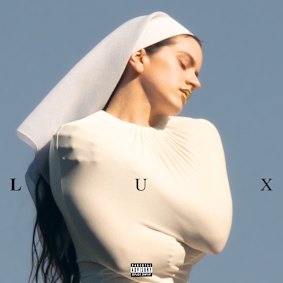
Lux, by Rosalia: an audacious left turn from a pop auteur.
Rosalia, Lux
On La Fama, the Weeknd-featuring lead single from her radical last album, 2022’s Motomami, Rosalia was already questioning her relationship with pop stardom. “Duermo con ella, pero nunca me la voy a casar” (“I’ll sleep with her, but never marry her”), she sang warily. Her new album Lux puts a spear in the point’s side. This is the pop star as ascetic, devoted to her art like a believer devoted to God.
By any means, Lux is intense. It’s an epic that shows its labour. Three years in the making, the album finds the Spanish artist singing in 13 languages including Catalan, Arabic, Ukrainian, Sicilian, and Japanese, and recording with the London Symphony Orchestra in pieces composed alongside Pulitzer Prize-winning classical artist Caroline Shaw and pop savants such as Ryan Tedder and Tobias Jesso Jr.
Created while she navigated her split from her ex-fiance, the Puerto Rican singer Rauw Alejandro, and amid increasing estrangement from the accolades and attention afforded by Motomami’s success, Rosalia found inspiration in the hagiographies of female saints. In interviews, she’s cycled through them like she was picking a name for her confirmation.
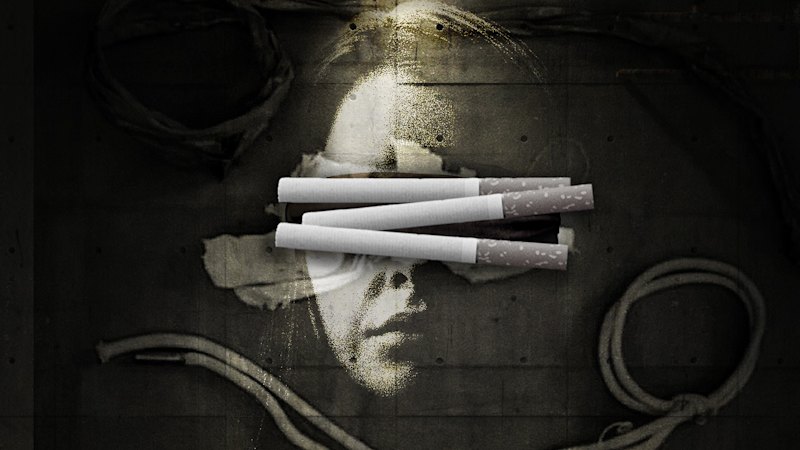
Lead single Berghain, a Mahler-esque headbanger’s ball, draws on the 12th-century German abbess Hildegard von Bingen who, compelled by debilitating visions of God, locked herself away to compose songs of devotion. On Porcelana, where she pairs a trap flow against atonal strings, Rosalia evokes the 17th-century Japanese monk Ryonen Genso who, after being rejected from a Buddhist temple because of her beauty, burned and scarred her face to prove her devotion to God.
On De Madruga, co-produced by Pharrell Williams, she’s exerting her God-given right for vengeance by honouring the 10th-century regent Saint Olga of Kiev, who waylaid her husband’s murderers with methodical brutality. And on Focu’ ranni – among three tracks only made available on Lux’s physical versions – she finds a cypher in Saint Rosalia of Palermo, a religious girl from a noble Sicilian family who broke off her wedding and fled to a cave to live out her remaining days in hermitude.
She also found muses in Saint Bjork and Saint Patti Smith (whose voices both grace the album), female musicians who chose devotion to their art over commercial considerations at every step. By the end of the album, over a booming timpani and a choral choir, Rosalia’s singing from her grave, asking the world to throw red wine and chocolates on her coffin and do motorcycle burnouts and dances on her cadaver.
It is, to understate it, a lot. And it’s perhaps fitting that by the end of making the album, as Rosalia told Apple Music’s Zane Lowe, she suffered a nervous breakdown. Simone Weil would approve.
What to make of this startling left turn? In part, it feels like an honouring of Rosalia’s classical pedigree; the now 33-year-old studied guitar from 9 and flamenco from 13 at Barcelona’s Catalonia College of Music, and has been accused of perverting the form ever since her breakthrough, 2018’s El Mal Querer. After Motomami, which earned acclaim but also cries of cultural appropriation for its engagement with Latin American club sounds, Lux leans into European traditions, its liturgical bent a pointed rejection of pop trends and its hedonistic spoils. At times, it plays like a post-breakup surge of Old Testament violence.
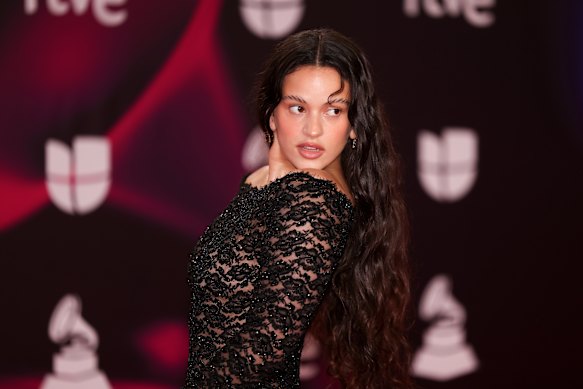
Rosalia at the 2023 Latin Grammy Awards, the cite of her crowning success with Motomami.Credit: Vianney Le Caer/Invision/AP
As ever, Rosalia’s at her most intoxicating when lines are blurred, when her classical foundation buffets against modern modes. On Reliquia, as she aligns herself with the saints whose remnants pepper cathedrals throughout Europe – “Me, who lost my hands in Jerez and my eyes in Rome, my heels in Milan,” she sings in Spanish – her melisma writhes over staccato strings and thudding beats, somehow finding the emotional nexus between Vivaldi and Yeezus.
On Divinize, the holy and the base overlap, like on Madonna’s Like a Prayer, FKA Twigs’ Mary Magdalene or Leonard Cohen’s Hallelujah; “Pray on my spine, it’s a rosary,” Rosalia sings, over rattling beats and ascending strings. The final stanza of La Yugular is expansive poetry, as she contemplates the devotion held in the weight of a soul (“a glass of milk occupies an army, and an army fits inside a golf ball, and a golf ball occupies the Titanic, and the Titanic fits inside a lipstick”).
On the waltzing La Perla, the album’s lightest moment, she’s engaging with modern pop’s key form – the barely veiled kiss-off – and taking tabloid-baiting jabs at “an emotional terrorist, the greatest disaster in the world” (it’s almost certainly aimed at Alejandro). It’s necessary because, at times, the solemnity on Lux is a lot to bear.
Loading
Memoria, a fado written by and performed with Portuguese artist Carminho, is so reverential you feel robbed. La Rumba del Perdon is Gipsy Kings for a new generation. And despite its outlandish vocals and closing wink, Mio Cristo Piange Diamanti, Rosalia’s attempt at an aria, just makes me think of Andrea Bocelli in stadium-mode. You can picture The Voice contestants wowing onlookers with it at Carols by Candlelight.
But the audacity is the point. Online, Lux has already sparked debates over whether it constitutes pop or not, or classical or not, or opera or not. You’d imagine Rosalia would embrace the discourse with a bow of her halo and a warm benediction. As any Catholic knows, saintin’ ain’t easy.
Rosalia’s Lux is out now.
Most Viewed in Culture
Loading