3 months ago
16
3 months ago
16
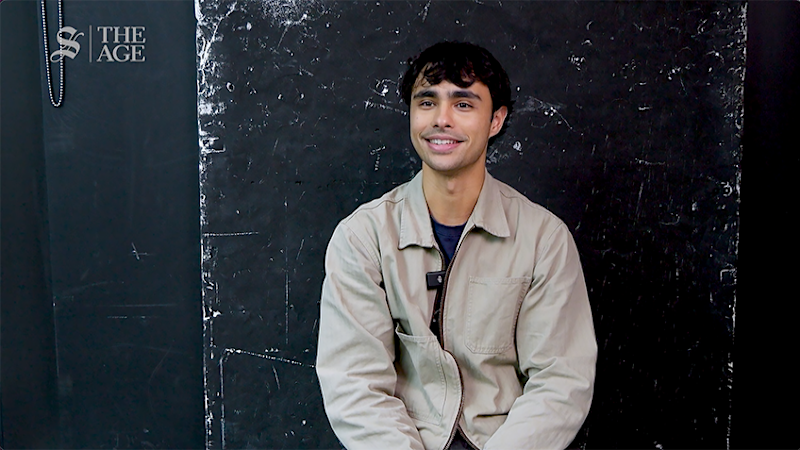
John Foley has a long-term goal to buy a home but paying $310 a week rent to live in a share house with four others doesn’t make it easy to save.
He may qualify for two government programs that cut the deposit required to purchase but to find an affordable house he’d need to move far from friends and work.

John Foley has a long-term goal of buying a home.Credit: Louise Kennerley
“It’s nice that there is some kind of acknowledgment of the rising house prices,” said the 37-year-old nurse, who lives in Glebe in inner Sydney.
“I feel like you’re just increasing demand; you’re giving more income to more people, which means more people will buy houses, which means there’s less available and the ones that are available will go up in price.”
Loading
The federal government’s Help to Buy shared equity scheme opens on Friday and will allow first home buyers to co-purchase with the government.
Experts say it will help some buyers on modest incomes. But it doesn’t change how high property prices have become.
Buyers pay a deposit as small as 2 per cent, instead of a standard 20 per cent. The federal government contributes up to 30 per cent of the price of an existing home, or up to 40 per cent of a new home. Buyers need a home loan for the rest.
Purchase prices are capped at $1.3 million in Sydney, $950,000 in Melbourne, $1 million in Brisbane and $850,000 in Perth.
Individuals must earn $100,000 a year or below, while for single parents and joint applicants the cap is $160,000.
Because the government chips in, buyers have smaller mortgage repayments than in the popular, recently expanded Australian Government 5% Deposit Scheme.
Foley, who earns below $100,000, likes that the government is supporting first home buyers and helping shoulder the repayments.
But he worries the upward pressure on prices now could make it harder to buy in future, once he’s ready.
“It feels a little impossible at the moment,” said Foley, who has just retrained as a graphic designer. Going back to study hit his savings.
There’s also the price caps. The median house price in his suburb is $2.4 million, on Domain data.
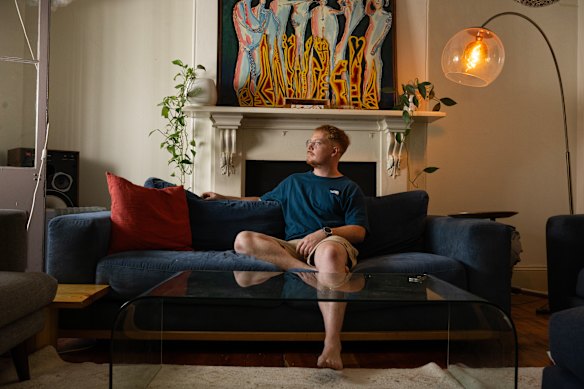
Homes are pricey in John Foley’s neighbourhood. Credit: Louise Kennerley
“I would imagine I’d have to move to Newcastle,” he joked. “I’d love to keep living in Glebe but I don’t think you could get a place for less than $2 million, realistically. You could probably buy an apartment but it definitely limits your options.”
He would like to see fewer tax incentives to own multiple homes, feeling this makes it hard for first home buyers to get in.
Kate Browne, head of research at financial comparison site Compare Club, thought the shared equity program might suit someone looking to stay in a home long-term with lower mortgage repayments, as sellers would split the proceeds with the government.
“Because the property market is still so hot in places like Sydney and Melbourne and Brisbane it’s not going to suit everyone, but it will help some people,” she said.
Compare Club modelling shows home owners could save between $1000 and $2000 a month in repayments if they co-bought with the government.
“That’s huge. We’re right in a situation where we’re unlikely to see any rate cuts,” she said. “If you are looking to keep your mortgage repayments on a fairly reduced amount and a doable amount, that is a massive reassurance for people.”
Cotality head of Australian research Eliza Owen thought Help to Buy was a good initiative for some, and the limit of 10,000 places a year meant it would have relatively little effect on overall demand.
Loading
The income caps and smaller loan sizes make the program well targeted, she said, but warned some Australians earn too little to consider it and would need rental accommodation or public housing.
“While it’s well targeted and will help some people, it’s not a mass solution to declining home ownership and lack of affordability. It’s tinkering around the edges,” she said.
“We should be open to conversations about taking pressure off the market more broadly, and more housing supply is obviously one way to do that, but it seems that we’ve not really looked at the other side of the equation, the demand side. And I guess that is a harder conversation to have around things like tax reform, how we incentivise property as an investment.”
Brendan Coates, Grattan Institute housing and economic security program director, thought Help to Buy would help low-income earners without access to parental funds, and middle-aged Australians who lose their family home during a divorce.
“It’s not going to be the thing that makes housing affordable to most Australians but it has a role to play,” he said.
He said Help to Buy would barely affect prices but thought the income thresholds were too high as about three-quarters of working-age singles earn less than $100,000 a year.
“It’s building more homes that’s ultimately going to solve this crisis and unfortunately the federal government has been much less successful there.”
Start the day with a summary of the day’s most important and interesting stories, analysis and insights. Sign up for our Morning Edition newsletter.
Most Viewed in Property
Loading