2 months ago
21
2 months ago
21
It took years to come up with a plan to cut road deaths, and just 11 days to kill it
A federal proposal to reduce default speed limits on poor-quality country roads, under consideration for seven years, was dumped 11 days after submissions to a government consultation paper closed.
Road safety experts have decried the decision as a win for populism over science and evidence.
While it has been on the agenda since 2018, a paper released in October by the federal Office of Road Safety argued speed was a major factor contributing to the road deaths of 1294 people and the 30,000 people seriously injured in 2024.
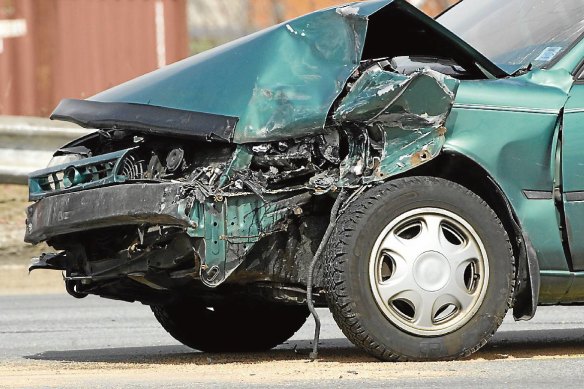
The risk of being killed on a regional or remote road is 11 times higher compared to a road in a major city, according to the study.Credit: iStock
It argued a reduction in the default speed limit from 100km/h to 80km/h on unsignposted roads would save hundreds of lives, billions of dollars and avoid thousands of injuries.
“The risk of being killed on a regional or remote road is 11 times higher compared to a road in a major city,” said the regulatory impact study.
It attracted opposition from farmers, truckers and rural residents who said it would decrease productivity, rob them of valuable time with their families and deflect attention from the need to repair roads.
NSW Farmers Association president Xavier Martin said: “Fixing the real driver of road trauma – that is, our ruined roads – is what will make a real difference.”
About 11,000 submissions were received, many from individuals.
Eleven days later, the proposal was scrapped by state and federal transport ministers. “No further work is being undertaken on open road default speed limits,” a communique from the November 21 meeting states.
The group had been given a collated summary of the submissions by Minister for Infrastructure, Transport, Regional Development and Local Government Catherine King.
She said ministers were concerned about a blanket approach to speed limits and reiterated their responsibility for setting speed limits in their own jurisdictions.
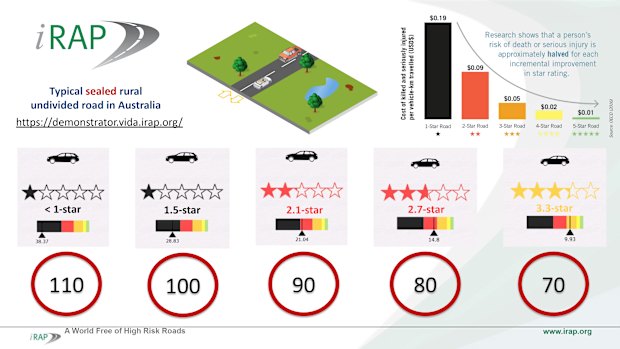
Research by iRAP found the risk of death or injury is nearly halved for each improvement in the star rating of the road. The risk of dying on a poor country road at 100 or 110 km/h was found to be extremely high.Credit: iRAP
King said: “Councils are upgrading regional roads across the country, thanks to our doubling of funding for the Roads to Recovery program, and we are working with states and territories to invest billions to upgrade our national road network.”
Australasian College of Road Safety (ACRS) chief executive Dr Ingrid Johnston said the decision was made before the 11,000 responses could be evaluated.
“Nobody would’ve been able to read that many by then,” Johnston said. “Was this decision based on politics or the evidence?”
Johnston said the government should have conducted an education campaign on the physics of speed and human frailty before releasing the paper.
“That didn’t happen. Instead, this important review, which has been an action waiting to be implemented for years, was conducted with undue haste as the end of this [existing road safety strategy, due to finish at the end of 2025] looms.
“Even if the money tree delivered, it would realistically take decades to get through all that work. Meanwhile, people are dying and something needs to be done. That something is reducing the speed limits.”
More than 150 experts sent an open letter to government supporting the speed limit proposal.
This included the global expert R.F. Soames Job, who previously directed the NSW Office of Road Safety; UNSW’s Professor of Public Health, Rebecca Ivers; Austroads; and road safety centres in WA and Victoria, including Safer Australian Roads and Highways.
Rob McInerney, head of the international road ratings group, was shocked by the government’s decision to abandon the process and stick with the status quo despite the rising death toll.
Road toll rises, speed limits remain unchanged
NSW recorded 369 deaths (a 15.7 per cent increase on previous 12 months in the year to October), Queensland with 309 (6.6 per cent increase). Australian Capital Territory had the lowest number of deaths in the past 12 months, with nine fatalities (unchanged).
He had warned of the need for more “evidence-based inputs” to “outweigh the usual volume of responses that support unsafe speeds”.
Loading
Research by iRAP, which operates AusRAP star system, found the risk of death or injury was nearly halved for each star added.
Transport for NSW said more than 71 per cent of travel takes place on state roads with a 3-star or higher rating. These roads have the most modern safety features, such as barriers, divided dual carriageways and wide shoulders.
The rest were one or two stars, including those with single lanes, no barriers and hazards such as trees or poles close to the road, according to this map of star-rated roads by Transport for NSW.
NSW is the Australian jurisdiction closest to attaining the national target of 80 per cent of all road travel being taken on roads rated 3 stars or more by 2030. It is investing $2 billion using AusRAP data to identify roads where work would reduce trauma.
Most Viewed in National
Loading