3 months ago
18
3 months ago
18
When George Frideric Handel chose Dublin for the 1742 premiere of his great oratorio, Messiah, his controversial choice of venue ruffled more than a few establishment feathers in London.
However, Pinchgut Opera artistic director and self-confessed Handel nerd Erin Helyard has a theory involving blackmail, infidelity and a spicy sex scandal to explain Handel’s thinking.
At the centre of the intrigue is 18th century actor/singer Susannah Cibber, described by Helyard as “the Meryl Streep of the era”.

Mezzo-soprano Ashlyn Tymms is one of the performers in this week’s Messiah.Credit: Steven Siewert
Years before the famous Dublin concert, Cibber became embroiled in a scandal, largely encouraged by her husband, Theophilus.
“Her husband was quite a nasty man,” says Helyard. “He seems somehow to have engineered a sort of threesome or weird sexual situation with an extra person who came into their marriage.”
Theophilus sued for adultery in a case that titillated polite – and not-so-polite – society in London.
“Her reputation was destroyed and she was slandered in the streets,” says Helyard.
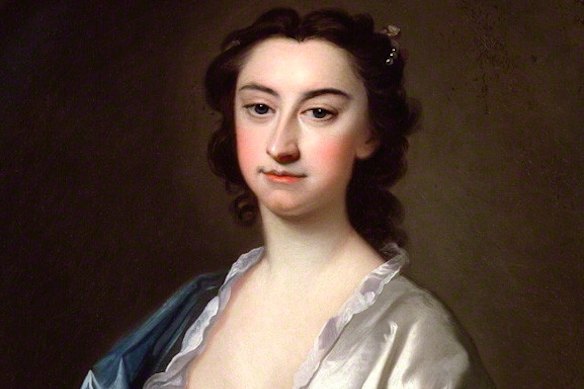
A portrait of Susannah Cibber, “the Meryl Streep of her era”.Credit: National Portrait Gallery London
Ultimately, however, Cibber was rehabilitated in the court of public opinion as the wronged party. Key to the restoration of her reputation was the support of her friend Handel. She had fled to Dublin to avoid the gossip, where the baroque master handed her the plum solo role in his masterwork.
When she sang the central aria, He was despised and rejected … on April 13, 1742, many in the audience were moved to tears. Clergyman Reverend Patrick Delany even stood up and declared: “Woman, for this be all thy sins forgiven thee!”
“I think it was Handel’s way of trying to protect and restore her and to heal the rifts,” says Helyard. “She then became the greatest actress of the 18th century.”
The emotional psycho-drama of Susannah’s story is just one aspect of Helyard’s lifelong fascination with Messiah.
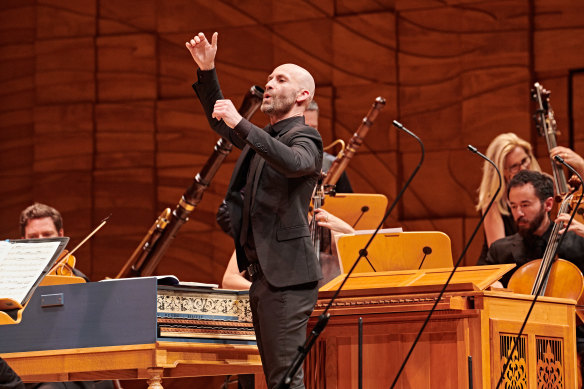
Pinchgut’s Erin Helyard has long been fascinated by Messiah.
Mostly heard these days with a large orchestra and a chorus of up to 200 voices, that original performance in Dublin was sung by barely a dozen performers and a similarly sized instrumental ensemble.
“I’ve done it with most of the major symphony orchestras in Australia and New Zealand,” says Helyard, who was in his 20s when he first conducted the work.
“Now I’m doing it with my own group so it’s kind of like coming home.”
‘I’m always in tears by the end because there is something about it that really pulls at the emotions.’
Erin HelyardAn elite group of 12 singers, including mezzo-soprano Ashlyn Tymms singing the part originally performed by Susannah, will be accompanied by players of the Orchestra of the Antipodes on period instruments.
Helyard says the experience will be vastly different from the massed choir versions familiar to most modern audiences.
“It’s wonderful to do this early version because you get a clarity, a transparency and a vitality that is different from the larger versions.”
Loading
However, regardless of the type of performance, the effect on Helyard remains the same.
“I’m always in tears by the end because there is something about it that really pulls at the emotions,” he says.
Messiah, original Dublin version, City Recital Hall, November 27 - December 3.
Most Viewed in Culture
Loading