3 months ago
9
3 months ago
9
By Matthew Burgess and Carmeli Argana
January 6, 2026 — 12.47pm
A pullback from Australian assets is accelerating as investors shift capital toward hot markets globally that promise returns far outpacing the muted prospects at home.
MLC Asset Management and JPMorgan Asset Management are among those expecting stronger equity returns offshore, while T. Rowe Price is betting the Reserve Bank’s hawkish stance will flatten the yield curve for bonds.
The message for investors chasing upside in Australian assets is clear: look elsewhere. The benchmark S&P/ASX 200 Index lagged peers in 2025, while bond prices dropped as the central bank weighs pivoting back to tightening monetary policy.
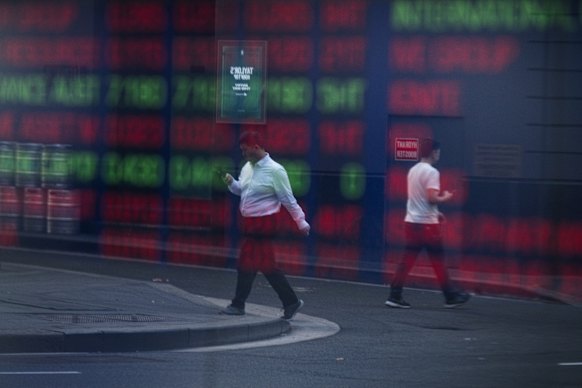
International investors are walking away from the Australian sharemarket.Credit: Louie Douvis
“We’re under-allocated to Australia” shares as it’s hard to see them outperform in 2026, said Patrick Nicoll, head of asset allocation at MLC. “We’re also short duration in Australia, expecting [bond] yields to rise” as the RBA lifts rates again.
Chief among investor concern is the weak profit growth among some of Australia’s largest companies. The Commonwealth Bank – which accounts for about 10 per cent of the ASX 200 — trimmed gains after a November update highlighted margin pressure amid valuation concerns. Biotech giant CSL capped its worst year in more than two decades as disappointing earnings and a soft US vaccine market dented investor confidence.
Loading
As a result, Australian stocks may gain less than 5 per cent over the next 12 months, about one-third the expected rally in the MSCI All-Country World Index, according to analyst price targets compiled by Bloomberg.
Earnings growth ahead will be driven by cyclical metals and a mining recovery, which is “likely to be the leader in terms of earnings depending on the pathway for inflation and rates,” according to Penny Heard, head of equities at UniSuper. Domestically focused sectors like industrial and consumer discretionary may face challenges ahead, she added.
Meanwhile, the RBA’s hawkish slant has wreaked havoc on the nation’s debt. Traders expect the central bank will hike rates again by June, with a one-third chance it will lift rates in February, according to swaps data compiled by Bloomberg.
Those bets have propelled yields on the nation’s benchmark 10-year bond to the highest level in the developed world. A gauge tracking debt returns in Australia rose 2.3 per cent in 2025 compared to the 6.8 per cent return from international peers, according to data compiled by Bloomberg.
Loading
It’s not all gloom. RBA bets have already narrowed the three- to 10-year bond gap to about 60 basis points, which T. Rowe Price anticipates will fall to the low teens as the market debates rate hikes, said Scott Solomon, a portfolio manager in London.
The rate differential with the US, where rates are on the way down, could also push the Australian dollar to US70¢ by mid-year, a level last seen in February 2023, he added. It was trading just under US67¢ on Monday.
The prospect of higher rates has driven rotation into miners from banking stocks on soaring metal prices and a strong currency. Australia’s sharemarket also offers a dividend yield at around 3.2 per cent, almost twice the 1.8 per cent offered on MSCI’s global gauge.
Despite the relative value, Australia is likely to remain a global laggard as the AI theme dominates North Asian and US stocks.
Investors have “a pretty constructive outlook for Australia relative to where it has been,” said Kerry Craig, a global market strategist at JPMorgan in Melbourne. “But we would still see international markets doing better.”
Bloomberg
The Market Recap newsletter is a wrap of the day’s trading. Get it each weekday afternoon.
Most Viewed in Business
Loading