3 months ago
31
3 months ago
31
Opinion
January 18, 2026 — 5.01am
January 18, 2026 — 5.01am
A lot of fuss is made about resolutions at the start of every new year. That people are so ready and eager for a reset after December – a month notorious for being busy, expensive and usually involving a few late nights with champagne involved – is hardly surprising.
But as all of us would know (and some of us better than others), setting resolutions is easy. It’s making sure they’re achievable, and then sticking with them, that’s the really difficult part.
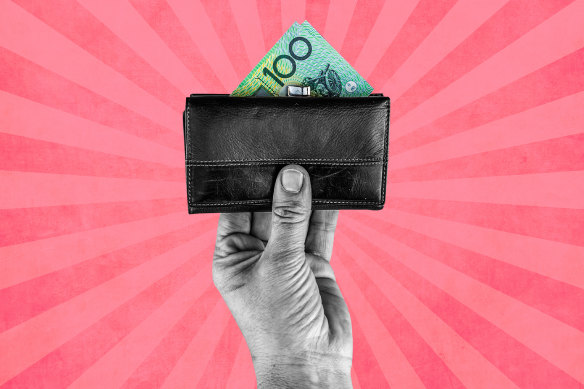
A spare $1000 in your wallet can make all the difference.Credit: Marija Ercegovac
To be clear, it’s not that I’m anti-resolutions, per se. In fact, I deeply believe in the power of goal setting and am a major fan of ticking things off a list. It’s just that I also think if you’re ready to make some changes or try something new, you don’t need to wait for a new year to take the plunge and get started.
The good news is, at least half of you might already have this one – pardon the pun – in the bank. But according to a Finder survey from June 2025 that tracked the financial wellness of Australians, almost half of us don’t.
Which is why it doesn’t matter if you haven’t yet set your 2026 financial goals. Yes, we’re three weeks into January, but so what? There’s still 49 weeks to go, which is plenty of time to play catch up on the number one money goal every Australian needs to have this year: ensuring you have an emergency savings account with $1000 in the bank.
If that sounds painfully easy to you, or you confidently know that you’ve already got more than that tucked away, congratulations and good job! But if you’re among the 9.3 million Australians, which is roughly 43 per cent of adults, that have less than $1000 in their immediate savings, we need to talk.
Here’s the thing about starting small: once you start to see results, it becomes addictive.
The 2025 survey found that among those 9.3 million people, the average savings balance was just $215. It also found that 18 per cent of adult Australians had no savings at all.
Given the sustained cost-of-living crisis we’ve been experiencing for a number of years now, this isn’t entirely surprising. For a lot of us, 2025 could best be described as “one of those years”. One survey from Money.com.au found that between 2024 and 2025, our savings habits went backwards, with a balance of 9.7 per cent less last year than the year before.
But while it’s entirely understandable how so many people found themselves in this position, the cold hard truth is that it is seriously dangerous and in urgent need of remedying.
Loading
The first question you might have is why $1000 as a savings goal? Why not $5000 or $10,000? Or why not go bigger and have the goal of an emergency fund that covers three months of living expenses and salary?
And the answer to this is simple: if you want to develop a healthy habit, you need to start small and with a goal that’s actually achievable. No one – or at least very few people – show up to run the Melbourne Marathon without having spent months or years training to be able to run such long distances. The people who do have the confidence (read: delusion) to wing it with no preparation, invariably fail.
In an ideal world, sure, all of us would be saving at least 20 per cent of our paychecks each week. If you’re earning the median salary of $74,100, that would see you putting aside $14,820 each year.
Again, if you can and are doing that, amazing. But again, with so many people paying more on rent or mortgages, groceries, utilities, transport and other daily expenses than ever before, that option simply isn’t on the table.
The problem with knowing this is that it can lead to you feeling overwhelmed, frustrated and wondering what’s the point in trying. Which once again brings me to the point of starting small and with a goal that’s actually achievable.
Yes, $1000 is an arbitrary figure in theory. But it requires just $20.40 to be stashed away each week if you spread it out across an entire year, or $40.80 a fortnight if you can smash it out in six months.
And here’s the thing about starting small: once you start to see results, it becomes addictive. This is especially true when it comes to our financial goals and habits. When you have only $100 or $215 to your name, stopping yourself from spending it can feel pointless. After all, it’s a relatively small amount in the grand scheme of things.
But by purposefully setting aside a small portion each time you’re paid and vowing you’re not going to touch it, this mindset tends to change.
This brings us to the question of where to save your money. Personally, I’m a big fan of setting up a savings account that is separate from your everyday spending account and setting up an automatic transfer for the day you get paid.
Loading
That way, the money is taken out before you even have the chance to spend it, and you quickly learn to budget without it – especially if it’s a small amount like $20 or $40 a week. Choosing a high-interest savings account can be great, but it’s worth checking the fine print with your bank (some have minimum monthly contribution requirements, while others may penalise you if you need to withdraw the savings before a certain amount of time has passed).
If you’re thinking you simply do not have a spare $20 per week to find, it’s worth forensically going through your spending habits. Almost always, there are big and small splurges that add up.
And at $20 a week, this looks like buying lunch once less a week, or skipping four takeaway coffees. At $40, it’s borrowing that book you wanted to read from the local library instead of buying it brand new.
I’m not giving these examples to shame people for their habits, either. Instead, it’s a reminder that small and seemingly inane purchases really do add up.
Yes, $1000 might not be the dream buffer. But if your car breaks down, your fridge breaks, or you wake up with a toothache, it’s an amount that sure will help. If it helps foster new habits that last all year, that’s even better.
Victoria Devine is an award-winning retired financial adviser, a bestselling author and host of Australia’s No.1 finance podcast, She’s on the Money. She is also founder and director of Zella Money.
- Advice given in this article is general in nature and is not intended to influence readers’ decisions about investing or financial products. They should always seek their own professional advice that takes into account their personal circumstances before making any financial decisions.
Expert tips on how to save, invest and make the most of your money delivered to your inbox every Sunday. Sign up for our Real Money newsletter.
Most Viewed in Money
Loading