3 months ago
38
3 months ago
38
Samantha PolingBBC Panorama
Watch: Kennel owner shows BBC where dozens of aggressive seized dogs, including XL bullies, are now housed
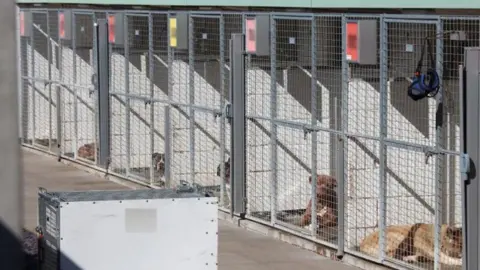
Behind the high fences, under the watch of CCTV cameras, there is a loud chorus of barks. When dangerous or banned dogs are seized, this is where many of them are taken.
Panorama was given rare access to one of the private specialist kennels now regularly used to hold these dogs since XL bully bans were introduced across the UK in 2024. The kennels take on seized or abandoned animals that police are unable to house themselves.
We have been asked not to identify the kennels' location or the staff. Some of the dogs have been seized from organised crime members, who could try to take them back or harm staff, said the man who runs the kennels, who we are calling Mark.
This is one site among seven run by the same company, which together house more than 500 XL bullies. Every kennel here is full when we visit and many of them are covered by screens, because some of the dogs are so volatile our presence could provoke them.
When an attack happens, Mark and his team get the call to go and seize the dog. Sometimes it is still with the body of its victim, Mark tells us.
"It's bad with an adult. It's even harder with a kid for me," Mark says. "I hate school holidays. I hate the half-term. I hate Christmas. I dread the phone ringing, because the bites do increase during the holiday period and half-term and it's just horrendous."
Official police figures show that dog attacks in general have been rising year on year in the UK since 2018, and our research has found that in the 12 months following the ban, at least six people were killed in attacks involving XL bullies.
Attacks are likely to get worse before they get better, as dogs bought before the ban reach maturity, the police tactical lead for dangerous dogs in England and Wales told us.
The family of Morgan Dorsett - who was killed at the age of 19 by an XL bully after the ban came into force - also spoke to Panorama and called for the legislation to be made tougher. They want it to focus more on the owners as well as the dogs, with checks like those for firearms certificates.

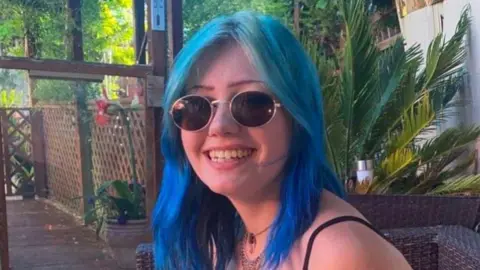
Morgan Dorsett was killed by an XL bully last year
"The legislation doesn't work. My daughter wouldn't be dead now if it did work," Morgan Dorsett's mother, Marie Smith, told us.
"The law needs to change."
In the two days that followed our visit, Mark says he and his team around the UK were called to another 39 separate dog attacks.
Seventeen of them involved XL bullies, leaving nine people with life-changing injuries.
'Dangerously out of control'
As he leads us into the facility, Mark warns us to prepare ourselves.
"We've never let cameras in before, but people need to understand what is happening in society, what they're reading in the papers, they need to understand it. This is a problem."
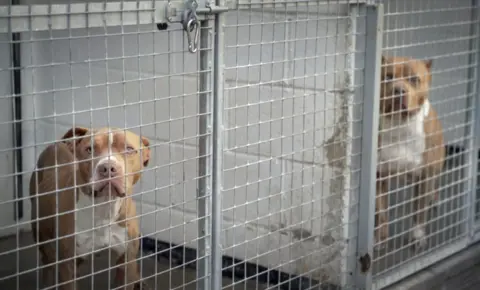
In row upon row of metal cages, 120 dangerous dogs are being held at this site. All are either banned breeds or have shown high levels of aggression.
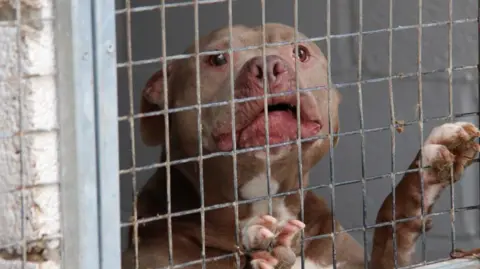
Dogs in the kennels are graded - green for the least aggressive, and black for the most
Some of the dogs self-harm or can become instantly aggressive, throwing themselves at the metal bars. The week before we visited, one dog had even managed to break out of its kennel into one next door.
As we walk around the site, each cage has a large, coloured sign attached. Every dog has been graded - green for the least aggressive, and black for the most.
One sign on a black cage reads: "Dangerously out of control, bitten a neighbour on the face, breached exemption." Another says: "Bite score five, potentially fatal."
Before the XL bully ban, 90% of the dogs here would be graded green, Mark says. Now the level of aggression has changed - only two out of 120 dogs have this grade.
"We're always at capacity," Mark says. "There is never a time when our kennels aren't full. And in the last few years, it's XL bullies filling them."
He says the scenes he has witnessed attending some calls after dog attacks have been "like a horror movie".
"I've seen too many life-changing injuries over the last three years, more than people can even realise."
His phone then rings. A person has been attacked by their dog in a car, and is stuck inside it, with the dog. Police need Mark on the scene urgently.
'Concentrate on threat, harm and risk'
Under the new legislation in 2024, XL bully owners in England and Wales had to register their dogs and agree to lifelong restrictions, including muzzling them, insuring them, and having them neutered - a measure designed to eradicate the breed altogether.
The alternative for owners was to take £200 in government compensation and have their dog put down. If they did neither, they risked their pet being seized and destroyed.
There are similar bans in Scotland and Northern Ireland.
The number of dangerous animals needing to be put in kennels has risen more than a third since the ban, says Patrick O'Hara, tactical lead for dangerous dogs for the National Police Chiefs' Council in England and Wales.
"I think we will continue to see dog attacks as these dogs start to come of age and reach maturity," says police tactical lead Patrick O'Hara
The increase comes at a price - housing them in kennels rose from £4m in 2018 to £25m in the first year of the ban, O'Hara says.
Police are having to decide where to focus their resources because of the number of dangerous-dog callouts, he says.
"We're just going to have to decide and concentrate on threat, harm and risk where there is more of a risk to the public than those lower-level cases," he says.
Dogs seized because of a criminal allegation - where owners have breached exemptions or the animal has been involved in an attack - must remain in the kennels until criminal proceedings are concluded. The dogs are then returned or put down.
Mark says that 85% of such cases in his kennels result in the dog being returned to its owner.
"Some of these dogs shouldn't be going home… that terrifies me, that they're going to be coming back in. And dogs have gone home that have bitten and come back," he says.
"I certainly didn't come into this business to put dogs to sleep," says kennel owner "Mark"
While many of the dogs at Mark's kennels have attacked people, some have just been abandoned.
In the year before the ban, the RSPCA reported 21 XL bullies being dumped by their owners in England and Wales. In the first six months after the ban, 129 were abandoned.
By law, abandoned dogs must be kept for seven days to allow owners an opportunity to claim them, but are put down on the eighth day if they are a banned breed, as they are not allowed to be rehomed.
"I certainly didn't come into this business to put dogs to sleep. But would you rehome that dog, not knowing anything? Would you put your name to it? Because I wouldn't," Mark says.
"I'm worried about when I have to sit in front of a coroner and say I'm sorry I rehomed that dog because I felt sorry for it. I'm sorry your daughter's lost an arm or been killed. And that's the reality of this situation."
Few have been impacted by dog attacks like the family of Morgan Dorsett. The 19-year-old was killed by an XL bully in Bristol in February 2025 - a year after the new law was introduced.
"The dog weighed more than her. He went for the neck. I hope and pray that it was quick," her mother Marie tells us.
A woman has been charged with having a dog dangerously out of control, causing injury resulting in death.
Morgan's mother wants the law to be tightened, putting more focus on the owners, rather than the dogs.
"To have a gun in your home you need to have a licence. You are then background checked… Where are these checks for these dogs? Where are they? There's none," she says.
"We can't just have her die for no reason. Something needs to happen from this."
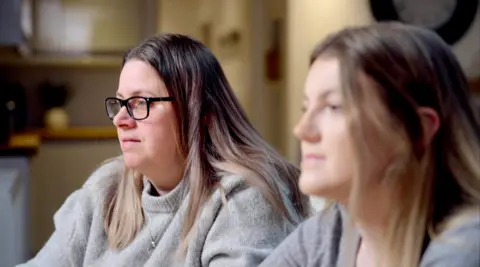
Marie and her younger daughter Caelia want the law to be strengthened
O'Hara, the police tactical lead on dangerous dogs, warns that XL bullies "will be with us for generations to come".
"In the short term I think we will continue to see dog attacks as these dogs start to come of age and reach maturity. So, I think it's going to probably get worse before it gets better."
In a statement, the Department for Environment, Food and Rural Affairs - which deals with dangerous dogs in England and Wales - said it was "continuing to assess whether the current dog control rules are sufficient to ensure communities are protected".
It said the government "must balance the views" of those critical of the ban "with our responsibility to ensure that the public is protected from dog attacks".
The department added it was engaging "closely with the police, local authorities, veterinary bodies and rescue and rehoming organisations to monitor the impacts and effectiveness of the XL bully dog ban".