2 months ago
16
2 months ago
16
‘His position is untenable’: corruption watchdog boss stares down resignation demands
The nation’s first federal anti-corruption commissioner, Paul Brereton, is refusing to bow to growing calls for his resignation after the distinguished former judge became embroiled in a second potential conflict of interest controversy in as many years.
National Anti-Corruption Commission (NACC) Inspector Gail Furness, who acts as a watchdog for the organisation, is investigating complaints about Brereton’s ongoing defence ties after previously finding he engaged in misconduct over the handling of a referral into the robo-debt scheme.
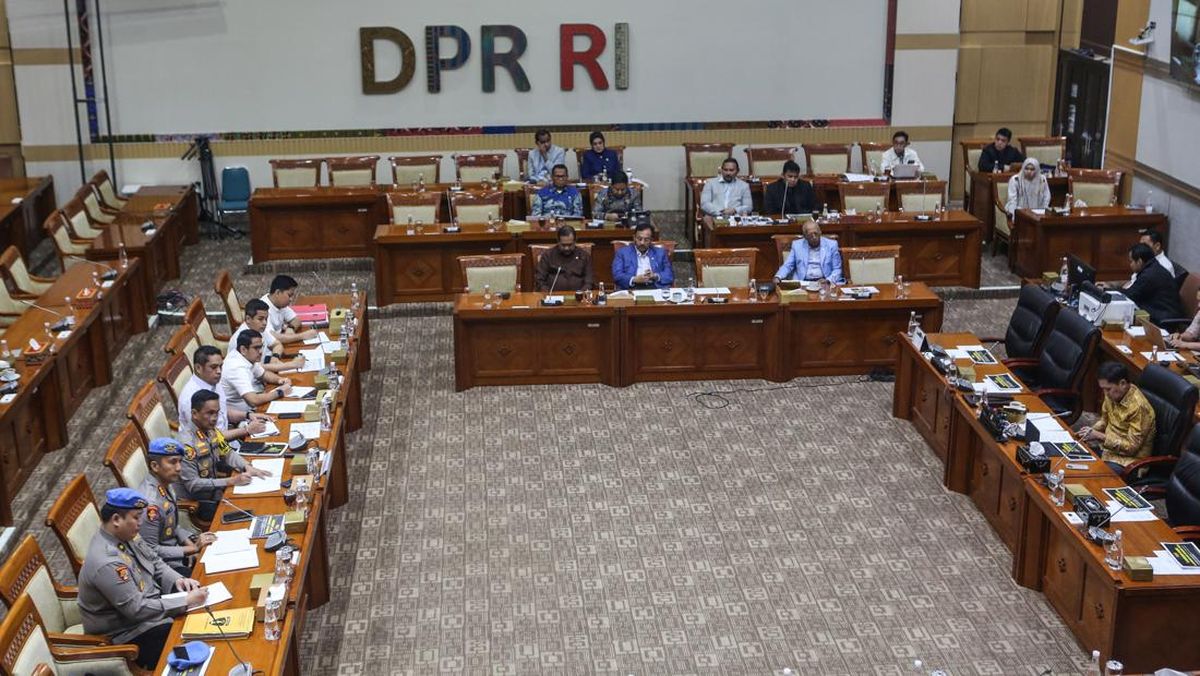
During a tense and often defensive appearance at a parliamentary hearing this week, Brereton stunned federal politicians by saying he was eager to hold the NACC’s first public hearing to help shield the organisation from criticism, but had not yet found an appropriate case.
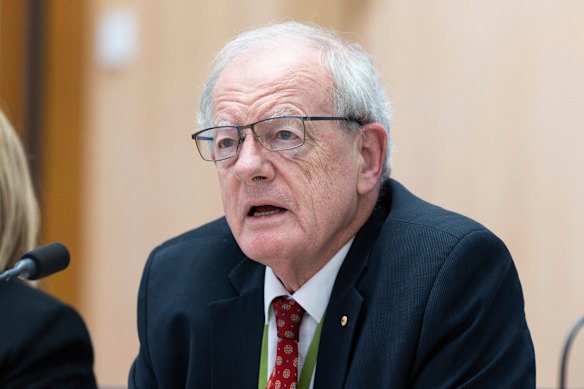
National Anti-Corruption Commission chief Paul Brereton is staring down calls for his resignation.Credit: Alex Ellinghausen
Brereton was contradicted by staff members at the hearing about whether it was necessary for him to recuse himself from all defence matters because of his ongoing, unpaid advisory work for the Inspector-General of the Australian Defence Force (IGADF) over matters relating to alleged war crimes in Afghanistan, as well as his membership of the Army Reserve.
Anthony Whealy, the chair of the Centre for Public Integrity, which led the push for a federal anti-corruption body, called for Brereton to step aside to help regain public confidence in the institution.
Loading
“The constant criticism of him and his refusal to accept that criticism means public confidence has diminished to such a degree that there needs to be wholesale change in the leadership at the NACC,” said Whealy, who served on the benches of the Supreme Court of NSW and the NSW Court of Appeal.
“He is an intelligent and honest fellow, but he has some terrible blind spots.”
Whealy said that Brereton’s position had “become untenable for a number of reasons”, including that he did not seem to take the issue of perceived conflicts of interest seriously enough.
Brereton did not include his advisory work for the IGADF in formal disclosures to the government until October, following ABC reports about the issue. The NACC also announced in October that Brereton would recuse himself from all defence-related corruption referrals. He had previously recused himself on a case-by-case basis.
Loading
Brereton led the landmark inquiry, completed in 2020, that found “credible” information to implicate 25 current or former Australian special forces personnel in the alleged unlawful killing of 39 individuals and the cruel treatment of two others in Afghanistan.
Greens senator David Shoebridge said: “Commissioner Brereton has repeatedly demonstrated such poor conduct that he no longer has the public confidence necessary to lead the NACC.”
Independent MP Helen Haines, who spearheaded a push within parliament for the creation of a federal anti-corruption body, said: “It is very disappointing and concerning that for the first two-and-a-half years of the NACC, so much attention has been on the commissioner himself.
“The public had high hopes for the NACC and I want to see it succeed, but to date the feedback I get from the public is that they are disappointed and even outraged by the way it has begun.”
Haines said Brereton should resign unless he severs ties to Defence and ends his association with the IGADF.
“We would have clear air if the commissioner decided he could fulfil one role or the other but not both,” she said.
A spokesperson for the NACC defended Brereton’s conduct.
“The commissioner’s Defence associations were well known at the time of his appointment,” the spokesperson said.
“His decision to not participate in any Defence referrals is sufficient in the circumstances.
“There is no reason for the commissioner to step down and doing so would undermine the independence of the commission.”
Furness told the parliamentary hearing on Thursday that she was examining two complaints relating to Brereton’s military links after receiving around 90 complaints from the public about the issue.
Furness found last October that Brereton had disclosed a conflict of interest in relation to the robo-debt matter but said he should have withdrawn from the matter completely.
This resulted in a finding of “officer misconduct … that is not unlawful but arose from a mistake of law or fact”.
William Partlett, an associate professor at Melbourne Law School, said: “To regain the trust of the public the commissioner should resign, and we can have a reset and start again … It has been a disappointing tenure to say the least.”
Partlett, a fellow at the Centre for Public Integrity, added: “If the public loses faith in this institution then it may as well not exist.”
I’m pretty keen to have one [a public hearing] and say, ‘Right, we’ve done one’.
NACC commissioner Paul BreretonAt the end of the hearings, Haines asked Brereton about how the NACC would determine whether the required “exceptional circumstances” had been met hold a public hearing.
The NACC has not held any public hearings since it began operating in July 2023.
“I’m quite keen to have a public hearing, partly to put to rest these continual questions,” Brereton replied.
“So I’m pretty keen to have one and say, ‘Right, we’ve done one’. But I’ve got to do that responsibly and lawfully, and not just to get the issue off my back.
“I’ve got to have a case that ticks the boxes and [for] which it is going to be appropriate to do it.”
Haines said that Brereton’s answer “felt rather flippant to me and didn’t give any clarity about what constitutes an exceptional circumstance”.
Shoebridge said: “Protecting the NACC from legitimate criticism is the single worst reason to hold a public hearing. What Brereton has done is ensure that if he ever does hold a public hearing, it will look like a charade rather than a serious anti-corruption measure.”
The NACC spokesperson said: “The commissioner’s comments about a public hearing, when read in context, were clearly intended to emphasise that although there has been community interest in the commission holding a public hearing, we are bound to apply the statutory test which requires that there be exceptional circumstances to do so.”
Cut through the noise of federal politics with news, views and expert analysis. Subscribers can sign up to our weekly Inside Politics newsletter.
Most Viewed in Politics
Loading