3 months ago
17
3 months ago
17
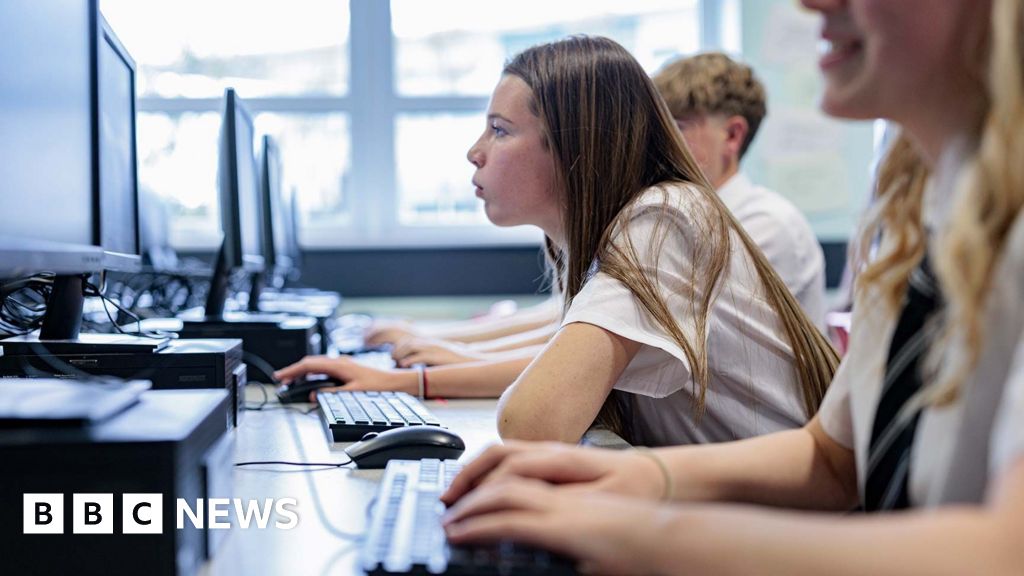
The backer of a High Court challenge to the government’s teen social media ban has called for the likes of Elon Musk and Google to fund the legal bid, while Labor says it won’t be deterred from pursuing the world-first restrictions.
The Digital Freedom Project, a campaign group established to oppose the government’s under-16 social media ban, filed a challenge to the nation’s highest court on Wednesday on behalf of two teenage plaintiffs, 15-year-olds Noah Jones and Macy Neyland, who are children of members of the group.
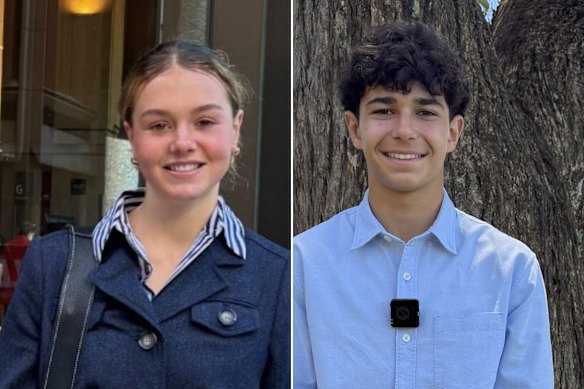
Macy Neyland and Noah Jones are the plaintiffs in the High Court challenge.
The group’s president and NSW parliamentarian, John Ruddick, said they were seeking an injunction to stop the ban from beginning as planned on December 10, and ultimately hoped to get it thrown out as unconstitutional.
“We’re hoping to get an injunction, which means that the law won’t take effect until the High Court makes its decision, which we expect will be about March next year,” Ruddick said.
The Australian constitution does not explicitly protect freedom of speech, but there is an implied freedom of political communication, which Ruddick said would be the focus of the legal challenge.
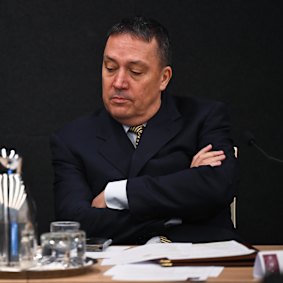
NSW Libertarian Party MP John Ruddick.Credit: Janie Barrett
Ruddick called on tech giants to back the legal bid, which he said was being funded through crowdsourcing and did not have the support of major platforms.
“So far, we are getting donations from mums and dads across the country,” he said. “[Tech giants have] got a very open invitation to get behind our challenge. I hope they can voice support for us. I hope they can make a donation, but it’s radio silence at the moment.
“I would have thought that Elon Musk would have got involved,” he said, pointing to Musk’s success in an Australian court after the eSafety Commission dropped its legal battle to have X take down graphic footage of a church stabbing in Sydney.
Ruddick said the Digital Freedom Project launched its High Court bid after Google failed to follow through on its threat to sue over the teen social media ban.
Ruddick, a member of the NSW Libertarian Party, said the intention to protect children online was the right one, but that the ban would only exacerbate the problem.
“Like many cases of prohibition and censorship in history, it will have unintended side effects,” he said. “The kids will still access social media, but it’ll be an underground social media without parental supervision. So that’s the biggest issue. The second-biggest issue is we are fearful this is the beginning of more censorship.”
Ruddick said it should be parents’ responsibility to be aware of what their children were doing online and educate them about the harms of social media.
“This is paramount in today’s world, that kids are looked after online, but … the parents cannot delegate it to bureaucrats. It is a recipe for disaster,” he said.
Minister for Communications Anika Wells said on Wednesday the government was committed to the ban.
Loading
“We will not be intimidated by threats. We will not be intimidated by legal challenges. We will not be intimidated by big tech,” she said in parliament.
“Despite the fact that we are receiving threats and legal challenges by people with ulterior motives, the Albanese Labor government remains steadfastly on the side of parents, and not of platforms.”
The Digital Freedom Project laid out its argument in a statement on Wednesday.
“The High Court has long held that our Australian Constitution implies a freedom to communicate on political and government matters. In this case, the government’s purpose – protecting children from demonstrable online harms – is legitimate and serious. But a measure is only constitutional if, in substance, it burdens political communication no more than reasonably necessary to achieve that purpose,” the group said.
“The [social media minimum age ban] blocks a whole class of Australians ... from the very online spaces where news is consumed, representatives are contacted, campaigns are organised and public debate occurs.”
Social media companies face fines of up to $49.5 million if they fail to take “reasonable steps” to block teens from platforms using age-assurance technology, though the eSafety Commission has not mandated how they should do so.
Cut through the noise of federal politics with news, views and expert analysis. Subscribers can sign up to our weekly Inside Politics newsletter.
Most Viewed in Politics
Loading