
 2 months ago
47
2 months ago
47
The word “quiet” comes up a lot when people talk about Conway Savage. Sure, he manned the piano for more than 25 years for Nick Cave and the Bad Seeds. But those who knew him tend to begin somewhere smaller and less dramatic. Country ballads. Small rooms. Family Christmases. Cricket. The soft way he laughed.
“He had the most beautiful, smooth, white, creamy-skinned hands. Just to watch him play was a true joy,” says Suzie Higgie, recalling the pair’s darkly beautiful 1998 album, Soon Will Be Tomorrow. “I used to joke that he was always in a minor key … but I love that mournful, thoughtful gentleness that Conway brought.”
Dave Graney, who recruited him to his White Buffaloes in the late ’80s, remembers “a very quiet guy. Conway had that kind of way of talking and muttering, laughing to himself, and you always only half-heard things he said. You had to be very close to him”.
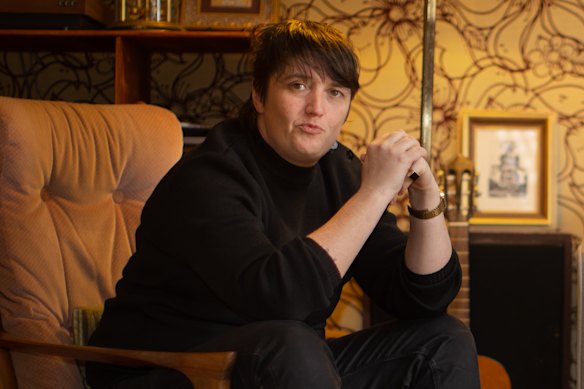
The disconnect between man and myth is especially surreal “when you’re coming at it as his niece”, says Cash Savage, who will join Higgie, Graney and others to perform her uncle’s work in a show called These Are the Waves in July.
“It was a life-changing thing for me to go and see a family member sitting up there as part of Nick Cave and the Bad Seeds. Can you even imagine?” Since her first show at the Palais Theatre in the mid ’90s, Cash Savage “didn’t miss a single Bad Seeds show in Melbourne”, she says.
“But with the Bad Seeds, people come to conclusions about what sort of people those guys are. If you’re just looking at Conway and the artist that he is — was — you notice the nuances, and the softness.”
Conway Savage was diagnosed with a brain tumour in 2017 and died in Melbourne the following year. He was 58. “Irascible, funny, terrifying, sentimental, warm-hearted, gentle, acerbic, honest, genuine,” Cave wrote on his passing. He recalled a memory of one drunken night in a hotel bar in Cologne when Savage sat at the piano and sang the dying cowboy’s lament, Streets of Laredo, “in his sweet, melancholy style, and stopped the world for a moment”.
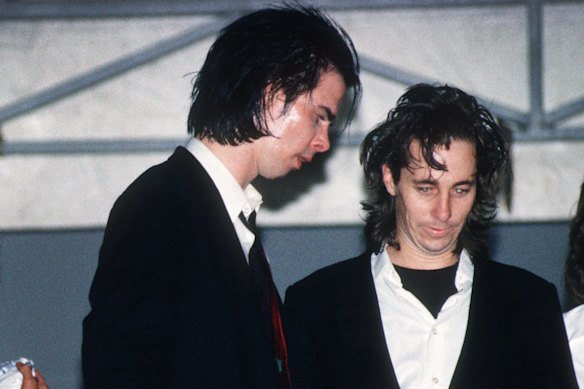
The song would have been close to the pianist’s heart. Back when Cave was extricating himself from the Melbourne punk underground, Savage’s band, Feral Dinosaurs, was mining the less-fashionable terrain of Hank Williams Jr and Merle Haggard. Later in the ’80s, he played with Dust On The Bible, the country-rock outfit fronted by Jane Savage, his sister-in-law and Cash’s mother.
“He was obviously touched by country music,” says Mick Harvey, who hired him to the Bad Seeds in 1990, “but he brushed shoulders with a lot of different styles. He really liked pop music. I know he loved Prince. And he liked a good, rowdy punk group, too. But he was very fussy about which things he thought were good.”
On a new, 24-song vinyl compilation titled Too Dark To See, Savage emerges as an artist entrenched in his own world. Between the grim folk laments, bar-room gospel, bruised piano balladry and oblique pop detours, what’s striking is how little he needed to make that world appear.
Guitarist Robert Tickner, who played with organist Amanda Fox in Conway’s last trio, remembers him sometimes stripping his own piano out of recordings to better serve a song. On stage, arrangements could be so minimal “they could fall apart at any moment. You never knew where things were gonna go. Sometimes he liked to sabotage the gig if it was going too smoothly … anything to throw things off kilter”.
The bigger framework of the Bad Seeds could be “difficult”, Harvey recalls, due to the structures dictated by the singer-songwriter-pianist at the helm. “Conway’s second album was called Wrong Man’s Hands and that speaks to that situation, definitely,” he says with a laugh. “He had a huge respect for Nick as a songwriter, and he loved being in the band. It’s just, you know, these things come with their pitfalls and potholes. But to his credit, he stayed the course.”
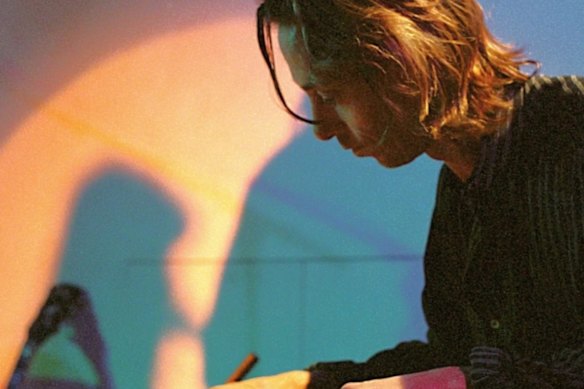
Savage left the Bad Seeds in early 2017. He had long found a parallel groove with low-key solo releases that led, in turn, to an unlikely following in Dundalk, on Ireland’s east coast. Nurtured by Irish fan and musician Mark Corcoran, that connection led to the first These Are the Waves shows at Dundalk’s Spirit Store last September. One of the tracks on Too Dark To See, The Saint of Shitty Little Rooms, was recorded live in Ireland, and seems wryly appropriate to Savage’s last contented years as a performer.
“I think he was very happy with Amanda and [Tickner], the strange band they had together, just piano, guitar, and organ,” Dave Graney says. “The Bad Seeds were in larger and larger arenas each time they toured, so everything outside of that … he wanted a smaller, anecdotal experience, almost.
“He just took things as they came, made his records and did a few gigs, and the easier they were for him, the better. When he was living with Amanda, he could walk up to Pure Pop Records [in St Kilda], where they had gigs out in their backyard. That was his idea of a great gig.”
The ensemble paying tribute next month will test the limits of larger rooms. Besides most of the above named, the ensemble includes Bad Seeds bassist Martyn P. Casey, guitarist Charlie Owen, Penny Ikinger and more friends and colleagues from a long and colourful road.
For Cash Savage, performing her uncle’s songs is a new experience. “He was always at Christmases. He loved his family. Me and my cousins all have really fun memories of him. He was very good at cricket. Loved the Swans. A bit of a joker. Just a fun uncle.”
With hindsight, she says, he also made great music. “It’s really beautiful. There’s absolutely notes that I would never use because they’re too pretty, and he’s got that stuff everywhere. If anything, it only makes it more melancholy.”
These Are The Waves is at Camelot Lounge Marrickville on July 10, Brunswick Ballroom on July 17, and Memo Music Hall, St Kilda, on July 18. Too Dark To See will be available as a double vinyl LP.
Looking for more music reads?
- Read our round-up of recent near-perfect new albums
- Musical comedy duo TwoSet Violin on why they deleted their YouTube videos
- Meet Hudson Freeman, the indie-folk singer behind the breakout hit of the year

















































