
 2 months ago
62
2 months ago
62
Fat girls, says Danish director Emilie Thalund, learn early in life to be pleasing. “Being fat is one of the worst things in the world you can be, in a way,” she says. “So at least you have to be sweet; you have to be likeable; you have to be nice. And you can’t, you know, take up too much space – physically or emotionally. That’s also something I learned quite early as a girl.”
Weightless, Thalund’s first film, revolves around teenage Lea’s summer at a health camp. Speaking at the prestigious San Sebastian Film Festival, where the film won the New Directors Award, Thalund says she wanted to make a film where the fat girl was unambiguously the heroine.
“The fat girl is always playing the second character or made into something comic, the fat friend. Perhaps the really new thing would be not talking about it at all, just letting her be as she is, but I also wanted to shine a light on this hierarchy between bodies: the comparisons and mirroring and the differing access you have to things.”
Weightless isn’t autobiographical but it does reflect her own experience. Thalund once lived, as she puts it, “in a large body”. Now 36, lean and fit, she still feels very connected to her teenage self. “It’s a way back but I feel those years are very defining for how you look at yourself. It always felt like that was a place I had to go and explore a little bit with my first film.”
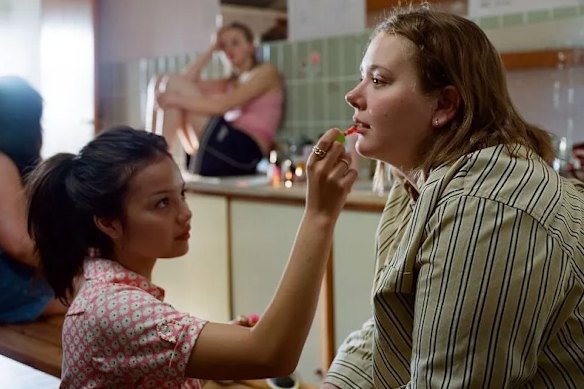
Urged on by her mother (Julie Thalund, the director’s sister), angel-faced Lea (Marie Helweg Augustsen) is keen to embrace the camp’s ethos, lose weight and, quite literally, fit in. The camp is by no means a hell-hole. There are unnerving weigh-ins and rules around food but the tone is upbeat, the gym sessions galvanising and the counsellors warmly encouraging. The spin class actually looks fun.
Not everyone there is fat, either. Lea’s roommate Sasha (Ella Paaske) is back for the umpteenth time because when she’s at home she fights with her mother, most recently about her sexual relationship with an older and thoroughly unsavoury man. In a nutshell, Sasha is trouble. She also seems, for all that she is slim and pretty and turns male heads wherever she goes, to despise herself in a way Lea never would.
Sasha can see clearly enough, however, that her pliable new friend’s transparent crush on Rune, their cheerful physical education instructor (a terrific Joachim Fjelstrup), is leading her into murky territory. Another early learning for girls, says Thalund, is the importance of male attention. “And if you don’t get it from a boy your own age, maybe you can get it somewhere else.”
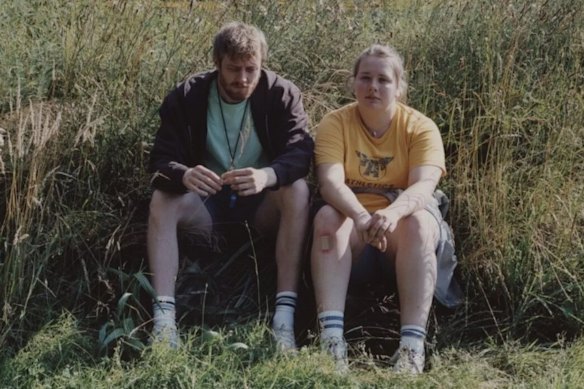
Which feels like a good thing, of course. “I’m not so interested in whether these things happen; I’m interested in why they happen – because they happen all the time. In a way, it’s obvious. Rune is charming; he’s there, he’s interested, he’s listening, he sees her – it’s the first time she feels like she’s been seen. But when does it turn into a bad thing?”
It is hard for anyone to mark a turning point; there is no rule book.
“Also, for me, if people quite early on start commenting on your body, a boundary has already been crossed. And then, I think, it is more and more difficult to keep ownership of your body and to know what feels right or wrong. I think that is very much what happens in this film.”
Thalund and her co-writer, Marianne Lentz, cast the girls well ahead of the shoot and developed the script with them, both to ensure they got it right and to establish a comfortable working space. Even though the actors were a few years older than the characters they played, they were aware of a duty of care.
“We created this story about grown-ups not taking good enough care of young people, so how do we make sure not to do the same thing? We did a lot of work around that.” Both cast and crew were chosen with that safe space in mind.
In the process they discovered that not much had moved on in the 20 years since they were negotiating that territory. “And the reactions we have had from young women seeing it have been very positive, like ‘have you read my diary?’ or ‘how could you know this?’ – so, sadly, it is very much now like being a teenage girl when I was young.”
Compounded, surely, by online culture? That is something new.
“They never have a break,” agrees Thalund. “Before, you could look at Kate Moss or other supermodels and say, well, they are supermodels. Or they’re Hollywood stars.”
No normal person could expect to look like that.
“But now they’re girls of their own age, from the same environment. I think it’s so toxic.
“But you can also find beautiful communities where people don’t look like Hollywood stars and have the same interests as you, so it’s a mix that can make some people feel less lonely because there is a wider representation on some of these platforms that in the general media. And there is a happy ending in this film, in a way, in that these girls connect. They share their pain; they share with each other. And I think that’s what women have always done. We share our stories.”
More festival highlights
Being Bo Widerberg
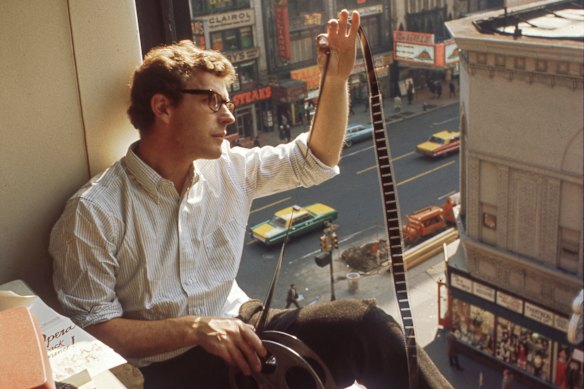
Sweden’s answer to the French New Wave, Bo Widerberg, the director of the 1967 masterpiece Elvira Madigan, was also mercurial, opinionated and ruthlessly dismissive of anything that would get between him and his next project. Jon Asp and Mattias Nohrborg give a forensic reading of his life, taking it film by film and wife by wife. So much detail makes it one for the buffs.
The Kidnapping of a President

The real-life kidnapping of Finland’s first president by a group of ham-fisted right-wing conspirators in 1930 is given a dark comic twist and a jazz score in Samuli Valkama’s uncannily timely caper. The Fascists are idiots and the tone is Nordically quirky but Valkama doesn’t shy away from the grim fact that what turns into bumbling farce could have gone very differently.
Fjord
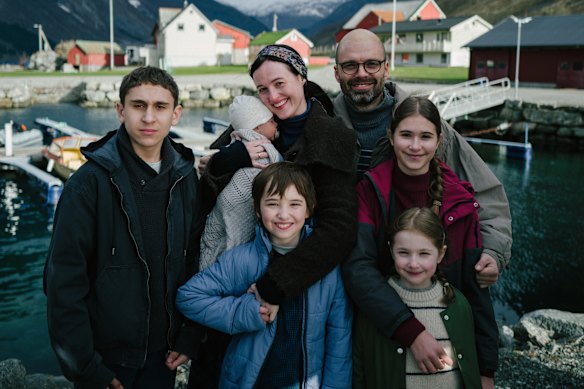
Romanian director Cristian Mungiu picked up his second Palme d’Or in Cannes for this dense, unsettling drama about an Evangelical family from Romania whose strict parenting practices bring them into conflict with authorities when they move to Norway. Sebastian Stan is the patriarch accused of abuse, while Scandi darling Renate Reinsve is his surrendered wife. Are they guilty or merely different?
The Love That Remains
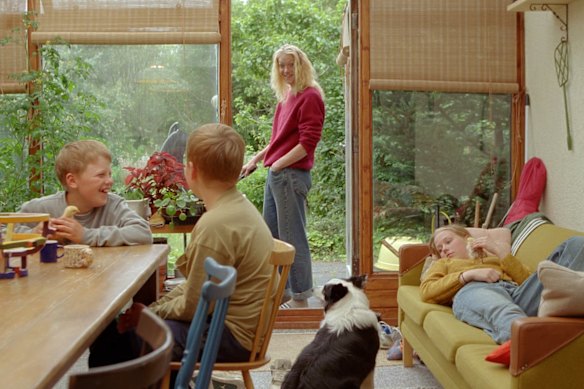
After his magisterial historic epic Godland, Hlynur Palmason returns to the smaller dramas to be found in everyday domestic life, intricately wound together with Iceland’s formidable environment. Magnus, a deep-sea fisherman, and his wife Anna, the earth artist, are separated but must still negotiate a daily, enduringly intimate family life. A painful, albeit often funny account of a spent love that refuses to die.
Persona
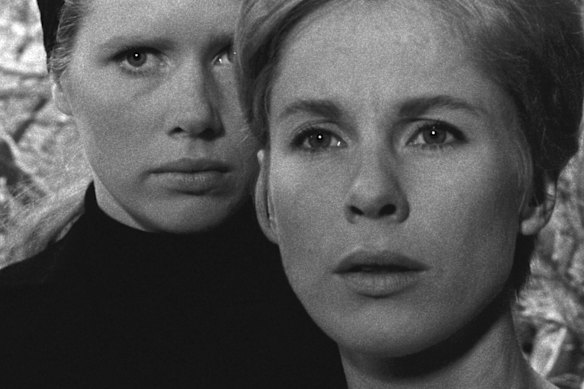
Ingmar Bergman’s experimental 1966 psychological drama, shot on the remote island where he lived, is variously interpreted as a story about Jungian dualism, about a vampiric relationship, or a parable about cinema, trying to bridge the gap between life and art. Liv Ullmann plays an actress who has abruptly stopped speaking or moving; Bibi Andersson is her nurse. A rare opportunity to see the full, uncensored version on the big screen, where its meaning remains as tantalisingly ambiguous as ever.
The Nordic Film Festival runs in Melbourne until August 2; Sydney, July 23-August 16; Brisbane July 22-August 16; and Canberra until August 2.
Want more movies? We’ve got you.
- Must-see movies, interviews and all the latest from the world of film delivered to your inbox. Sign up for our Screening Room newsletter.
- Why we should care about Christopher Nolan’s Odysseus.
- Debut director’s journey to First Light.

















































