1 month ago
11
1 month ago
11
You can sense the story even before you see it. Its narrative beats and emotional arcs announce themselves with such little subtlety they’re almost illuminated in neon. There’s the scene with the spark of the idea that will change the world, the pitch meeting where our hero goes off-script and wows the crowd with their rogue proclamations, the montage showing big capitalist markets of success – followed swiftly by the downfall. Cancellation. Financial ruin and an irreparable reputation.
I’ve watched so many TV shows and movies dramatising real-world founders and CEOs, I could write one with my eyes closed.
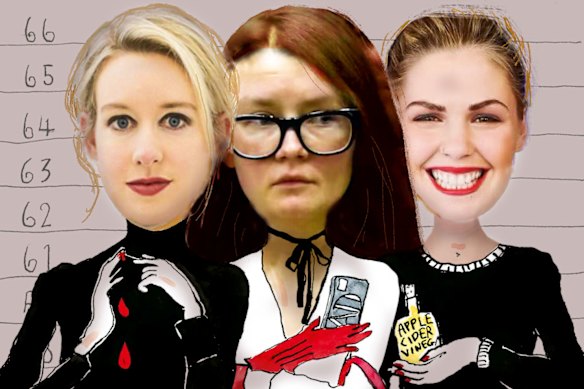
Adaptations of the lives of figures like Elizabeth Holmes Anna Delvey and Belle Gibson are part of the Scammer Girlboss subgenre.Credit: Robin Cowcher
There was Super Pumped, about the founding of Uber. BlackBerry about the rise and iPhone-related fall of the first mobile computer. WeCrashed, which saw Jared Leto and Anne Hathaway portray the unnerving real-life couple behind the co-working space WeWork. All of them aspire to the heights of The Social Network, but none comes close to capturing the nasty lost boy in a hoodie like director David Fincher did in his rendering of Mark Zuckerberg.
As tech overlords have outgrown their geeky origins and come to control not just our apps but our elections and environmental future, it becomes harder for me to watch shows about them like fun, escapist entertainment.
That’s where the series about disgraced female founders come in. Their worlds are much more fun.
Before Taylor Swift co-opted the word in a line from her new album, Girlboss was a book by Sophia Amuroso, the founder of a fashion brand. Her book title (that eventually became a TV series) gave us a new vernacular to use, in the 2010s, for women who were the faces and figureheads of brands that wanted to sell empowerment and community (as well as, variably, clothes, skincare products and health). The title was equal parts a clarion call, a neat category for a certain kind of public figure, and a diminishing catch-all for any woman made the subject of an investigative feature-turned-miniseries.
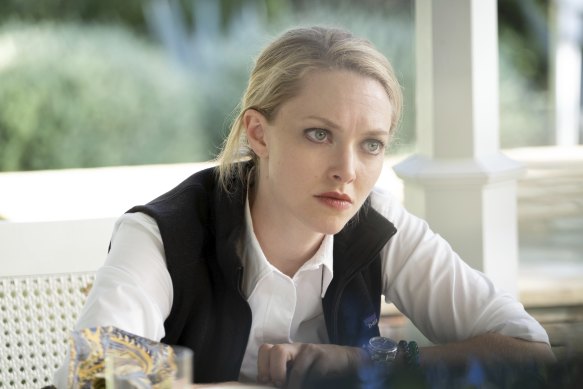
Amanda Seyfried in The Dropout playing Elizabeth Holmes, the chief executive of Theranos who was convicted of fraud.Credit: Disney +
“Scammer girlboss” is one key subgenre under the broader category of exposé adaptations. Figures like Belle Gibson and Anna Delvey were the subjects of Netflix series – Gibson’s was Apple Cider Vinegar and Delvey’s was Inventing Anna. Watching both, you can’t quite believe anyone bought what they were selling or saying.
In 2022, the best of these biographical dramas was released. The Dropout had Amanda Seyfried playing Elizabeth Holmes, the chief executive of Theranos who aped Steve Jobs by wearing a black turtleneck every day, deliberately lowered her vocal register to be taken more seriously, and kept her peroxide blonde hair visibly damaged to signal to her older, male board members that she was not shallow and image obsessed. She took her work too seriously to get a Keratin treatment – despite her work landing her in jail for fraud at the time of writing.
Loading
The women who make enough noise and headlines to feature in these shows aren’t exactly inspiring the next generation of women founders. They’re messy, flawed and mostly criminals – which is fun to watch. And as a recent instalment in the canon proves, stories of capable, hard-working women are not all that interesting. Swiped is a new feature film in which Lily James plays Whitney Wolfe Herd, who hustled her way into a startup that would become Tinder. She suggested its name, and was so good at marketing the app she was named a co-founder.
But she was a woman in Silicon Valley in 2012, and her colleagues were either hostile or harassing. The film shows her forcibly exiting the company, then conceiving and launching Bumble – the “women-friendly” dating app – under a parent company run by a man who also engages in problematic behaviour. The film depicts her as capable and clever. Very serious. And not at all fun.
I remember living through the height of the prestige TV era, and witnessing the hand-wringing over audiences celebrating characters like Tony Soprano and Don Draper. Women characters never got the same grace. But these girlboss anti-heroes earn their place alongside Tony and Don, not because they’re role models, but because they’re riveting.
Their scams, delusions and spectacular downfalls make for sharp, addictive storytelling – a neon-lit morality play that keeps us pressing “next episode”.
Most Viewed in Lifestyle
Loading