3 months ago
24
3 months ago
24
The ailing Liberal Party will shun quotas to help boost its ranks of women MPs, despite Opposition Leader Sussan Ley having opened the door to the measure.
The party’s review into its historic drubbing at the May federal election – led by Liberal elders Nick Minchin and Pru Goward – will not recommend a rigid quota system, according to four sources familiar with the draft report but not sanctioned to talk about it publicly.
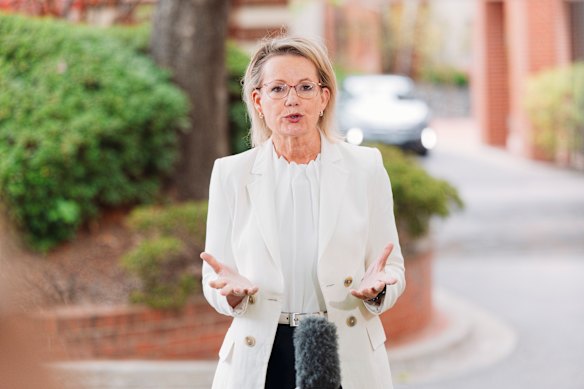
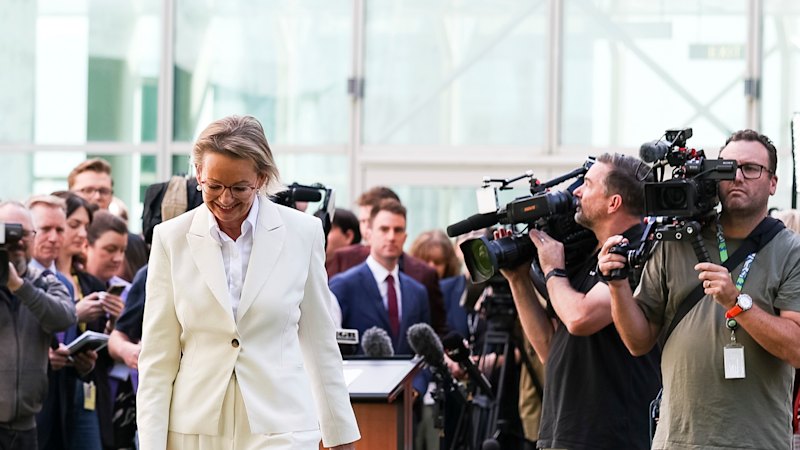
Opposition Leader Sussan Ley, pictured in Canberra on Friday, had opened the door to quotas for women MPs.Credit: David Beach
It comes as Ley faced pressure from conservative rivals who have played down the prospect of a leadership coup after an escalation of backbench criticism on Friday, before a climax this week over energy policy.
The opposition has been dogged by weeks of leadership speculation, feuding over energy, missteps and schisms between Ley and MPs such as Andrew Hastie, who are unhappy with the party’s direction as Ley aims to tack to the centre. Crunch meetings this Wednesday and Thursday aimed at settling the net zero issue will help determine Ley’s longevity as leader.
Loading
The review by Minchin and Goward, who have spent months probing MPs to get to the bottom of the party’s worst election loss, also found that former leader Peter Dutton and his team presented voters with a dire policy agenda, and spent years acting like a cautious government-in-exile rather than a lean, mean fighting machine capable of tearing down Labor.
Quotas mandate that a certain proportion of seats be held by women, and have helped women become a majority of Labor’s caucus. However, the Liberal Party’s philosophical aversion to identity politics and belief in individualism makes a quota a more contentious issue for the party.
In her first major speech as leader in June, Ley said she was open to quotas but not wedded to them, adding that “what is not fine is not having enough women”.
The party selected mostly younger women in a group of seats it thought were winnable, but that it did not win, including Kooyong and Chisholm in Victoria, Parramatta, Warringah, Wentworth and Robertson in NSW, South Australia’s Boothby, and Lyons in Tasmania.
The party’s election policies and presentation turned off many women voters, as the review will make clear when it is made public after parliament rises for the year.
Women have turned away from the Coalition at successive elections as the party has lost key seats in major cities. Many women were turned off by headline election policies on nuclear energy and a work-from-home clampdown on public servants that Labor twisted into a broader anti-flexible work agenda, party officials found.
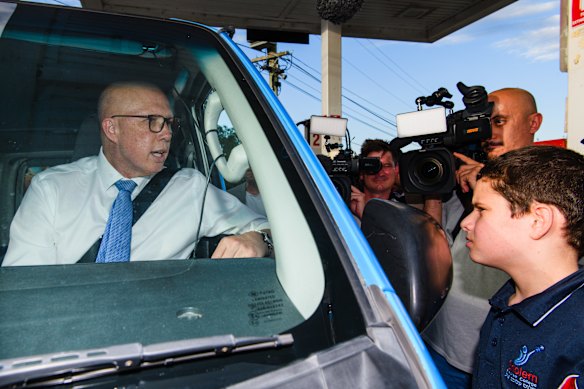
Then opposition leader Peter Dutton in April on his petrol station tour during the election campaign.Credit: James Brickwood
“Yes, Labor weaponised some of this, but we had a set of policies which women either didn’t care for or felt actually made their lives harder,” one party figure said.
The Liberal Party’s gender imbalance in its ranks of MPs has barely changed in a decade. One third of Liberal MPs are women, despite the party having a target of 50 per cent female representation.
Loading
The election probe is being kept secret until later in the year, at which point it will be made public and form an important part of writing the history of – and apportioning blame for – the party’s worst election loss.
A critical observation of Minchin and Goward is that the Coalition failed to change its psyche, tone, campaigning and media strategy after losing the 2022 election to Labor and going from government to opposition after nine years in power.
One source familiar with the findings said it had become clear that Dutton’s team included former Morrison government ministers who “lacked the hunger” to shift from a bureaucratic, cautious governing style to the kind of nimble, more political approach needed to prosecute a government.
This masthead reported last month that Dutton had told the election review that former defence spokesman Andrew Hastie had “gone on strike” and was reluctant to fight against Labor.
Unlike when Tony Abbott and Anthony Albanese were opposition leaders, Dutton’s operation made its daily political decisions without continuous input, data and research from the party’s professional campaigners, led by federal director Andrew Hirst, who ran the winning 2019 campaign and two subsequent election losses.
Instead of fusing into a campaigning machine once losing power, Hirst’s secretariat and other party forums, such as the federal executive, still deferred to the MPs as if they held power and could access the power of the bureaucracy, rather than being an opposition in need of data, ideas and campaign nous from outside the halls of parliament.
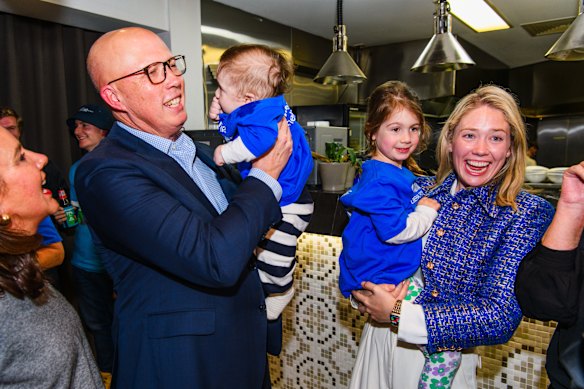
Peter Dutton campaigning in Kooyong with Liberal candidate Amelia Hamer. Independent candidate Monique Ryan retained the formerly blue-ribbon Liberal seat at the 2025 election.Credit: James Brickwood
It was widely reported during the election campaign that Dutton’s office and Hirst’s team had a poor working relationship, a claim substantiated by Minchin and Goward.
“The Dutton opposition was totally obsessed with unity, and outside of the Voice [to parliament Indigenous referendum], never morphed into a fully functioning political unit,” one source said.
Dutton, Minchin and Hirst declined to comment.
A separate root-and-branch special commission of inquiry into the Liberal Party, which will prove deeper than a normal election review, was sanctioned by the party’s federal executive last week.
The probe will look into the party’s federated model and state division structure, with a particular focus on how to select more women candidates and connect to multicultural communities.
It will be led by Senator James McGrath, with input from former NSW premier Mike Baird, former Tasmanian premier Will Hodgman, and former federal MPs, party officials and activists including Caroline Inge, Caroline Di Russo, Sascha Meldrum, Jane Buncle, Fiona Cunningham and Danielle Young.
The review is also expected to focus on the party’s deficient polling, which effectively misled Dutton, as well as the effect of US President Donald Trump in dragging down the conservative vote.
Most Viewed in Politics
Loading