3 months ago
31
3 months ago
31
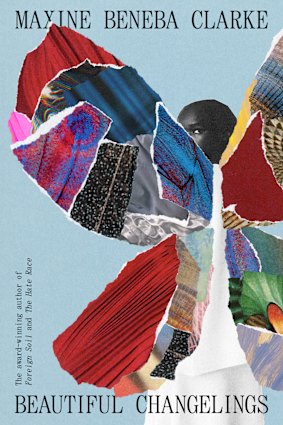
POETRY
Beautiful Changelings
Maxine Beneba Clarke
Ultimo, $29.99
When we think of a changeling the image that usually comes to mind is a waifish creature, not quite human, ethereal and otherworldly. Maxine Beneba Clarke joyfully subverts this notion of a fairy child; her beautiful changelings take the form of older women who are very much grounded, and “golden in the autumn/of your being”.
The title poem is a salvo to those with “once-taut skin” who are now armed with “fierce wisdom”; Clarke’s changelings are (pre)menopausal, who’ve had enough with serving others and remaining prim and decorous. Or as she puts it:
“you stuff being nice, you
taking back my time
you telling it like it is, you
not suffering fools…”
It’s a bracing start to the collection of poems. Clarke is the author of 14 books, and works across genre, including short stories, memoir and picture books. She’s also written collections of poetry for kids, but this latest one is for (young) adults, following on from Carrying the World (2016) and How Decent Folk Behave (2021).
The nimbleness Clarke shows as she skips through different styles of writing is similarly deployed through the tonal shifts in this work. Beautiful Changelings is at turns, funny, enlightening, acerbic, droll and rageful. In all the poems is the through-line of Clarke’s signature style: her crisp, accessible verse whose punchiness and rhythmic beats have been honed by her years as a slam poet on stage, long before she’d even written for the page.
In a world where youth holds such currency, it’s a relief to come across a poem with the title: “I want to grow old”, a tribute to influential icons Iris Apfel, Toni Morrison and Joan Didion. Other offerings touch on the poet’s own Generation X (who, among those of us growing up in this era, can ever forget parachute tracksuits, acid washed jeans, Chiko rolls and “born into punk”?)
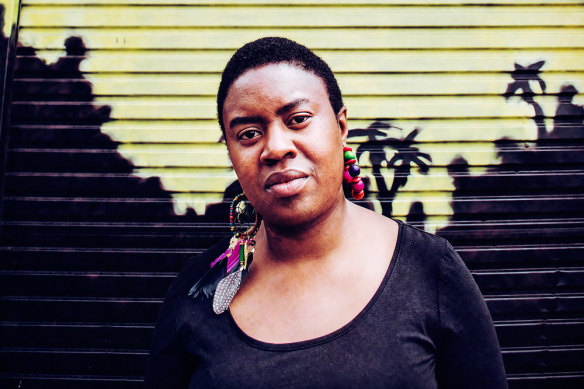
Maxine Beneba Clarke’s new book of poetry is playful, blunt and provocative,
For the most part, however, Beautiful Changelings is predominantly focused on women’s bodies. It’s about ageing brightly and disgracefully, of reclaiming time and space. Unfortunately, it’s also about having to exist in the throes of patriarchy in late-stage capitalism, of being patronised by medicos, of having a diaspora black body in a white ruling world. The extended poem I would like a hysterectomy for instance, follows the hapless narrator as she tries to navigate the labyrinthine healthcare system while facing medical misogyny. It’s a bleak and powerful serve.
The feminist rallying cry is strong and loud and proud in Beautiful Changelings. There are potent reminders to young girls that fulfilment can stretch beyond husband, children and hearth. Have they considered aiming to be a CEO, entering parliament, doing a degree? To lean into the space of being “whatever kind of person I was born to be” without the strictures of familial or societal expectations.
Clarke’s material ranges far and wide. Memoir pieces, like “the bolshie black girl” trying to infiltrate a boys-only cricket club, are interspersed between reworked nursery rhymes and fairytales, with a sharp twist or a mordant turn. There’s also a section called Women’s Work, that surveys the emotional, physical and professional labour required to carry the world. As a parent to a son, Clarke too, is conscious of raising him to become a decent man: to take up a little less room and to speak a little more quietly.
Loading
There’s a playfulness of form in this collection, including a Mother’s Day acrostic and an alphabetical glossary of cliched terms used to describe women. Many heads will nod in exasperation at Clarke’s listing of phrases such as “a bit of alright”, “don’t-worry-your-pretty-little-head-about-that” and “lady in the streets, freak in the sheets”.
In this #MeToo, we-pick-the-bear era, Beautiful Changelings sets out the various challenges confronted by women historically and contemporarily, wherein sexual, physical and legal abuse are all surveyed in the poet’s characteristically blunt and provocative manner. The book is also a love letter to the sisterhood. One extended poem, The Hope of a Thousand Small Lights, is dedicated to women who have fought for equal treatment by the International Criminal Court, straining for justice on behalf of those who are vulnerable, voiceless and broken, from the Balkans to Rwanda and beyond.
There is power, fire, pride and unmitigated fury in this book. At the very least it’s a paean to independence and self-sovereignty despite all the difficulties faced. Clarke stares at us squarely in the eye, unflinching, as she tells us how she’s “a woman, successful,/ and complete,/in the company/of herself”.
Most Viewed in Culture
Loading