2 months ago
7
2 months ago
7
From classic John Grisham and an introduction to the Japanese author Haruki Murakami, to the life of an unsung wine heroine and tall-sounding cricket tales, this week’s books cater to all readers.
FICTION PICK OF THE WEEK
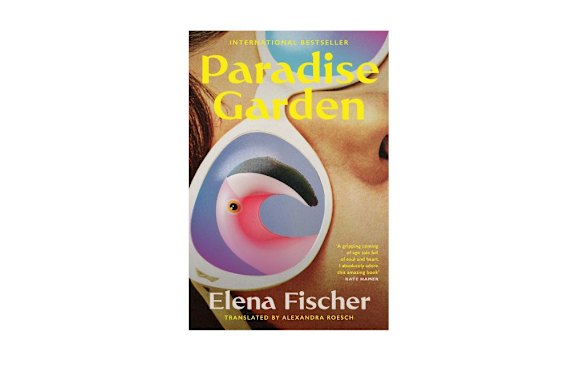
Paradise Garden
Elena Fischer
Indigo Press, $29.99
Fourteen-year-old Billie lives in a rundown high-rise within earshot of an autobahn. The German housing estate is home to struggling outsiders – Billie’s neighbours include a Palestinian refugee studying chemistry, and two different women whose lives have been touched by domestic violence and mental illness. Billie herself comes from a Hungarian migrant family with Romani blood. Her single mum subsists on the poverty line and, despite holding down two jobs, must resort to serving spaghetti and tomato ketchup for dinner at the end of every lean month. A sudden visit from Billie’s grandmother upsets a rare opportunity for leisure, but it is the death of Billie’s mum that wrenches the coming-of-age story into a quest narrative (Billie heads to Germany in search of a father she’s never known) and, through random acts of kindness, into a realm of cautious optimism. Elena Fischer writes with unusual clarity, economy and maturity for an author at the beginning of her career, and has a knack for transforming bleakness into qualified hope without cheapening either.
The Widow
John Grisham
Hodder & Stoughton, $34.99
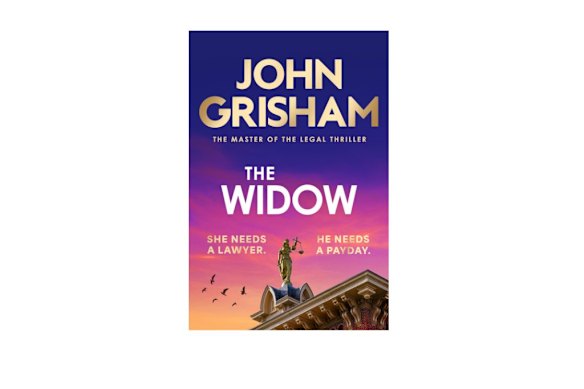
Another classic legal thriller from John Grisham, this one with a squirt of whodunit to juice up the wheels of justice. Small-town lawyer Simon Latch has a gambling addiction, an unremarkable career, and an estranged wife determined to file for divorce. When he lands a client asking him to draft her will, it looks like the stroke of luck he needs. At 85, Eleanor Barnett has had another will drawn up recently… by a shyster who’s been fleecing the $20 million estate she inherited from her second husband. Latch tries to rectify matters, preserving Mrs Barnett’s intention to disinherit her stepsons, and keeping it all under wraps. The unusual secrecy will later be used against him. After his client dies in a car accident, Latch finds himself at the centre of a homicide investigation, and trial, where evidence points to his guilt. Finding the truth behind the widow’s demise may be the only way to exonerate a flawed man and a (relatively) honest lawyer who seems to have been wrongly accused of murder. Grisham’s skill at portraying the theatre and the tactical aspects of the law in layman’s terms is unmatched, even if the whodunit itself lacks inspiration.
The Maskeys
Stuart Everly-Wilson
Transit Lounge, $34.99
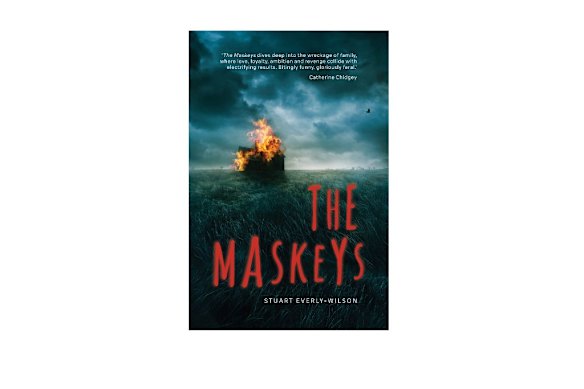
A criminal underclass has risen to the surface in the small Australian town of Naples. Crippled drug lord George Maskey has made many enemies, among them Gayle Reynolds, a service station owner who blames him for the disappearance of her son, Duncan, and what appear to be arson attacks at her lover’s home. In revenge, Gayle kidnaps the smallest fry she can find. Rodney, a childhood friend of Duncan’s, is a plain-looking weakling. He’s tended the Maskey family’s weed crop since his mother’s death, and Gayle thinks he might hold the key to discovering what happened to her son. Rodney is a book-lover – romcoms, especially – and when he meets Leanne in captivity, he hatches a plan that might just turn the tables on everyone. Stuart Everly-Wilson gives a precise, empathic portrait of the lives (and mores) of the lumpenproletariat. The Maskeys is suspenseful, darkly funny and moving rural crime with a genre shift as unlikely as its runtish hero.
Super-Frog Saves Tokyo
Haruki Murakami
Harvill, $34.99
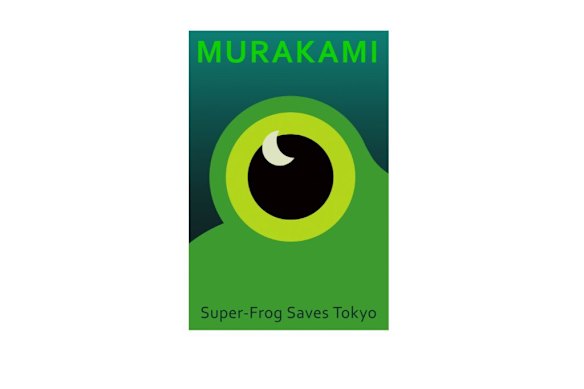
As an introduction to the weird and wonderful imagination of Haruki Murakami, this brightly illustrated edition of Super-Frog Saves Tokyo is more of an amuse-bouche than an entrée. The short story follows Katagiri – an unimaginative and dutiful salaryman whose humdrum life takes a surreal turn when he comes home one day to find a six-foot-tall amphibian in his apartment. Frog politely introduces himself and prepares tea, before disclosing that he has chosen Katigiri to accompany him on a formidable quest. A gigantic Worm living deep underground threatens Tokyo with a catastrophic earthquake, and only Frog and Katagiri can thwart the menace and save the city. It’s almost a children’s story for adults, and the collision between superheroic fantasy and the quotidian, between shades of anime and kaiju fiction and Katagiri’s disgust at the drabness and futility of ordinary working life, generates a tension it is left to the reader to resolve. That tension recurs in Murakami’s oeuvre, and this is a good taster for those intimidated by full immersion in the hugeness of a novel like 1Q84, say, as well as an attractive gift for Murakami devotees.
The Hollow Girl
Lyn Yeowart
Penguin, $34.99
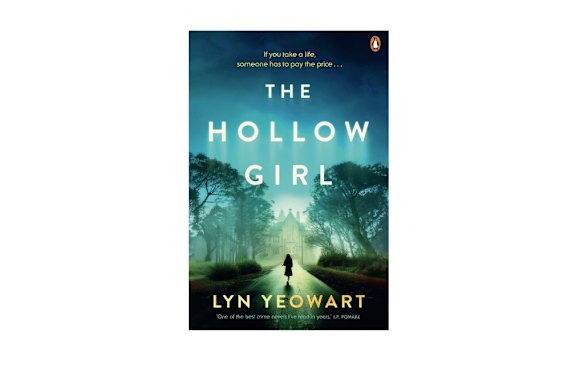
Lyn Yeowart’s The Hollow Girl weaves together gothic fiction and feminist period crime. It’s 1973 and Harrowford Hall is on the verge of closing. The grim institution ostensibly provides “refuge” to unwed mothers in rural Victoria, though when one of the nurses is found dead, Detective Sergeant Eleanor Smith is sent to lead the homicide investigation. What she finds unearths a hideous history of institutional abuse, manipulation and coercive control, a policy of forced adoption, and many more corpses – some of them babies – in a case that gets bleaker as Smith and her novice offsider pierce the fog of misogyny to discover the truth. That fog is pernicious and lingers over almost every aspect of the novel – it’s thick in the police force, and among nurses who imagine they’re helping their victims, and it mingles with more classic gothic flourishes, such as the haunting desolation and air of decay that hangs over the soon-to-be-defunct Harrowford Hall itself. The fog lifts in the presence of Eleanor’s determination and competence, as this atmospheric novel, based on appalling recent history, brings bleak secrets to the light.
NON-FICTION PICK OF THE WEEK
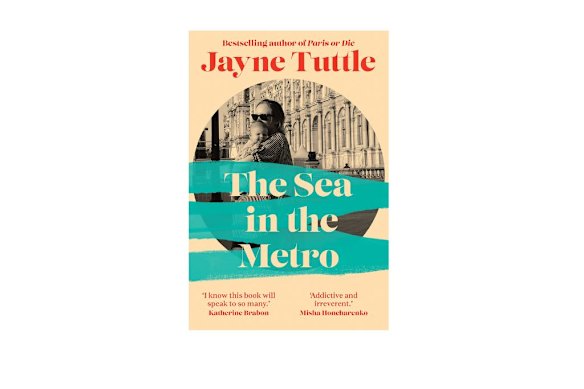
The Sea in the Metro
Jayne Tuttle
Hardie Grant, $34.99
Jayne Tuttle’s memoir (which follows from her previous book, My Sweet Guillotine, in which she experienced a freak, near-death accident in a Paris stairwell), may focus on the day-to-day demands of being a mother in France, but it also incorporates reflections on literature, art, love and life. There are times when the writing is at its most intense and visceral, that smells, thoughts, feelings and sensations all inform each other to create a sense of immediacy. She takes the reader into her marriage, the birth of her baby, the effect this has on her relationship and the balancing act of wanting to be free to pursue the artistic life (both Tuttle and her musician husband), with the demands of parenthood in a foreign country. She finds solace in the company of an older French woman and in New Wave French cinema, Goddard’s Un Femme est un Femme almost haunting the narrative, as does the death of her mother years before. An imaginatively crafted exploration of the conflicting desires that come with the urge to live, in the context of the everyday.
Mary Penfold
Grantlee Kieza
ABC Books, $49.99
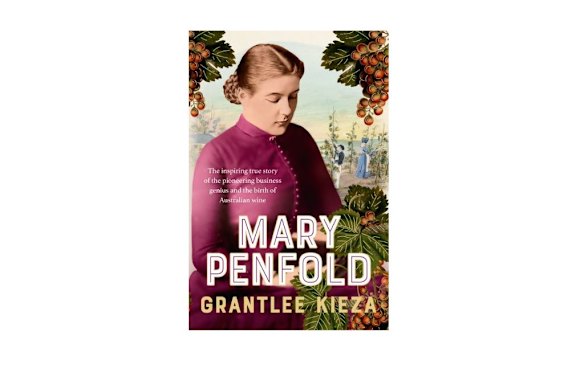
By the time Mary Penfold died in Melbourne in 1895 at the age of 79, her life’s work, Penfolds wines, had a gold medal from Paris. But the “commander-in-chief” as she was known, spent much of her life in the shadow of her doctor husband who got most of the official credit for the winery. With Kieza’s biography she steps out of the shadows. The fact is they planted those first vines together in 1844, and when her husband died in 1870, it was Mary who turned a small concern into the Penfolds we know today. The book gets off to a slow start - there’s a lot of familiar colonial background detail- but it gathers as it goes and as the matriarch takes centre stage. It’s an uplifting tale of dreams and resolution, but it also has moments of deep sadness, especially the relationship between Mary and her granddaughter, poet and writer Inez, who lived with Mary at the Grange before her untimely death. Mary, devastated, published her collected poems and verse posthumously. This is a well-rounded documentation of a life as rich as the wines Mary worked so hard to make.
A Mouse at Moresby
Irvine and Tony Green
Big Sky Publishing, $34.99
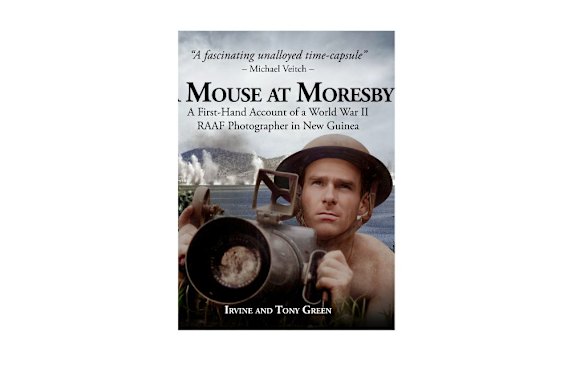
When the Japanese referred to the troops in Port Moresby as “mice” (a reference to the Rats of Tobruk), the troops took to it with the same relish as the Rats. This compilation of Irvine Green’s photographs, letters and diary extracts (edited and annotated by his son, Tony) is something of a message in a bottle, a valuable first-hand account of photo training and observing the first enemy raids on Moresby. His reaction to being in the trenches as the bombs fell is a mix of the terrifying and the almost casual – the test of the effect of a raid being if you could roll a cigarette afterwards without your hands shaking. But after he got a clear photograph of Japanese flight formations (which Intelligence in Australia was very impressed with) he skipped the trenches and took more. Not so much a portrait of grace under pressure, as extraordinary composure.
The Dark Prince of Melbourne
Ian W. Shaw
ABC Books, $35.99
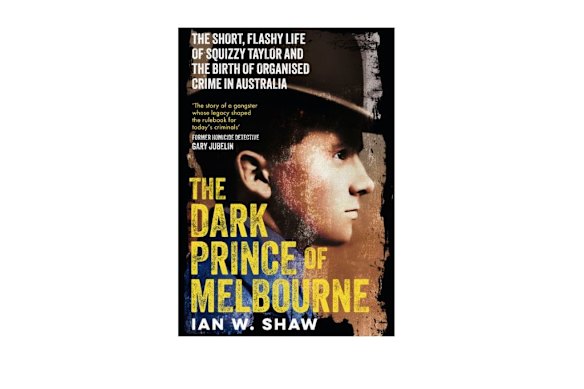
The passage of time might help cast Joseph Leslie “Squizzy” Taylor as a “colourful” underworld Melbourne figure, but, for all his dapper clothing, Squizzy was a thug. Ian W. Shaw, in this atmospheric but unsentimental study, provides a convincing portrait of a character ripe for mythologising. He tracks Taylor’s early years, notably as a pickpocket and corrupt jockey, to his frequent arrests and prison time and his emergence on the serious crime scene. The killing of Arthur Trotter, for example, a commercial traveller for MacRobertson’s Confectionery, robbed and murdered in his Fitzroy home in front of his wife and child. But Squizzy was slippery, police being constantly confounded in trying to pin a rap on him. In the end, justice stepped up in the form of a fellow thug, and Squizzy was famously eliminated in a Carlton shoot-out in 1927. Among other things, this is also a study of the emergence of organised crime in Australia, Squizzy casting a long shadow over those that followed.
Bedtime Tales for Cricket Tragics
Geoff Lemon & Adam Collins
Affirm Press, $36.99
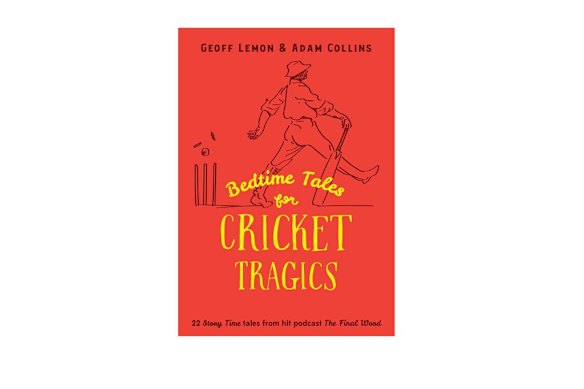
Most of the stories in this spin-off from Lemon and Collins’ podcast The Final Word have a distinct touch of the tall story about them – even when they’re true. George Coulthard, for example, a one-Test wonder, all-round hothead and a wide boy, ignited a riot in 1879 when umpiring a match between England and NSW in Sydney with a questionable run-out decision. There was a lot of money on the match and the punters in the crowd “smelled a fix” and burst onto the field, causing play to be abandoned. The other umpire was future prime minister Edmund Barton, and a 15-year-old Banjo Paterson being in the crowd. In another story, Arthur Coningham, labelled the “dodgiest Australian cricketer of all” (up against stiff opposition), achieved notoriety off the field in 1900 when he sued his wife for divorce (adultery), naming Monsignor O’Haran of Sydney. Twenty-two tales that are just the ticket for the Ashes tour.
The Booklist is a weekly newsletter for book lovers from Jason Steger. Get it delivered every Friday.