3 months ago
6
3 months ago
6
Julia Busuttil Nishimura is telling me about the three types of cheese she always has in her fridge when a shopkeeper interrupts her. They chat in Italian for a few minutes, she laughs, blushes slightly, then we turn back to the cabinet laden with hunks of Italian cheese.
“What did he say?” I ask. “He told me I know a lot,” she bashfully says.
He’s right. Julia has melded her Maltese heritage and time spent living in Tuscany with influences from her husband’s Japanese lineage to become a renowned author of four cookbooks, a recipe columnist for publications such as Good Food and a social media darling.

We’re at Australia’s largest continental grocer, Mediterranean Wholesalers in Brunswick. Like a die-hard cohort of Melbourne cooks, she loves it here. Leaving hospital five years ago with her second baby, Yuki, she came straight to its coffee counter for a $2 espresso and a ricotta cannoli (she couldn’t eat the soft cheese during pregnancy, and cannot again today as she is pregnant with her third child).
We are walking aisle by aisle through the hulking store so Julia can show me the most essential ingredients with which to stock an Italian pantry.
We’re placing building blocks for the easy execution of one of the world’s great cuisines into our trolley.
Easy? Well, yes, when you have a great olive oil, can of sweet tomatoes and a beautiful pasta, you’ve got dinner in 15 minutes.

You need a shaving of parmesan on top, too, of course - which brings us back to the cheese counter. The three cheeses she always has on hand are: parmigiano reggiano (aged cow’s milk cheese with a complex, nutty flavour), grana padano (like parmesan but not aged as long, simpler in flavour and cheaper!) and pecorino (sheep’s milk cheese essential in carbonara and cacio e pepe sauces).
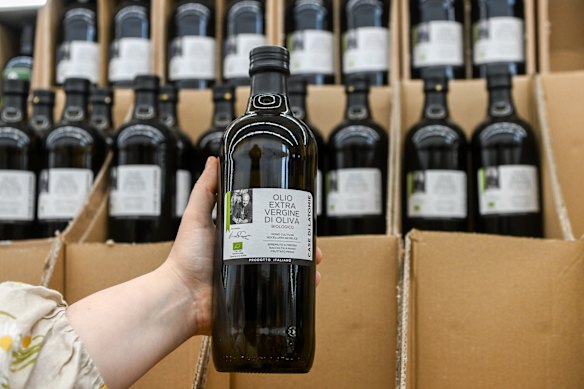
The staples of Julia’s Italian pantry
Olive oil
Case Di Latomie Extra Virgin Olive Oil, $30
Olive oil is the head of the holy trinity of Italian basics and the logical genesis of our excursion. Julia flips between using Australian and Italian olive oil, she likes both (local brands she buys are Mount Zero, Alto, Primo Estate), as long as they are extra virgin and recently harvested. Olive oil is a fresh product that denatures (oxidises) over time, so she recommends checking the back of bottles to see when they were harvested.
“You want something ideally less than a year old.” She makes a beeline for a brand here called Case Di Latomie from Sicily. It’s grassy and beautifully bitter from the health-giving polyphenols (powerful antioxidants).
“I don’t save good olive oil just for salads - I use it in everything - for frying, roasting, drizzling over pasta. It’s so good for you. I’m happy to spend the money on it.”
Tinned tomatoes
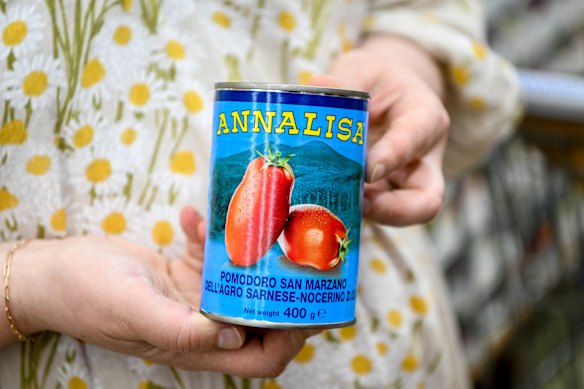
Annalisa Pomodoro San Marzano, $3.60
Tinned tomatoes are the next highly revered ingredient in the trinity, and possibly Julia’s most-used staple. Sourcing the best is key also, and one of her favourites is an Italian variety called San Marzano. These are heirloom plum tomatoes grown in the volcanic soil near Mount Vesuvius (the brand she gets today is Annalisa). This type of tomato is sweeter and less acidic than other varieties, with a complex, concentrated flavour.
We roll the pretty cans in our hands and note the DOP insignia, which in English means Protected Designation of Origin. This means the tomatoes are subject to a strict appellation control similar to that of wine which guarantees they are from the specific region, produced according to traditional standards. “Tinned tomatoes provide a flavour and texture that is the basis of so much of what I cook, so they have to be good.”
Pro tip: San Marzano tomatoes make a killer pizza base: she crushes them by hand, then grates in a clove of garlic, a scrunch of oregano (see below), salt, and a glug of olive oil.

Pasta
Gentile pasta, $5.75
Pasta is the final, precious ingredient in the trinity. We wheel the trolley into an aisle - aisles, actually - piled with a blinding array of dried pasta. Julia nabs natty blue packets of Gentile pasta from Gragnano, the so-called City of Pasta in Naples. “It’s an artisan brand - they use beautiful durum wheat, and it has a great rough-surfaced texture which helps the sauce cling to it.” (It’s a bargain here.) She goes large on her selections; her favourite is a tubular shape called paccheri.
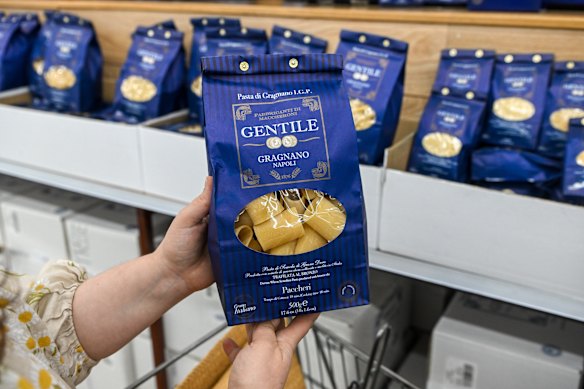
Pro tip: “This was the first meal I had with the family I stayed with in Tuscany: the mamma started with a cold fry pan and threw in cherry tomatoes, basil, some crushed garlic cloves, salt and olive oil. She cooked it on a low heat for about 30 minutes, and boiled the paccheri until just under al dente. She tossed the pasta into the pan, ladled in a bit of pasta water until the sauce became silky and the pasta perfectly cooked. Heaven.”

Risotto rice
Riseria Gazzani Carnaroli, $10.95
Veering from popular wisdom, Julia says the best type of rice for risotto is not arborio, which will do the job, but if you are keen to elevate your risotto game, use either the vialone nano or carnaroli varieties. The Riseria Gazzani brand from near Verona, is her favourite here, “but if you can find Acquerello, buy it!”
In the quest for a textbook risotto, the rice needs to be high starch and short- to medium-grain. Julia prefers the carnaroli rice which becomes creamy when cooked but still maintains a firm bite. Vialone nano is ideal for a more soupy textured risotto. “I always have both types in the cupboard.”
Pro tip: Julia’s pea, lemon and pecorino risotto uses carnaroli rice.
Passata
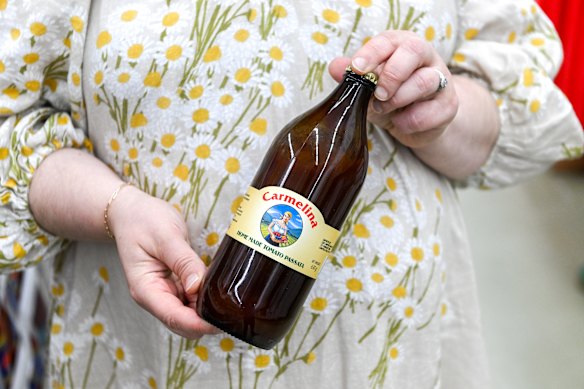
Carmelina Home Made Tomato Passata, $2.79
While tinned San Marzano tomatoes are her go-to in pasta sauces, Julia always has bottles of passata in comforting red rows in her pantry (she’ll often use them in ragus). She loves the beer-bottle-packaged Carmelina brand. As a big devotee of reading the ingredients listings on food labels (“we should do this with whatever we buy”), Julia likes this brand because it contains three things: tomatoes, cherry tomatoes and a tiny bit of salt.
Dried oregano
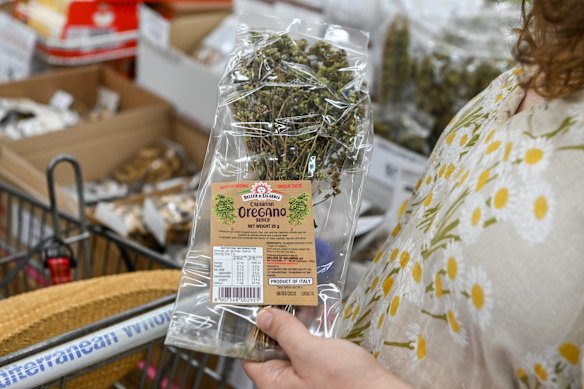
Whole bunch of dried oregano, $6
“Just don’t do it,” is Julia’s advice. Don’t buy dried oregano flakes in the ubiquitous sachets or slender glass jars (no name-shaming here, but you know what we mean). Buy bunches of dried oregano, still on the stem; “the taste difference is like night and day,” she says. She keeps her bunch in a glass jar and scrunches handfuls off when she needs it.

Tomato paste
BioNature Organic Concentrated Tomato Paste, $3.79
Many rich pasta sauces, ragus and braises such as osso buco require the baseload hit of tomato paste. Julia prefers jars of paste rather than expensive and over-packaged sachets or small tubs.
“Jars are easy to measure tablespoons from and they keep in the fridge once opened for ages; drizzle the top with olive oil to prolong its life,” she says.
She loves a brand called BioNature which says this on the label − Ingredients: Organic tomatoes (100 per cent).

Beans
BioNature Cannellini beans, $1.65
No self-respecting nonna is without legumes in the pantry. Julia is here for it: she always has cans of cannellini beans, lentils and chickpeas.
“Mostly with lentils, I prefer to use dried rather than canned - you do not need to soak these overnight and they are easy to cook.
“With chickpeas, I tend to use both dried and tinned. When I have the time, I will always choose dried, especially if I can find local varieties that aren’t too old, but when I am short on time, you cannot beat tinned ones for convenience.”
Tinned cannellini beans are her true must-have since it’s hard to find dried Australian varieties.
Pro tip: “In summer, I eat beans and tinned fish for lunch almost every day. I make a salad of cannellini beans, canned tuna, rocket, cherry tomatoes, parsley with an olive oil and red wine vinegar dressing.”
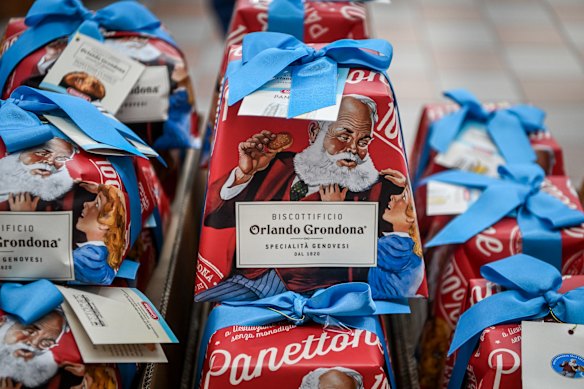
Something special for Christmas
Orlando Grondona Pandoro, $47.50
“I already have at least four panettone at home - we all can’t wait to start eating them,” she says of the traditional Italian Christmas sweet bready treat.
It is its first cousin, the pandoro, her family prefers. “This has no candied fruit or raisins in it: it’s just a fluffy, sweet star-shaped bread we rip up and dunk into coffee.”
There is a gloriously hued jumble of panettone and pandoro rimming the cafe section of Mediterranean Wholesalers. The very finest of these can be over $100. Her choice is $47.50 - a mid-way price but still gorgeous in quality, she says.
Pro tip: Her go-to this Christmas will be to slice off the bottom of a pandoro, scoop out some of the bread, then fill it with gelato, pop the bottom back on and re-freeze it until firm again.
Read more shopping guides: