2 months ago
17
2 months ago
17
An industrial-scale timber removal program in Victoria’s Wombat State Forest before its proclamation as a national park late next year has revived the controversy over what should be done with fallen trees.
Devastating storms downed countless trees across 45,000 hectares of state forest in 2021, with 1200 hectares so badly affected by “wind throw” that more than 50 per cent of trees fell within those areas.
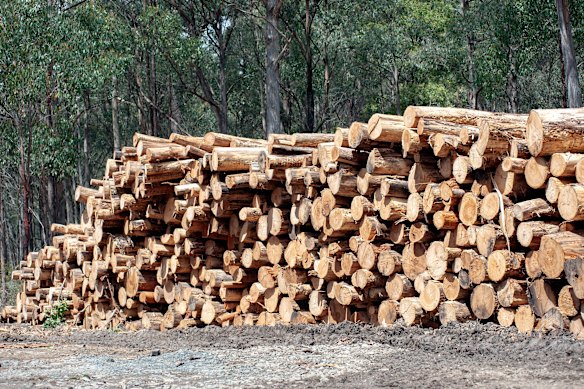
Fresh logs piled high in the Wombat State Forest, where the state government has resumed “storm recovery” logging.Credit: Sandy Scheltema
Since then, figures released under freedom of information (FOI) laws show that more than $2 million worth of timber has been salvaged from Wombat State Forest and sold by VicForests contractors and community forestry operators.
The “storm recovery” operation restarted in October and is slated to run through to June next year. Documents provided to this masthead show 490 hectares of forest will be affected, across nine coupes in Victoria’s central west. It’s estimated salvage operations have already taken place across 100 hectares since October.
Victoria officially ended native forest logging on January 1, 2024.
However, one leading forest scientist said salvage logging can have “massive impacts” on the biodiversity and ecological values of forests for decades, and the government was effectively allowing logging by stealth.
Wombat State Forest and the Lerderderg State Park, both north-west of Melbourne, will next year combine to become the Wombat-Lerderderg National Park, spanning 44,700 hectares. The parks include high-quality habitats, home to powerful owls, greater gliders, mountain skinks and brush-tailed phascogales.
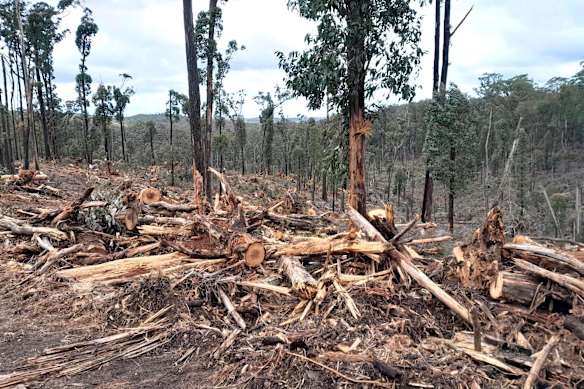
The “storm recovery” operation restarted in October and is to run through to June next year.
In private correspondence seen by this masthead, Chris Hardman, the chief fire officer at Forest Fire Management Victoria, said the “storm debris” program was an essential bushfire mitigation measure.
“These are not timber-harvesting operations and are not being driven by commercial outcomes,” he wrote.
Hardman confirmed trees that had been downed in the 2021 storms would be removed, as well as “finer fuels” that presented an increased bushfire risk.
The state government justifies the removal of vast quantities of wind-thrown trees as being necessary to reduce the risk of bushfires in the forest.
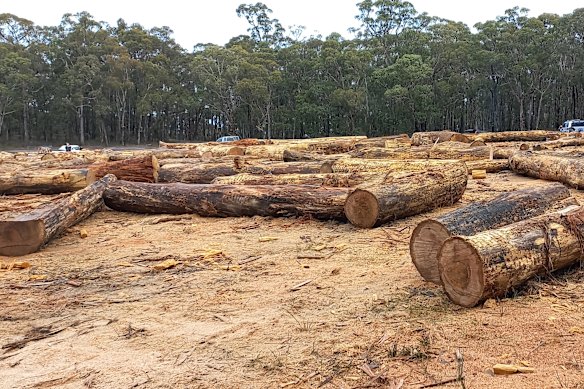
A site photographed recently in the Wombat State Forest.
“We are removing large fallen trees from areas of the forest that are strategically important for fighting fires,” a Department of Energy, Environment and Climate Change spokesperson said.
“Large fallen trees block access for emergency responders causing significant delays in response times, making fires harder to suppress and creating a greater risk to the community.”
But advice commissioned by the government, and released under FOI, argues the science is far from settled on whether it is preferable to leave wind-thrown trees where they lie or remove them.
“Relative to fire, the structural and ecological impacts of wind throw in temperate eucalypt forests is less well known,” said the advice prepared by University of Melbourne’s Flare Wildfire Research Group.
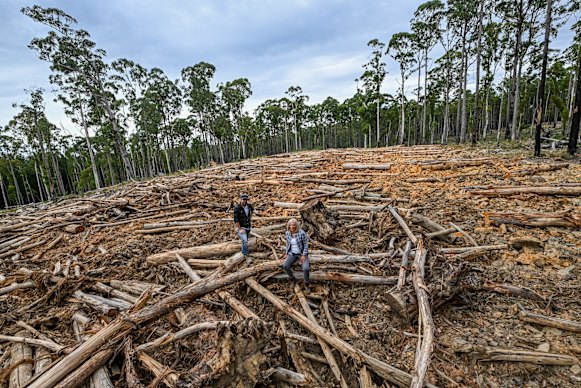
Conservationists Ben Gill (left) and Gayle Osborne in Wombat State Forest in March 2024.Credit: Justin McManus
“Wind throw, particularly in low-elevation, mixed-species forests, are complex events and relatively poorly understood, and it is difficult to estimate the impact of such events on a range of forest values, particularly over the long term.”
Professor David Lindenmayer, Australia’s most cited scientist forest ecologist who wrote the textbook on salvage logging in 2012, recently co-authored a research paper that argued removing dead trees does not reduce the risk of fast-moving wildfires.
After logging, including salvage operations, Lindenmayer said, forests conduct a “pulse of regeneration”.
“And there is very strong evidence that that pulse of regeneration in Victorian forests, from about 10 to 40 years after that logging operation, becomes very, very fire prone,” he said.
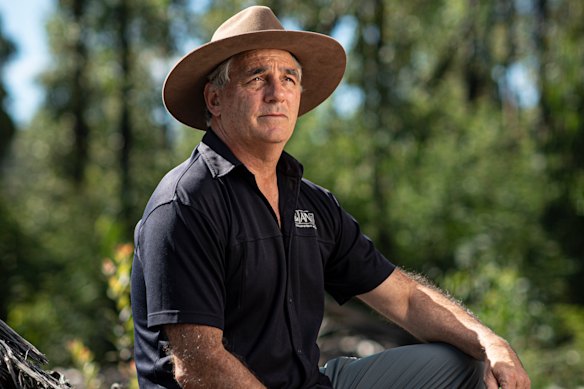
Professor David Lindenmayer.Credit: Wolter Peeters
Salvage logging involves multiple disturbances to forest systems, which Lindenmayer said have “massive impacts” on the biodiversity and ecological values of forests for decades.
“It’s been demonstrated from all over the world ... It is the worst form of logging, and the Victorian government is basically lying to the people who own the forest, which is the Victorian public, by saying that, ‘We’ve stopped logging’, when clearly they haven’t.”
Environmental campaigners say they support the removal of fallen trees from access roads, to help emergency services gain rapid access to forests in the event of bushfires.
But Victorian National Parks Association nature conservation campaigner Ben Gill said residents continued to document widespread damage to the Wombat State Forest that went far beyond remediating the damage sustained in the 2021 storms.

Fresh logs in the Wombat State Forest. Victoria officially ended native forest logging two years ago.
“Two-thirds of every tree processed in these operations is being turned into fine fuel and dumped across the forest floor as the forestry contractors are only interested in the valuable saw logs,” Gill said.
“That fuel increases fire risk and chokes regeneration. This is a department choosing to prop up a declining logging industry while walking away from its environmental responsibilities.”
Aerial imagery and photographs taken by members of the public shows logs piled high on landings.
An FOI document shows VicForest and community contractors removed 22,472 cubic metres of timber from Wombat State Forest between 2021 and last year.
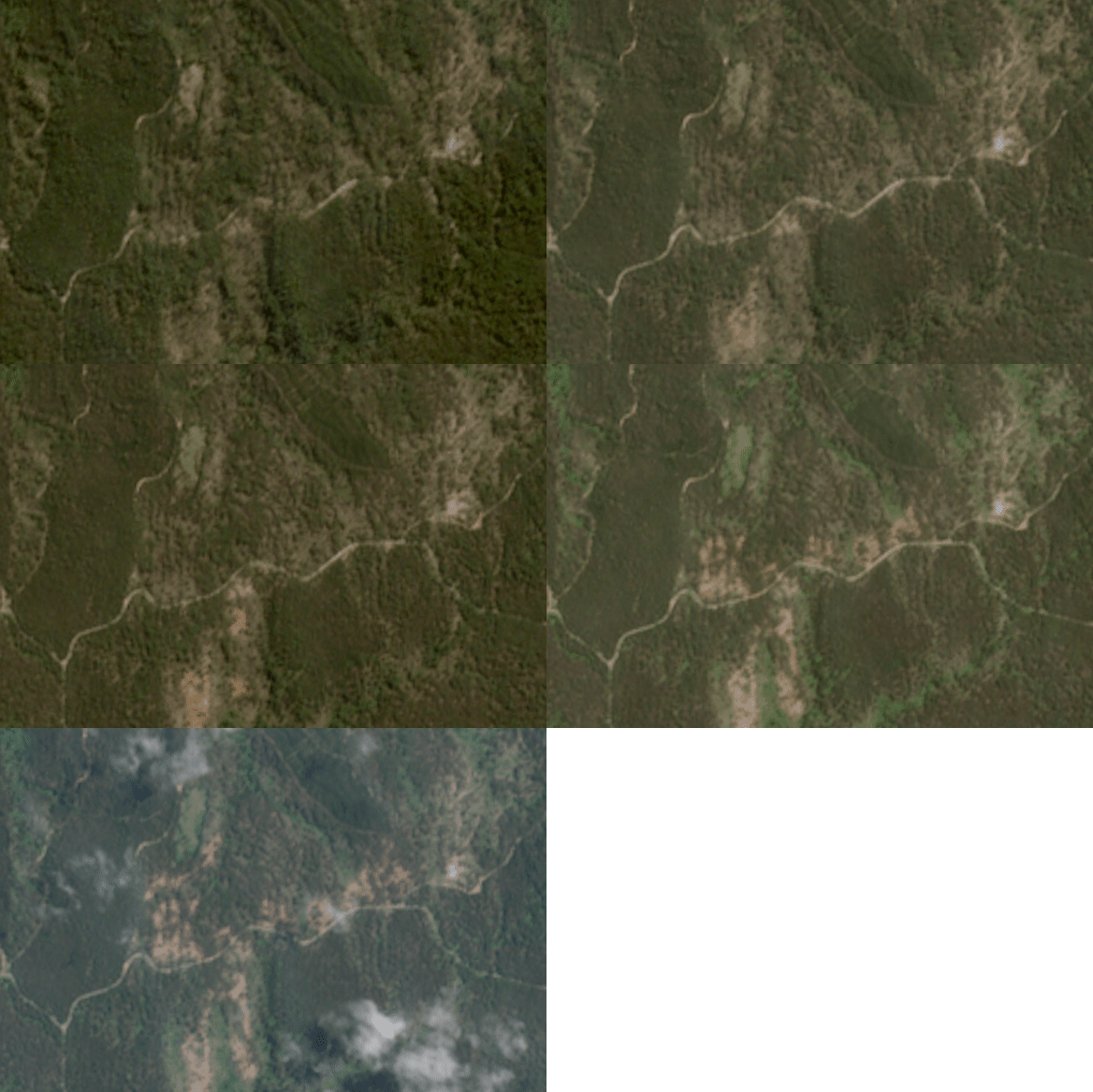
Satellite images show the destruction at Leonard’s Hill, in Wombat State Forest, from the air.Credit: Ben Gill, Victorian National Parks Association
But Gill believes the real figure being removed – based on satellite images of log piles in the forest – to be closer to 10,000 to 15,000 cubic metres per year.
When VicForests was conducting commercial harvesting operation in the forest, it said removing 3500 cubic metres of timber from the forest per year was a “sustainable” yield.
According to the University of Melbourne advice prepared for government, “fire has been the major disturbance in temperate eucalypt forests of Victoria, followed by timber harvesting and fire risk mitigation”.
Loading
“An increase in fallen trees and coarse, woody debris can provide important habitat for nesting, sheltering, basking and hibernation, and foraging substrates for a range of ground dwelling fauna species (insects, small mammals/marsupials and reptiles) as well as substrate for fungi growth.”
The university research team warned that salvage operations could increase the intensity of bushfires by producing drier fuels.
The department spokesperson did not respond to questions about why the government had not relied upon this advice in the context of salvage operations.
The spokesperson said some of the timber cleared from the state forest during “recovery operations” was provided to the nearby community for firewood.
Start the day with a summary of the day’s most important and interesting stories, analysis and insights. Sign up for our Morning Edition newsletter.
Most Viewed in Environment
Loading