3 months ago
20
3 months ago
20
The craze for frequent flyer points has expanded to the small business sector, with companies vying to lure small business owners by using perks such as flights in return for processing their payments of rent, payments or even tax.
In what is estimated to be a $5 billion industry, a raft of businesses has grown to help customers navigate and exploit airline-linked benefits.

One way to business class... Small and medium-sized enterprises can convert payment transactions into air miles.
The platforms and services help customers earn and redeem points, creating a business that is only possible through the rise of cash-rich airline loyalty programs.
The points payment sector is showing signs of strong growth. Pay.com.au, for example, now boasts more airline travel partners than American Express, even as the rules around fees on card could be shaken up by regulators.
The success of points sector is driven not only by the banks and airlines’ use of points as a marketing tool but also because cash-strapped small to medium-sized businesses benefit from the payments arrangements the speciality platforms offer.
Small businesses can pay bills through processing services like RewardPay, B2B Pay, Yak Pay, or Pay.com.au, which simplify the time-consuming complexity of payments for wages, rent, bills, even taxes, while smoothing out their often-lumpy cash flow.
Companies are charged fees for the services, and in return, they receive air miles from payments. Importantly, fees paid to the processing companies can often be claimed as a business expense for tax purposes.
While not giving a complete picture of the industry, annual value of purchases on commercial credit cards has jumped from $57 billion in March 2021 to over $115 billion in September 2025, according to RBA data analysed by Qi Insights.
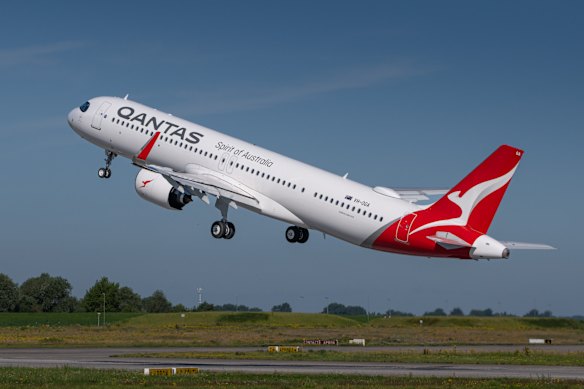
Payment processing takes off as a way to earn air miles.
Sevan Tuna, managing director of accountancy Alexander Spencer, is a customer of Pay.com.au.
He says it’s simpler than trying to navigate through multiple cards “to try to get the benefits of rewards points for business spending”. It also helps him manage cashflow.
Paying via credit cards gives small businesses access to longer terms for repayment. American Express business cards, for example, typically come with a 51-55 day deadline. For cash-constrained small business, often waiting for their clients to pay up, this provides helpful flexibility in paying bills.
Tuna said a business making transactions of $4 million to $5 million a year through the platform would earn multiple business-class flights to Europe and back. “And you wouldn’t get through them in a year because you’d be travelling way too often.”

Pay.com.au’s Grant Austin.
Using these services comes with a cost. Paying $20,000 with a linked account can cost $270 after taxes with Pay.com. The financial benefit for the points, however, would be $700, according to a calculator on the company’s site. Reward Pay charges a percentage of the transaction cost plus GST, but that is typically lowered after taxes.
The success of points-processing firms also reflects the decline in frequent flyer brand loyalty as a motivation for consumers. Research from consultancy McKinsey shows that even as consumers continue to recommend airlines, they recommend loyalty programs less.
Clients can choose to convert their points to the airline of their choice, on some services. The flexibility allows customers to move them from one program to another, opening more flight options.
Loading
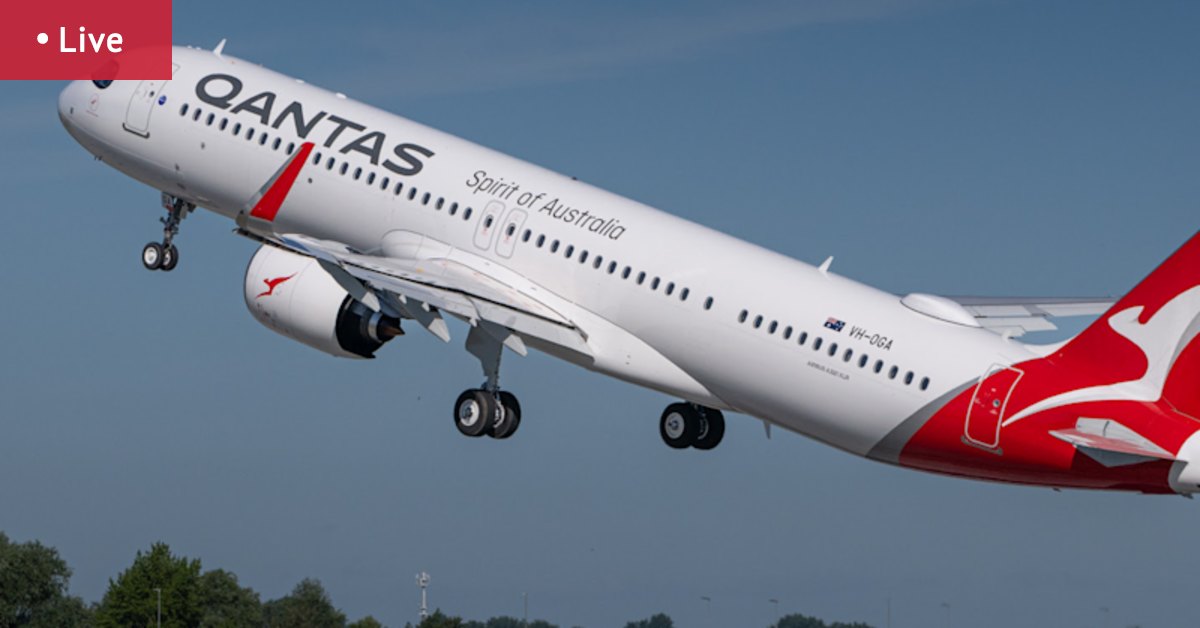
Pay.com.au has 12 airline travel partners ranging from Qantas and Virgin to Japan Airlines, to the British Airways Club. In its first few years, Pay.com only had Qantas and Singapore Airlines as partners, but in recent years, it has “has grown exponentially”, says Pay.com spokesperson Daniel Sciberras.
RewardPay focuses on key partners – Qantas and Virgin – and offers frequent promotions, such as a 30 per cent bonus – in which one dollar earns 1.3 Qantas points. Dawes estimates the marketplace in annual turnover for all the companies involved is $5 billion.
With the crossover of interests between banks, credit card and airlines, the best practices with points are always changing. Points strategist Adele Eliseo says: “As with everything, it’s all down to the mathematics and doing the calculation to make sure that it makes sense [for you].”
For example, in the years following COVID lockdowns, airlines held steady the value of points, and then increased their earn rates, to hold on to customers. Once lockdowns ended, airlines faced a surge of redemptions, prompting them to devalue their points – effectively requiring more for the same flight. Qantas, Virgin and Singapore Airlines have devalued their points.
Next year the Reserve Bank plans to ban debit card payment surcharges and cut interchange fees on card payments. When that happens, airlines are expected to devalue the points they sell to banks, shifting the landscape again.

There is a whole ecosystem of businesses growing around frequent flyer programs.Credit: Sam Mooy
The points sector is a complex tangle which reflects in part the convoluted design of the payments system, says Bradford Kelly, the founder of the Independent Payments Forum. Kelly said the payments for points-processing services inflates the cost of transactions. Top earners were the target market for these companies.
“They’re appealing to that demographic, and that demographic is the very upper echelon of spenders in Australia.”
Debit card transactions, which comprise the bulk of card use, subsidise the overall payment system, which the users of rewards cards benefit from, analysts say.
“At the moment, everyone is charged the same surcharge, whether it’s debit or credit,” said Kelly. But a “top echelon” is “getting all the benefit, and everybody else is paying for it through surcharges across cards on a flat basis”.
IPF represents small businesses in payment matters.
”When you tap your card, you’re being surcharged. And that guy with his frequent flyer card is being surcharged the same amount. But are you going to London for free?
“And so what’s going on is that those cardholders are getting all the benefit, and we as the rest of the world are paying for it.”
Loading
A spokesman for the company notes that “any SME can use Pay.com.au”
Sizeable sums are at stake. Pay.com.au has sought pre-IPO investment that would value the company at $600 million. “Our ambition extends beyond borders, with US operations set to scale in 2026 and beyond,” said CEO Grant Austin.
And it’s complex enough to warrant strategy. Pointify.com.au acts as a “concierge service” to help businesses navigate the ever-changing system. They train and consult with clients to develop strategies for getting the most out of the ever-shifting points ecosystem.
Adele Eliseo, who founded Pointify, said she works “with business decision-makers to essentially audit their expenses, look at their redemption goals, and then come up with a strategic plan on how they can optimise points earning”.
The success of air miles economy rivals the industry that spurred it: aviation. Peter Harbison, aviation analyst and chairman of GreenerAirlines.com, notes that during COVID, cash-strapped airlines mortgaged their frequent flyer programs for funds.
“When they did that, the value of the frequent flyer program was worth more than the total capitalisation of the airline,” he said.
The Business Briefing newsletter delivers major stories, exclusive coverage and expert opinion. Sign up to get it every weekday morning.
Most Viewed in Business
Loading