3 months ago
25
3 months ago
25
Four conditions set the scene for catastrophic fire conditions. So far, there’s only two
A weeklong heatwave is frying south-eastern Australia to a crisp and our many nervous conversations begin again: how bad will the bushfires be this summer?
On top of the extreme heat, forests in Victoria and NSW are full of highly flammable eucalyptus oil-filled fuel after strong vegetation growth due to several years of good rainfall.
But the fire danger ratings are not rising to extreme levels. How can that be?
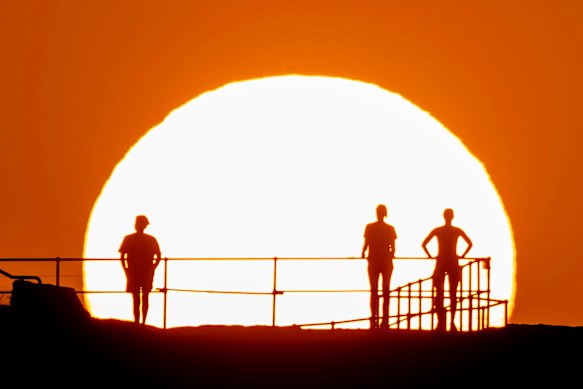
Sydney and Melbourne will swelter through the hottest weather in years over the coming week.Credit: Getty Images
Fortuitously, only two of the four horsemen of the bushfire apocalypse – heat and fuel – are up and riding across the landscape this summer.
Without the other two ingredients of catastrophic bushfires – drought and hot winds – we are unlikely to see a repeat of the gigantic fire front that swept through vast swathes of the eastern seaboard in 2019-20.
But while bushfire is an ever-present risk in summer, moisture is saving us from the likelihood of a repeat of Black Summer, and it has come in two forms.
In the two most recent catastrophic fire seasons on the eastern seaboard, Black Summer and Victoria’s Black Saturday in 2009, the parched, drought-stricken landscape was turned into a furnace by hot, dry winds from inland Australia.
Thankfully, the winds forecast in coming days will roll in from the sea, bringing moist air to the landscape. There are also widespread levels of at least average soil moisture, which trees suck out of the ground via their deep taproots, pump up their trunks and out into the atmosphere through their leaves.
Loading
The two years of above-average rainfall on the eastern seaboard is down to a La Nina weather pattern, which warms waters in the tropics near eastern Australia and drives rain-bearing clouds to the coast.
Despite the moisture, there is always a risk of bushfires, a fact that is highlighted by recent blazes. Localised fires in Tasmania, at Dolphin Sands, claimed 19 homes and in NSW at Koolewong, on the Central Coast, 16 homes were destroyed.
But former Fire and Rescue NSW commissioner Greg Mullins said while property losses were always expected in any summer, it was unlikely we would see fires as widespread and dangerous as Black Summer, Black Saturday and in the 2003 fires that swept though Canberra, unless we had a long-run drought drying the landscape.
Mullins said that although the top 20 centimetres or so of soil had dried out in recent hot weather, and grassland and forest leaf litter were turning brown, there was moisture below.
“The tree canopies aren’t stressed because there’s still moisture deep down,” he said.
The worst fires occur when the trees don’t have moisture to draw on.
“That’s when the whole forest top to bottom is alight with 30-metre flames and you get your massive crown fires, your pyro-convective storms and fire tornadoes,” Mullins said.
Regions in northern and central Victoria have the worst fire danger forecast across the south-east of the country in coming days. The second-highest levels of warning is forecast, due largely to rain shortfalls locally.
The other saving grace for most residents in NSW and Victoria is that there are no forecasts for hot, dry westerly winds to blast the states during the heatwave.
Coastal breezes are expected throughout the coming week, which Mullins said would make fires more manageable.
“It stops sparks and embers flying through the air and starting new fires and it limits the distance of spotting,” he said.
“It makes trees and vegetation and even dead leaves absorb moisture from the atmosphere, so it takes more energy to make them burn and the fires are less intense so even if it’s hot, the humidity’s up and the firefighters can usually deal with it.”
Loading
But the bushfire cycle never stops turning. The wet La Nina weather cycle is expected to end soon.
Global warming is making droughts in Australia more frequent and intense.
“If we go into drought this year, look out next summer,” Mullins said.
Get to the heart of what’s happening with climate change and the environment. Sign up for our fortnightly Environment newsletter.
Most Viewed in Environment
Loading