2 months ago
24
2 months ago
24

December 13, 2025 — 5:00am
The Mediterranean has two defining characteristics. One is its sybaritic lifestyle and the hedonism of its beaches and sunlit squares. The other is the weight of its history and culture. Brigitte Bardot versus Mary Beard, you might say.
But we have our own sun and beaches in Australia, and being earnest in the Mediterranean becomes wearying after a while. Another baffling ruin, another baroque church, another museum cluttered with ancient knickknackery.
The Baltic is a breath of fresh air, literally and figuratively. The climate is hardly comparable to the Mediterranean and the skies less sunny but, in this new age of heatwaves and bushfires, that’s a good thing. You won’t get a suntan, but you won’t overheat, either.
The tangle of influences – Swedish, German, Russian – is different. The history is less polished, the culture lighter, the people more sensible than self-indulgent, yet full of youthful enthusiasm. The nations and cities of the Baltic’s southern shoreline are undergoing happy transformations; while the Mediterranean is sunk in the past, the Baltic looks forward.
Don’t get me wrong: the Med is magnificent. But when I feel like a refreshing change, the Baltic is my go-to destination. I’m well pleased, therefore, to be setting off on a 15-night Baltic cruise from Copenhagen with destination-focused cruise line Azamara.
Copenhagen is an apt place to start. This cheerful city, with its blend of gingerbread old things and chic Nordic new things, sets the template for urban encounters in the Baltic. Sure, it doesn’t have the gravitas of Athens or Rome, but it has more contemporary appeal, design flair, eco-credentials and style.
The sail away is accompanied by the semaphoring of wind turbines and the honk of passing container ships. Azamara Journey dodges past an island fortress and spectacular Oresund Bridge, which disappears mid-channel into a tunnel to let ships sail unobstructed. Denmark is on the starboard, planes lifting off from Copenhagen airport. Sweden is to port, marked by the upthrust of Malmo’s Turning Torso skyscraper.
The pool deck erupts in live music from the onboard band, sunlight flicks off cocktails and is bounced back by the pale, winking sea. The start of a cruise is always exciting: anchors aweigh to somewhere new.
The first place new to me is Visby, on the large but low-lying Swedish island of Gotland. This former Viking stronghold and Hanseatic League trading port squats at the intersection of Baltic shipping routes. The old town is wrapped in walls sprouting dozens of towers of the type that Rapunzel might have fancied.
The Middle Ages were horrible, so I’m not complaining that Visby has been prettified for the modern age. It has clean cobbles and flowerboxes andan unexpectedly charming botanical garden. If Visby were in Croatia or Spain, it would be overrun with tourists, but Visby hasn’t been invaded since the time of the Vikings.
Baltic towns like this are made for cruising. Most are big enough to have interest and cultural oomph and yet small enough to easily get around. After a day, you can sail away satisfied over drinks in the ship’s Atlas Bar, feeling you’ve seen all the highlights.
We’re aboard a fitting ship for the Baltic. It is neither too big nor too small and is unpretentious and friendly. And good news for Australians: it serves good coffee and gratuities are included in the fare.
Next morning, the ship navigates the thousands of islands of Stockholm’s archipelago, a troll’s confetti of rocks occasionally adorned with pine trees bonsaied by the wind, and improbable red summer houses you imagine would only suit anchorites.
Stockholm itself sprawls over several islands sewn together by bridges. It arrives in an overture of Soviet-style apartment blocks that give way to elegant Renaissance towers and spires. The ship is small enough to dock in the city centre, leaving Stockholm’s chief attractions almost on the doorstep.
The old town, Gamla Stan, blushes with orange and rust-red buildings and a pompous pinkish palace, which is the only thing pompous about Stockholm, a city of breezy beauty. Next day, Helsinki is same-same only different: more breezy beauty, but less medieval and even more stylish.
That evening we have a special outing to the Helsinki Music Centre to hear Sibelius’ Finlandia played on the world’s largest modern concert-hall organ, which sends tremors through my ribcage.
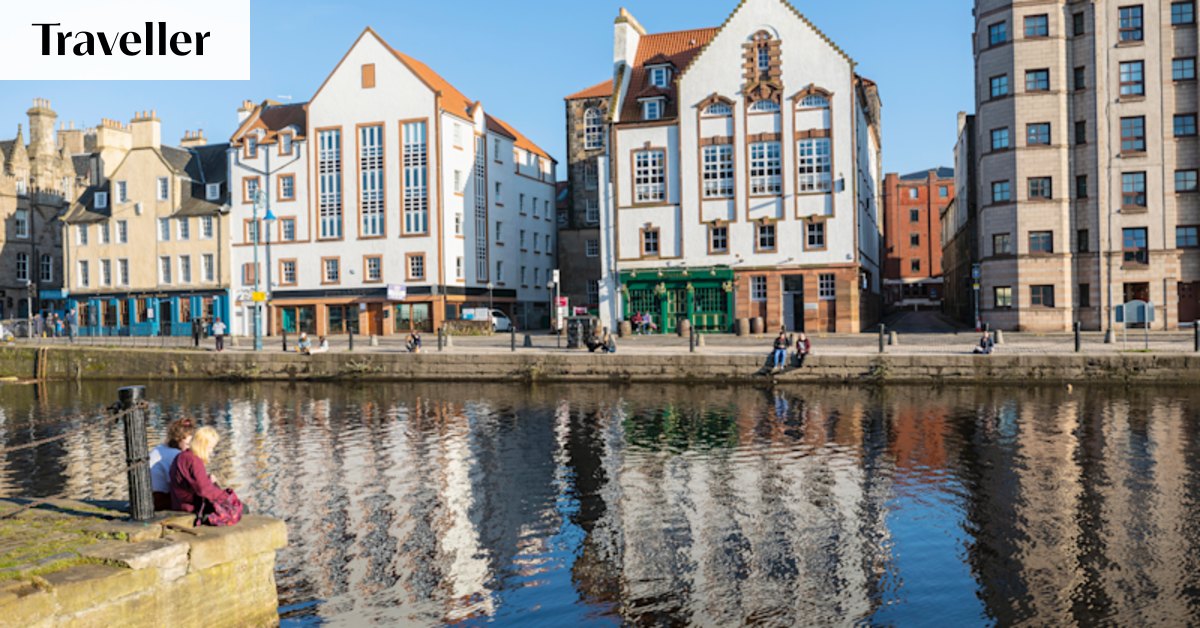
There are many things that tie Baltic ports together – culture, cuisine, architecture – but each town is varied enough to make every day of this cruise a new adventure. Tallinn in Estonia is a medieval pile of fairy-tale cliches wrapped in baroque prettiness and surrounded by newly hip, repurposed industrial areas.
Riga, in Latvia, is reached by a slow glide upriver. The landscape is flat and the city arrives in a disconcerting melange of glass high-rises, church spires, waterside villas and factories. Its suburbia, which I rattle through on a tram, retains Soviet grimness and grittiness. Yet it also claims the best assemblage of art nouveau buildings in Europe: wonderful streets of wedding-cake architecture laden with statues, masks, friezes and flummery enough to make me smile despite the rain.
Riga buzzes with youthful energy. Klaipeda in Lithuania has fallen asleep. But I like this town, which is neither a capital city nor a tourist trap, nor anything in particular. It frees me from sightseeing and allows me to happily slouch around and soak up the local ambience.
So many of the Baltic’s towns are like this, pale and pretty, hiding old forts and warehouse-lined canals and leafy parks. In the Mediterranean such a town would be crammed with shops selling lavender sachets, and cafes shrill with the chatter of tour groups. In Klaipeda I can stand in a square and talk to an idling policeman, and in the bakery semaphore my wishes to a woman perplexed at the challenges of serving a foreigner.
The Baltic isn’t tourist free. Copenhagen and Stockholm are of course well-known, and these days Gdansk in Poland is, too. I have to elbow my way through the old town and pay international prices for coffee, but I forgive Gdansk because it has everything I enjoy about old towns: creepy Gothic churches, alarming gargoyles, skew-whiff buildings, fanciful fountains.
That evening, a local Polish folk quintet plays on the ship’s pool deck over a buffet dinner served outdoors. It’s only one of Azamara’s efforts on this journey to bring on board a taste of local culture and cuisine.
Over the course of the cruise, buffet venue Windows Cafe offers dishes such as Swedish egg cake with fried pork and lingonberries, slow-cooked Finnish stew of beef, and Lithuanian beef rolls stuffed with mushrooms and pickles. My favourites: Lithuanian pork goulash, and a Latvian farmer’s breakfast of eggs, bacon, potatoes, onion with rye bread, rustic but satisfying.
Our last stop is Wismar in Germany. Another good thing about the Baltic is that public transport is so reliable I can hop on a train and visit neighbouring Schwerin to see its absurd lake-island castle and be sure I’ll be back in time for the sail away.
A male choir serenades us with traditional oompah songs from the quay in the hour before departure. Locals come out on their balconies to listen and clap. They wave at us on the decks, and we wave back.
In the Mediterranean they might have been brandishing placards and complaining about overtourism, but everyone seems cheerful in the Baltic. And why wouldn’t you be? This is Europe without fuss, and yet with everything going for it.
The details
Cruise
Azamara’s 11-night Baltic Intensive cruise between Copenhagen and Stockholm visits ports in Poland, Lithuania, Latvia, Estonia and Finland and offers a golf program for those wanting to test themselves on the region’s best courses. It departs on July 9, 2026 and costs from $5079 a person, twin share. An alternative 14-night Northern Europe & Baltic cruise between Tilbury (London) and Copenhagen departs on June 28, 2027 and costs from $8459 a person, twin share. See azamara.com
More
germany.travel, latvia.travel, lithuania.travel, poland.travel, visitdenmark.com, visitestonia.com, visitfinland.com, visitsweden.com
The writer travelled as a guest of Azamara.
Sign up for the Traveller Deals newsletter
Get exclusive travel deals delivered straight to your inbox. Sign up now.