3 months ago
14
3 months ago
14
“I don’t see school shopping in and of itself as a negative,” she said.
“I think the fact there’s some transparency around where you’re likely to get into a school is going to be really welcomed by parents.
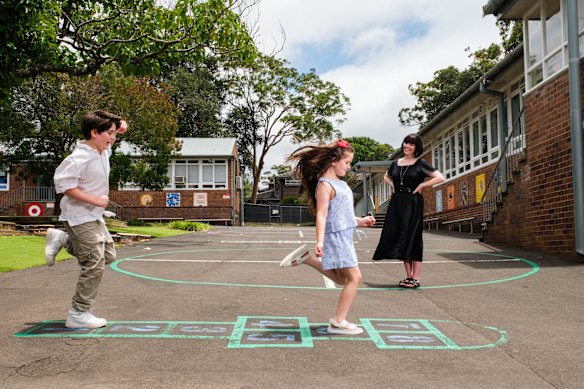
NSW P and C Federation president Gemma Quinn has welcomed the changes.Credit: Oscar Colman
“In some areas families already make big financial trade-offs to live near a preferred public school. Transparent information about capacity can reduce pressure, broaden options, and support more practical, informed decisions.”
She said clear information about capacity is respectful of parents’ time and reduces the stress when planning a child’s education.
“As a parent in a school with room to grow, I’m excited to see what this ease and transparency of information will bring,” she said.
Loading
“For many families, schooling decisions start with housing decisions. If parents can see where there may be vacancies along a realistic travel route, it can change the options available to them and help them plan their child’s future with more certainty.”
The change comes after the government expanded numerous co-ed high school catchments across Sydney as part of a policy shift designed to give every child in the state access to co-ed schooling by 2027.
Three new co-education schools will open in 2026 – Asquith High School, which was formerly Asquith Girls; Hornsby High School, which was formerly Asquith Boys; and Bayside High School, formerly Moorefield Girls and James Cook High.
Other enrolment changes introduced this year include the catchment for Cammeraygal High in Crows Nest being combined with Mosman High into a single “lower north shore enrolment zone” for students entering year 7 who live in Cammeray, Northbridge, Castlecrag and Naremburn.
“New students in the Lower North Shore Enrolment Zone will be eligible to submit a local enrolment application to Cammeraygal High School or Mosman High School,” parents were told.
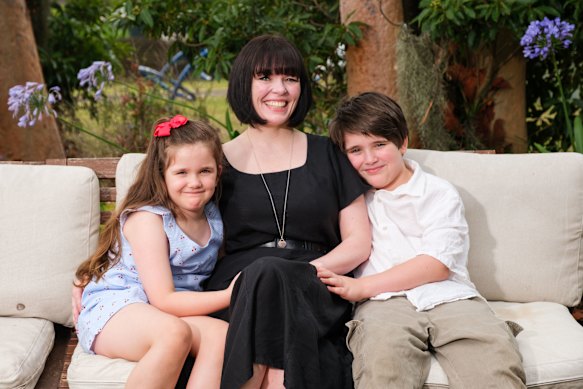
Gemma Quinn with her children Hamish and Hazel.Credit: Oscar Colman
President of the Northern District Council of P and Cs, David Hope, said the shared enrolment zone appeared to be the result of long-term planning failure to provide enough schools in the area.
“They have now provided the partially fluid boundaries between those two schools because they haven’t got the capacity for students to attend a school in their local community. They’ve had the last 15 years to sort this out,” he said.
More broadly, Hope noted the latest enrolment change came after a policy in 2019 saw the introduction of harder boundaries to combat school shopping.
Loading
“They set hard boundaries, which resulted in some additional parents opting for private and Catholic schools, but the department doesn’t like losing market share.”
He said the department must also focus on lifting the reputation of schools with a negative reputation.
“Sometimes the perceptions are not justified. Other times it is an old perception which persists. The department has done quite a bit to improve schools which aren’t as popular.
“But they don’t make staff adjustments because the school is not performing, they work around that. And that is not always in the best interest of the students or aligned with the department’s value statements.”
Most public school students will return to class on February 2.
Start the day with a summary of the day’s most important and interesting stories, analysis and insights. Sign up for our Morning Edition newsletter.