2 months ago
21
2 months ago
21
One of Victoria’s largest disability services providers is facing financial crisis, which its chief executive officer said was caused by higher-than-expected numbers of client deaths and a funding stand-off between the state and federal governments.
Scope chief executive officer Lisa Evans this week told her staff Scope’s services had to be “right-sized for our revenue”, or risk becoming unsustainable within four years.
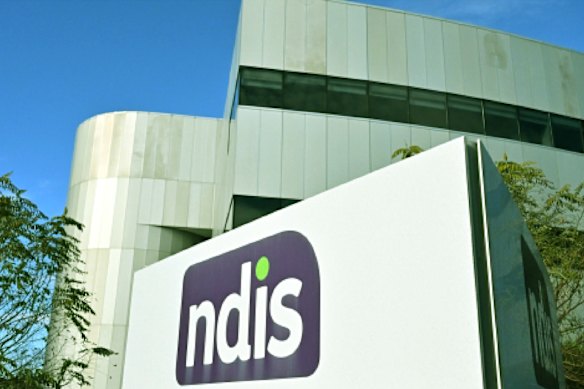
The loss of many NDIS clients and a funding stand-off between the state and federal governments have hit Scope, one of Victoria’s largest NDIS service providers.
More than 60 Victorian-supported independent living homes caring for the state’s most vulnerable residents have closed in the past 2½ years. The situation is set to become worse after January 1, when the state government grants that have topped up some National Disability Insurance Scheme clients’ payments end.
During a confidential “town hall” meeting on Thursday, Evans told staff the 77-year-old Victorian disability institution would have to reduce costs in nearly all areas of its operations.
When asked by The Age what impact this would have on disabled residents, Scope denied it would close any homes and insisted Evans was reinforcing the need to be strong financial stewards of clients’ money.
During Thursday’s town hall, Evans revealed to staff that Scope was forecast to lose $28 million in revenue this year, largely due to fewer clients in its homes, as well as the expiry of state government subsidies from January 1.
“Our client numbers have reduced far faster and greater than what we had expected or planned for,” Evans told staff on Thursday. “We have experienced on average between eight to 10 deaths per month, so when we lose a client because they sadly pass away, that revenue is also lost.
“We’ve also had some clients choose to move to other services – and that’s OK – but we’ve lost those clients and we haven’t been successful in having equal numbers come back in.”
Scope is one of five not-for-profit disability services providers that will be hit hard when Victorian government subsidies, that were intended to transition formerly state-run group homes onto the National Disability Insurance Scheme, ends on January 1.
The Victorian government began handing the operation of its state-run homes to the five not-for-profit private providers from 2016 in line with the creation of the federally funded NDIS. But because the state-run homes have higher operating costs than other NDIS-funded homes due to long-standing Victorian wage and service agreements, the state government agreed to provide $2.1 billion in subsidies to cover the operating cost gap costs for eight years while they transferred.
Those subsidies end on January 1, creating an uncertain future for 1985 disabled residents living in the former state-run group homes, which are now operated by Aruma, Life Without Barriers, Melba Support Services and Possability, as well as Scope.
As revealed by this masthead in September, almost 60 Victorian-supported independent living homes have been closed in the past 2½ years as the five not-for-profit organisations reported they are operating with only one month’s cashflow.
During her address to Scope staff on Thursday, Evans said the loss of the Victorian subsidies meant each of the group homes was costing more to operate than was being covered by revenue from the NDIS, resulting in an overcommitment of about $100 million a year.
Loading
“We always knew that [the Victorian government subsidy] was going to end, but it’s colliding with a decrease in our client numbers that’s far greater than what we expected, so we are going to have ongoing challenges in ensuring that our clients’ NDIS plans reflect their complexity and what it actually costs to provide support to them.”
In a statement to The Age, Scope stated Evans’ message to staff contained no changes, measures or service closures.
“The conversation focused on the shared responsibility we all have to review and strengthen our processes, systems and ways of working so we can right size our organisation to meet these challenges and ensure Scope’s long-term sustainability,” the Scope statement said.
“Scope continues to invest in high-quality, contemporary housing. This year, we have opened 13 new purpose-built SDA homes, creating 28 new SIL [supported independent living] places across Victoria and New South Wales. Over the next 18 months, we will open 26 additional homes with 73 more places.”
But Paul Healey, Victorian branch secretary of the Health and Community Services Union, said Evans’ staff message heightened concerns for the organisation and the people it cared for, with just 19 days until state government subsidies ended.
“Scope and Home@Scope have already shut around 29 houses that we know of, and people are terrified that management’s ‘right-sizing’ language is code for shutting even more,” he said.
“Every closed house means displaced participants, traumatised families, and workers left without certainty. That’s not sustainability, that’s abandonment.
“The Victorian and federal governments cannot sit on their hands while houses keep closing and a workforce crisis deepens.”
A Victorian government spokesperson said funding decisions for NDIS participants were the responsibility of the federal authority.
“We continue to advocate to the Commonwealth that NDIS plans should be adequately funded to provide the supports that NDIS participants need,” they said.
“Earlier this month, Minister [Lizzie] Blandthorn wrote to the Commonwealth again urging the federal government to meet its obligations on market sustainability and the need for action to protect provider viability.”
Start the day with a summary of the day’s most important and interesting stories, analysis and insights. Sign up for our Morning Edition newsletter.
Most Viewed in National
Loading