2 months ago
12
2 months ago
12
Court rules police use of capsicum spray on protester was ‘cruel, inhuman’
We’re sorry, this feature is currently unavailable. We’re working to restore it. Please try again later.
Victoria Police officers were “cruel, inhuman” and “degrading” when they sprayed capsicum spray at protesters at the 2019 International Mining and Resources Conference (IMARC), the Supreme Court has found in awarding $54,000 in a landmark class action case.
Justice Claire Harris delivered her judgment in the long-running case on Friday, finding the state of Victoria legally responsible for the unlawful physical assault (battery) and the violation of human rights committed by police against the lead plaintiff, climate activist and documentary maker Jordan Brown.
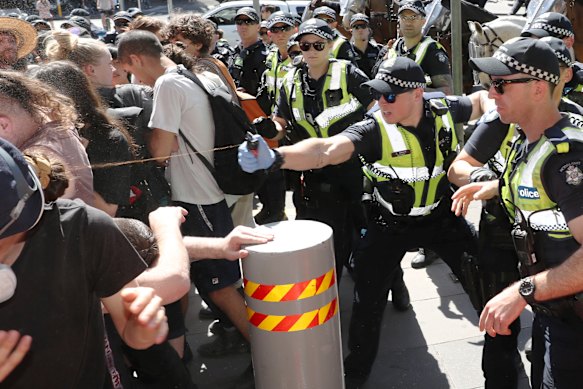
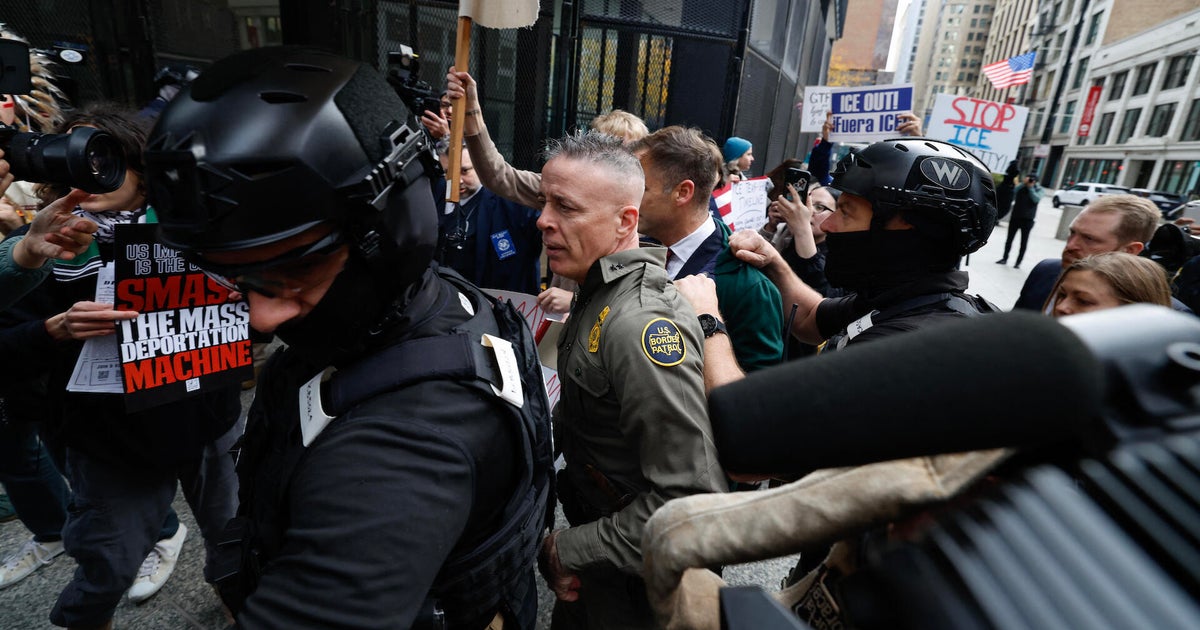
Police use pepper spray as protesters attempt to stop conference members entering during a protest against the International Mining and Resources Conference in Melbourne in October 2019.Credit: AAP
Dozens of protesters were doused with the spray – also known as oleoresin capsicum (OC) foam – after police attempted to arrest two climbers who had unfurled a sign outside the Melbourne Convention Centre on October 30, 2019.
The judge on Friday found the deliberate use of capsicum foam on Brown was unlawful and awarded him $54,000 – made up of $40,000 in general damages, $4000 in special damages and $10,000 in aggravated damages, which Harris said recognised the “increased distress and humiliation” caused by police actions.
The case was described as the first class action against Victoria Police specifically concerning the use of OC spray in a public protests, and advocates expect the ruling to set a major precedent for public order policing tactics in the state.
Harris said the case raised “very difficult questions” given the “dynamic and occasionally chaotic crowd environment” faced by police and found that police actions limited Brown’s rights to freedom of movement and peaceful assembly.
However, she warned the case wouldn’t necessarily set a new standard.
“The evidence will not set a precedent for every other case,” she said. “It is important to appreciate that these conclusions are necessarily limited in their effect to the use of OC aerosols as relevant to the plaintiff’s circumstances in the circumstances of this particular proceeding.”
The trial focused heavily on whether the actions of police officers, primarily from the Public Order Response Team (PORT), were an “unreasonable, unlawful and disproportionate use of force” in breach of the Crimes Act and the Victorian Charter of Human Rights.
The State of Victoria admitted that two officers deployed OC foam against the plaintiff, but defended the claim on the basis of lawful justification, primarily self-defence or to assist in a lawful arrest.
Loading
The police union had previously defended the actions of its officers as justified, proportionate and lawful. It has been approached for comment.
Victoria Police and Police Minister Anthony Carbines have been approached for comment.
Most Viewed in Politics
Loading