3 months ago
60
3 months ago
60

 Getty Images
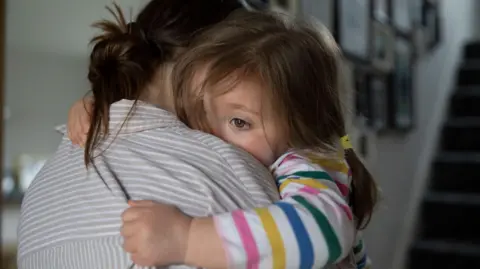
Government support for a new "child-focused" approach to Family Court battles between parents has been welcomed by its most senior judge, who described it as the "biggest change" in 30 years.
Sir Andrew McFarlane, who is stepping down from his role, said the move "turns the old approach on its head".
The scheme, which has been piloted since 2022, covers 10 areas and will be extended nationwide over the next three years.
Thousands of parents fighting over their children will be affected by the changes in England and Wales.
Currently, when parents arrive in court, each put forward their own version of events.
Cuts to legal aid mean that many people are trying to represent themselves. Recent analysis by the Nuffield Family Justice Observatory showed that in 80% of cases at least one parent is a litigant in person.
This means cases can take much longer to resolve, often lasting years. It can be traumatic for parents, who may give evidence in court, often recounting alleged domestic abuse. It can also have a serious impact on the children.
The BBC is following a case in which parents have been fighting over a six-year-old girl for almost her entire life. It is only within the last year or so that the little girl's voice - her wishes and feelings - have been reported to the court, through a social worker from the independent Children and Court Advisory Service (Cafcass).
The Child Focused Court will change that.
Before the case gets to court a Cafcass social worker will meet the child, and the parents. The judge will have their report when they first meet the parents.
Sir Andrew explained: "The judge will say, is this what's going on? Well, look at the impact on your child of what you two are doing.
"What are we going to do to make things better? What are we going to do in the future for this child? So it's a very different approach, a problem-solving approach, that requires more resources, particularly from CAFCASS."
CAFCASS has estimated it will need to recruit 200 more social workers to manage the new approach. It welcomed the £17m funding for the first year and said it would "continue to be clear" about any additional resources that it needed as the scheme is extended.
The government has promised more funding over the three-year rollout, moving from the 10 pilot areas to all 43 court centres.
Sir Andrew said he was confident the new approach could be adopted nationwide, though it would take time to train advisers, court staff, judges and magistrates.
 Judicial Office
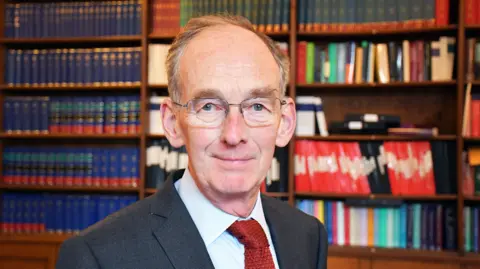
Sir Andrew said being a family judge meant having enormous empathy but also protecting yourself emotionally to a degree
Justice Minister Baroness Levitt KC said the new approach could "help spare more children the pain of drawn-out proceedings, deliver swifter justice for families while making sure support comes earlier when it is needed most".
She said the new system of courts had already "halved backlogs and resolved cases months faster in our pilot areas" with "more children feeling heard".
The Domestic Abuse Commissioner Dame Nicole Jacobs said she was thrilled that the government had "heard the calls from both children and adult victims" for a family justice system that "truly understands domestic abuse, listens to their concerns, and prioritises their safety."
While the Association of Lawyers for Children welcomed the rollout, it warned the model would not "achieve genuinely transformative change" unless it was accompanied by "wider reform and adequate funding of the chronically under resourced legal aid scheme, and proper funding of Cafcass and the family courts".
As the most senior family judge, Sir Andrew, who is retiring completely this week, has had to make very difficult decisions.
He compared the role of family judge to that of a trauma surgeon, saying: "I think all professionals who work in family justice get used to protecting themselves to a degree from what goes on.
"But equally, you couldn't do the job if you didn't have enormous empathy for the individuals in front of you.
"So it's a difficult tightrope to walk. You've got to be emotionally connected enough to understand what's going on, but protected so that you aren't drawn in to the emotional fallout yourself."