2 months ago
18
2 months ago
18
One day into the new era of social media age restrictions, thousands of young Australians have been booted from their favourite apps.
The process of identifying and blocking users under 16 is still subject to a progressive tech rollout, meaning many are still logged in to TikTok, YouTube or X, either proudly celebrating their wiles in cheating the regime or keeping a low profile and hoping to be overlooked. How long they stay there depends on how well they play the game of cat and mouse.
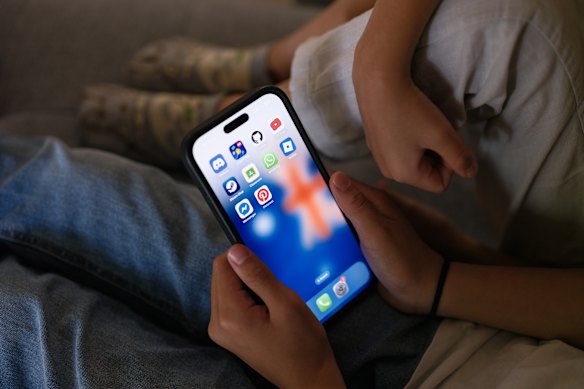
Staying logged in is not impossible for under-16s, but it’s becoming very complicated.Credit: Getty Images
Rise of the alts
Social media companies had a full year to consider how best to comply with these rules, but that also means young users who were so inclined had a year to consider how to dodge them. Their main account contains a lot of data that can be used to infer their age, and may even show their real birthday. But it would have been trivial to set up several alternates that don’t.
“The minute the ban was announced, kids and teens were creating new accounts with older dates of birth,” said Yasmin London, former police officer and safety expert at parental control platform Qustodio.
Loading
“They were onto it straight away, and there were thousands of TikToks showing exactly how to do it. There’s a ‘how-to’ culture forming around it. That has now moved to Discord and other platforms not covered by the ban.”
As many adult social media users now know, plenty of users with older dates of birth are being asked to confirm their age.
Simply saying you’re an adult isn’t enough to convince the apps, some of which monitor things like preferred content, friends lists, typing speed, scrolling patterns and language use to infer age. Sooner or later, even carefully crafted alts will be asked to verify.
Changing faces
Which is where facial age estimation comes in. Platforms are forbidden from using government ID as the sole way for users to prove that they’re over 16, and most have opted to use selfie scanning tech provided by age assurance companies. But this technology only guesses a face’s age and sends the pass or fail to the app; it doesn’t attempt to verify that the face belongs to the account owner.
“We’ve heard of kids borrowing devices or using family members for facial age checks. Some parents are aware, others aren’t, but either way, it’s a gap that’s being actively exploited,” London said.
“Some parents are also willing to actively support their kids bypassing the ban.”
Even without an adult’s help, that ‘how-to’ culture is helping explore effective ways kids can make themselves appear older. That includes lighting, head angle, eye position, facial expression and even props. Facial estimation techniques are good, but they also need to be fast and avoid locking out legitimate adults, which can be exploited.
New locations
There has been a lot of talk about under-16s using virtual private networks (or VPNs) to avoid the social media ban. A VPN works by sending your internet activity (either all of it, or just certain apps and services) to its destination via a server somewhere else in the world. So if you used a VPN to connect to TikTok, you could make it appear to TikTok as though you were logging in from the US or France or anywhere else.
However, VPNs can be complex to set up, especially if you need them on your phone as you move around, and can interfere with other services. Good ones are expensive, free ones can be dangerous, and they can be blocked at a router level by parental control products like Circle. Platforms can often identify VPN users by tracking known servers and inspecting data, and some identity companies offer this as part of their age assurance suite. So assuming social media companies are actively looking for VPN users (and the eSafety commissioner has asked that they do), they are not guaranteed to work for the purposes of circumventing the ban.
Loading
“We commend Australia’s efforts to protect teenagers online. However, such laws are new, and we’re yet to see how they will play out in practice,” said a spokesman for NordVPN, noting it was too early to tell if the country will see an uptick in VPN use.
“Age checks do not have to be perfect to be effective. Even with a VPN, Facebook can likely still identify users as Australian and determine their age, and adults may not need to provide ID or undergo further verification. If your Facebook account is 15 years old, you’re almost certainly over 16.”
Seeking refuge
If all else fails, there are plenty of other apps that are not actively cracking down on under-16 users. Lemon8, which comes from the same parent company as TikTok, is currently a popular one for Australian social media refugees, but there are signs it’s also beginning to comply with the rules.
Apps that are primarily for messaging are exempt from the ban, meaning networks can shift to WhatsApp, Discord, Signal or the like to keep in touch – or to organise the next attempt to rejoin TikTok, Instagram or Snapchat while flying under the radar.
Get news and reviews on technology, gadgets and gaming in our Technology newsletter every Friday. Sign up here.
Most Viewed in Technology
Loading