2 months ago
14
2 months ago
14
Budget update suggests WA households living the good life as iron ore royalties fly out the door
The Cook government has another $1.1 billion in revenue to play with in 2025-26, but as quickly as that money comes in, it is being spent as Treasurer Rita Saffioti moves to put out political fires in health and housing.
Saffioti painted an optimistic picture of the state’s economy and finances, as well as WA household budgets, during her mid-year budget announcement on Thursday.
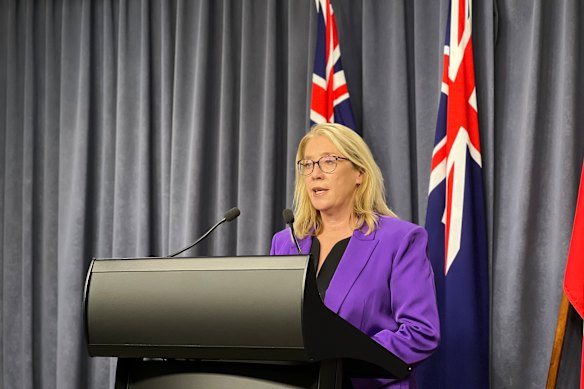
WA Treasurer Rita Saffioti on Thursday.Credit: Hamish Hastie
She pointed out home budgets were in better nick than any other state, with West Australians spending more on discretionary items like eating out and alcohol.
According to the mid-year review figures, total West Australian household consumption was up 3 per cent, compared to 2.75 per cent predicted in June.
West Australians’ discretionary spending also grew 3 per cent compared to the national average of 1.1 per cent, meaning Sandgropers were outspending other Australians three to one.
The mid-year review contained another $160 million for cost-of-living initiatives like the extension of the regional airfares cap and patient-assisted travel scheme.
Saffioti defended her government’s cost-of-living measures in the face of continued opposition to its spending on the Burswood racetrack, and denied highlighting discretionary spending was about suggesting the WA public didn’t need as much cost-of-living support.
“What we’re doing is we continue to work with the West Australian community. We’ve delivered more cost-of-living relief than I think any other jurisdiction,” she said.
“There are people with different experiences out there, and I absolutely acknowledge that. That’s why we continue our targeted incentives or targeted assistance.”
State final demand growth, which measures the size of the WA economy, jumped 0.5 per cent to 3 per cent compared to the June budget, with two thirds of that from private investment in the state.
“That shows that the fundamentals of our state are very strong because the demand is being fueled by the private sector,” Saffioti said.
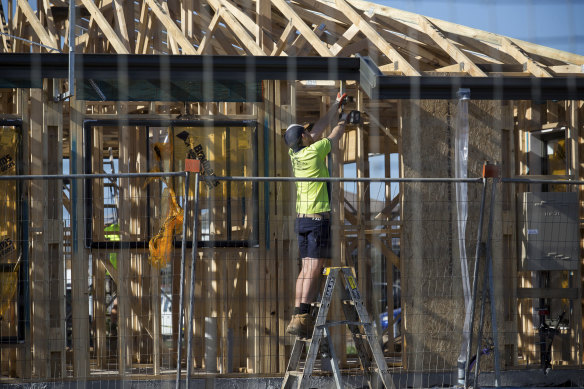
WA housing will receive a much-needed boost.Credit: Paul Jeffers
Once again, iron ore has proved a godsend to the WA budget, with $1.6 billion more pouring into the state’s coffers than predicted in the June budget due to higher-than-budgeted iron ore prices.
The state’s housing boom also resulted in an extra $830 million in stamp duty revenue and further $167 million from the elevated gold price.
The $51.4 billion in revenue predicted for 2025-26 would be higher, but Saffioti continues to push back receipt of nearly $1 billion in dividends from Synergy and Water Corp until next year.
The state’s operating surplus improved marginally from $2.4 billion in the June budget to $2.5 billion, but that’s because the extra revenue has already been earmarked for spending on areas like health and housing.
Debt is still predicted to balloon from $30 billion in 2024-25 to $35.7 billion this financial year, but Saffioti said it was still much less than the $39 billion predicted in the June budget.
Saffioti said addressing housing was a key way to reduce cost-of-living pressures in the state.
A key plank of the mid-year review was a $435 million cash injection into the state’s housing sector including pouring $234.4 million into the social and affordable investment fund to build 329 houses and refurbish 91 older dwellings.
The housing crisis has been a political nightmare for the WA government and a consistent target for the opposition, with the state’s public housing waitlist stubbornly high at more than 23,000 applicants and 7800 priority applicants.
Loading
Opposition Leader Basil Zempilas took to Facebook on Thursday to claim some credit for the extra funding, likening it to the recent decision to spend an extra $1.5 billion on health infrastructure.
“This is why a strong and effective Opposition is so important,” he said.
“Long overdue and much needed. Today, with this announcement in housing, the State Government have conceded they haven’t ‘been pulling every lever’.”
The extra health and housing funding will come from WA’s extraordinary revenue-raising capacity, driven by resources and the housing sector.
Saffioti claimed its efforts in the housing space are bearing fruit with the number of new homes approved reaching 23,726 in October and more than 3800 additional homes completed since it embarked on its social and affordable home build effort.
The extra housing money will be spent across a range of other initiatives.
About $6.5 million will be spent on extending the rent relief program until June next year. That program allows tenants at risk of eviction can apply for up to $5000 in one-off grants to pay their rent.
More than $16 million will be added to the housing enabling infrastructure fund to be spent on connecting about 5000 new homes in new developments with water infrastructure.
Development WA will receive $61.9 million to unlock land in Alkimos, Brookdale, Byford, Casuarina,
Hamilton Hill and Yanchep.
Loading
The state will also extend its $10,000 cash incentive to bring 1000 more tradies out west with $10 million for the construction visa subsidy and build a life in WA programs.
On the regional front, the government will allocate $57 million across a range of programs to improve housing supply in regional WA.
Urban Development Institute of Australia WA chief executive Tanya Steinbeck was particularly pleased to see further funding in the housing enabling infrastructure fund.
Most Viewed in Politics
Loading