3 months ago
25
3 months ago
25
Australia continues to grapple with the Bondi Beach terror attack, more than a week after December 14, when two gunmen opened fire on a Hanukkah celebration, killing 15 people and injuring dozens more.
Follow along here for rolling updates on the continued fallout.
Here’s what you need to know this morning.
- The full case against the Bondi shooters can be revealed after the media advocated for the release of court documents that allege the father and son trained in Australia for their attacks.
- Protesters gathered in Sydney and Melbourne on Monday in response to plans announced in both states to restrict protests after terror attacks, with some attendees in Sydney chanting “globalise the intifada”.
- A funeral for Dan Elkayam, a 27-year-old French engineer who was killed in the massacre, was held on Monday. He was described by friends and family as “humble and loving”.
- Twelve victims remain in hospital, and four remain in a critical but stable condition.
- Accused Bondi terrorist Naveed Akram has been transferred from hospital to a correctional centre in Sydney.
- Prime Minister Anthony Albanese said he understood anger being directed towards him at Sunday’s vigil, and apologised for “what the Jewish community and our nation as a whole has experienced”.
- Also on Monday, Federal Opposition Leader Sussan Ley launched an extraordinary attack on Foreign Minister Penny Wong, criticising the minister’s behaviour and absence in Sydney since last Sunday.
- NSW Premier Chris Minns will subject hate speech legislation introduced on Monday to further scrutiny, announcing that the reforms will be referred to a parliamentary committee.
- Prime Minister Anthony Albanese’s approval rating fell in the aftermath of the terror attack as social cohesion frays, polling by this masthead reveals. The PM met with cabinet on Monday and also convened a meeting of the national security committee.
- Victorian Premier Jacinta Allan announced further steps to fight antisemitism on Monday, including reforms that will look to bolster hate speech laws, give police more powers to crack down on protesters, and reassess gun laws.
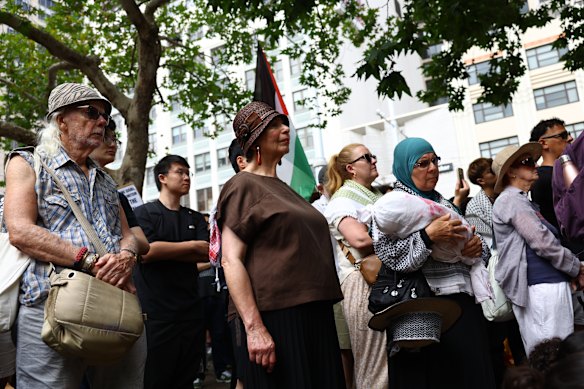
A vigil and rally is held in Sydney to protest the NSW government’s proposed anti-protest laws. Credit: Dominic Lorrimer