
 3 months ago
74
3 months ago
74
When Prime Minister Anthony Albanese and NSW Premier Chris Minns fronted television cameras two days after the deadly antisemitic terror attack at Bondi Beach, the pair presented a united front to shocked and scared Australians.
Speaking on the 14th floor of the NSW Police executive offices in Elizabeth Street, Albanese and Minns assured the public that gun laws would be tightened, while a police and counter-terrorism investigation continued.
What viewers didn’t know was that only moments before, the leaders had clashed metres away from the assembled media. Some officials – including senior police officers – were asked to leave the room while the duo had it out.
The disagreement concerned details about Naveed and Sajid Akram’s travel to the Philippines, which had surfaced in the media that morning. Albanese suspected it had been leaked by NSW Police. Their blunt exchange was over in minutes – yet it reflected a deeper story.
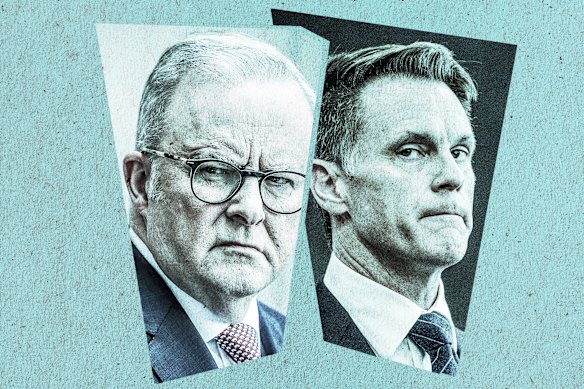
Never allies in the tribal world of Labor politics, the pair had a relationship that would be stretched to near breaking point as an emotional political debate erupted over antisemitism and security. It caused their relationship, as one senior NSW Labor MP described, to go from “bad to worse” since late last year.
Those tensions flared again on Wednesday after Minns used a media conference to call for income tax cuts, while failing to defend the federal government’s contentious reforms of negative gearing and capital gains.
Friction between prime ministers and premiers of the same political stripe isn’t new. Often, enmity can be deeper among politicians on the same team, like that between former prime minister Scott Morrison and ex-NSW premier Gladys Berejiklian.
But Minns and Albanese’s discord stands in contrast to the prime minister’s relationship with other premiers. And with both sides at an impasse over a bailout package for the crucial Tomago smelter, some in Labor question whether a lack of goodwill is inhibiting the delivery of outcomes.
This masthead has spoken to a range of sources in Macquarie Street and Canberra who have intimate knowledge of how the duo get along – or don’t. The sources, including top MPs and consiglieres who have worked with or around the pair for years, were granted anonymity to speak openly.
While the tension is a badly kept secret within Labor, the two leaders have a respectful working relationship. They speak on the phone. Minns and his wife, Anna, have dined with Albanese and Jodie Haydon. Haydon and Minns’ wife caught up this month and are friendly.
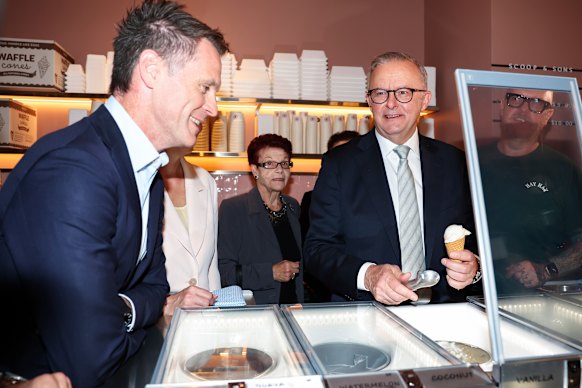
Asked about the specific elements of this story, Albanese said: “I work very closely with Premier Chris Minns and regard him as a friend. Premier Minns is a hardworking and effective premier focused on delivering for the people of NSW.”
Minns offered similarly soothing words.
“Prime Minister Anthony Albanese and I have known each other for a long time and have a good personal and working relationship over many years in public life. We’ve worked closely together through some incredibly difficult moments for NSW as well as on major reforms and investments that are making a real difference for people across the state.”
Their ability to remain on solid terms is critical to the nation’s future. They need to fix the mistrust between NSW and federal police that ASIO boss Dennis Richardson observed in his investigation into the Bondi response, and which was highlighted in the saga over a caravan bomb hoax in Dural.
On energy policy, they don’t see eye to eye on the future of Tomago, a symbolic part of the national debate on industrial capacity and renewables. And on tax and economics, Minns is beginning to offer an ideological contrast with federal Labor.
At its heart, however, the rivalry comes down to who holds sway and status out of the two leaders: one governs the harbour city looking out from Macquarie Street; the other has a grip on the nation from his harbourside mansion at Kirribilli.
Two lone wolves
Albanese is a 63-year-old whose path to the Labor leadership was seen as unlikely, as a member of a Left faction perennially in the minority.
Minns, 46, ran for the leadership twice before succeeding in 2021. The Princeton-educated former firefighter always had his eye on the state’s top job.
The pair have similarities. Both are described as lone wolves. Albanese morphed from a solitary insurgent to a consensus builder with a knack for building up wide networks of trusted contacts.
Most of their adult lives have been inside the NSW Labor Party, albeit from differing generations and factions. Both delivered their parties into government after long stints in the wilderness. Each feels they have a special capacity, beyond their colleagues, to win and maintain power.
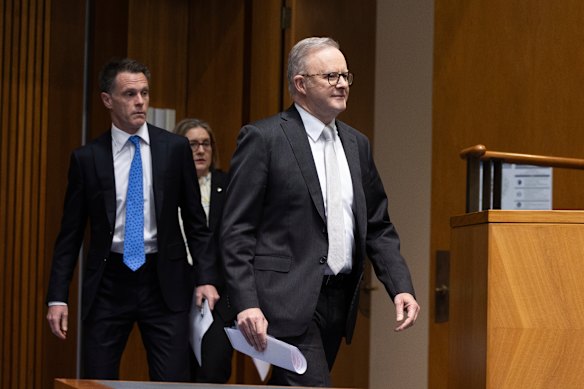
Albanese spent decades as a factional warrior in the Left, fighting the dominant NSW Right, which produced Paul Keating and Graham Richardson. Albanese has told colleagues about the feat of ascending to such high office from the NSW Left, always seen as inferior to the “whatever it takes” centre-unity right faction in NSW, from which Minns hails.
Of those who spoke to the Herald, there was no agreement about the genesis of tensions between the pair.
Some trace it back to before Minns entered parliament, generated by distrust after years of factional sparring. Others explained it by way of personality: either they’re too similar (both too stubborn); or, they see the world differently.
“They don’t have a good relationship. It goes back well before my time,” one MP says.
This contrasts with the prime minister’s rapport with other premiers, a senior Labor source says. Albanese lavishes South Australia’s Peter Malinauskas with praise. He has a long-term personal relationship with Roger Cook in WA. Even Jeremy Rockliff, the Liberal premier in Tasmania, maintains strong ties with Albanese, who has been loyal to Victoria’s Jacinta Allan even as she’s become toxic in her state.
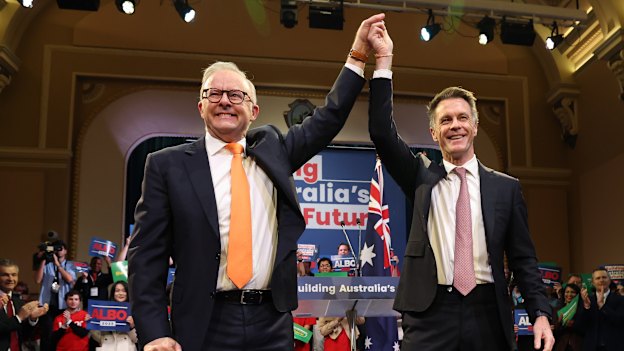
Other sources play down suggestions of a decades-long animus. Soon after he became opposition leader, they note, Albanese supported Minns in his unsuccessful leadership tilt against Jodi McKay in 2019. The night of the state election, Albanese left his beloved South Sydney Rabbitohs game against Manly to address Minns’ victory party. Minns supported Albanese when the latter considered switching from his seat of Grayndler to neighbouring Barton in 2015 after a redrawing of electoral boundaries shifted his house into a different division.
Frustration with Albanese has been percolating since before Minns took power. Albanese’s decision to hold media conferences with former Liberal premier Dominic Perrottet in the months preceding the March 2023 poll rankled some of Minns’ closest advisers, two sources said. With the NSW election then in the balance, some felt Albanese was hedging his bets.
One Labor insider sums it up like this. The prime minister and the premier have sought to stake out the centre ground and build broad coalitions. Albanese, the insider says, uses consensus to reduce opposition to his plans. Or at least he did until last week’s budget, which created a genuine class cleavage and will douse the suggestion that Albanese lacks progressive ambition.
“While Minns uses opposition to his political plans to build support,” the source says by contrast. Think radical plans to build dense housing in the inner city.
“In a normal political environment, both models can look very similar, even though they are profoundly different. In extreme events of the Bondi terror attacks, this subtle difference in political models became a profound difference.”
Another observer says: “Like all male politicians, they are conflict-averse. They spend a lot more time complaining about each other to others rather than to each other. That might give a sense that the relationship is worse than it is.”
Terror trouble
Within a week of the Bondi terror attack, an already shaky rapport between the Labor leaders had crumbled.
“Bondi accelerated what was already a deteriorating relationship,” one insider says.
On the morning of December 16, details of Naveed and Sajid Akram’s trip to the Philippines appeared on the front page of the nation’s tabloids.
During a meeting before the lunchtime media conference, Sydney’s police chiefs said details about the Philippines trip shouldn’t be disclosed. Albanese disagreed; Minns backed his top cops.
Australian Federal Police Commissioner Krissy Barrett, her NSW counterpart Mal Lanyon and other officials left the room so the prime minister and premier could have a conversation out of earshot.
One person familiar with what happened said raised voices could be heard. Another source was more tempered, saying Albanese was “firm” but no more. News of the argument made its way through both governments and the public service.
Three days later, the NSW premier announced a state-based royal commission. The decision blindsided Albanese and his colleagues who didn’t think NSW would go it alone. Ministers and federal police were still working on putting the pieces together and dealing with the immediate question of security.
It immediately ramped up pressure on Albanese to announce a federal probe, becoming the catalyst for arguably his greatest political crisis.
While sources in the NSW government are adamant that the prime minister’s office was given prior warning, the surprise demonstrated the disconnect between the offices. The two leaders appeared on completely different pages.
The growing chasm became clear at a memorial in Bondi the following Sunday. The prime minister’s office believed Albanese and Minns would enter and exit together. That did not occur.
“There was an expectation Chris would walk in with Anthony before the Bondi vigil on the Sunday the week after the attack. That didn’t happen and Anthony was booed. Things were very tense after that,” a senior source says.
Those in Canberra and NSW interpreted Minns’ decision as a desire to create separation from an unpopular prime minister.
In the days and weeks following, the premier’s popularity soared. He was lauded for his leadership, despite serious questions about NSW authorities’ role in granting a gun licence and policing the Chanukah event.
Albanese appeared out of touch. He faced relentless criticism from the Coalition and media outlets, including this masthead, over his refusal to hold a national royal commission. Albanese outlined a range of reasons why a royal commission was not a good idea. Some were more credible than others, but Minns’ early call opened up a clear line of criticism of the prime minister.
The view in Canberra was that Minns was rash and had caved under pressure from conservative media without putting forward details on terms of reference or a leader for the inquiry. It proved the suspicion of some critics in federal Labor that Minns was focused on winning media wars.
Those close to the premier felt Bondi was yet another example of the prime minister’s inability to cauterise a crisis. The scale of the tragedy demanded decisiveness, and Minns would not bear the political damage of Albanese’s missteps.
For some in Minns’ orbit, Albanese’s clunky response to the attack was just another example that his rise to power was in part because of luck, benefiting from the Coalition’s ineptitude rather than his own conviction.
Those in Canberra believed Minns’ siding with police demonstrated his tight relationship with Sydney’s conservative institutions: police, News Corp tabloids and radio station 2GB. His closeness to these groups is a key feature of his premiership and one that others in the party, particularly on the left, view dimly.
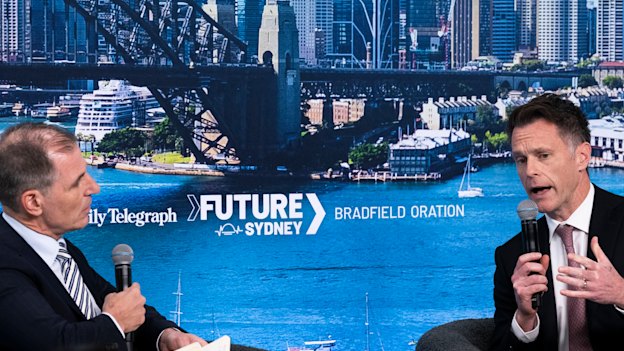
Some federal figures had warned Minns over the years that he would eventually be deserted by News Corp, as the Rupert Murdoch-owned outlet did to Kevin Rudd after initially supporting his rise.
On the other hand, Albanese fumed to colleagues in January about the media coverage Minns was receiving, which was reflected in opinion polling that hasn’t fully recovered to this day for Albanese. Minns sounded decisive but he did not need to contend with the difficulty of managing Australia’s foreign policy towards Israel. Benjamin Netanyahu’s belligerence and violence had made his government unpopular in many Western nations, leading to Australia and others recognising a Palestinian state.
Instead, Minns – who has an affinity with the Jewish cause – could grieve with that community with no baggage.
A contest over Israel-Palestine politics, and attitudes towards NSW police, emerged again during the visit by Israeli President Isaac Herzog to grieve with Australia’s devastated Jewish community. At a protest rally, police forced a group of Muslim men praying in a CBD street to stand and move on.
Muslim leaders demanded an apology and disciplinary action against officers. The incident sparked conversation about the contest between public order and a secular public square on one hand, and religious tolerance on the other.
Asked if he would apologise to the Muslim community, Minns said no.
The following day, Albanese spoke on this masthead’s Inside Politics podcast and took a different line.
“I’m concerned at the great deal of hurt which the Muslim community are feeling,” Albanese said. “I think that is something that needs a full explanation.
Ideology and policy
A few days before the December 16 press conference, a spotlight was shone on a fissure over energy and industry policy that reflects the ideological differences between the Albanese and Minns administrations.
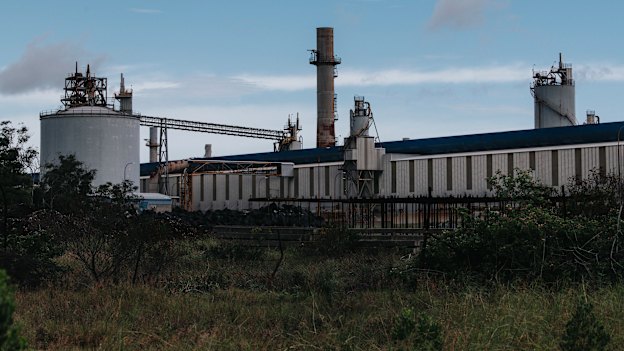
Albanese travelled with Industry Minister Tim Ayres to the Hunter Valley on December 12 to announce a bailout package for Tomago, the nation’s largest aluminium smelter.
Ayres is one of Albanese’s most trusted left-wing allies. The pair lived near each other in Sydney’s inner west. The senator has a bold vision to re-industrialise Australia, turning around decades of industry policy. The plan is to keep manufacturing firms like fertiliser businesses and metals smelters alive over the next few years by subsidising them until energy prices one day come down through a gas reservation rollout and the later stages of the rocky transition to green energy.
Albanese declared that 1000 workers at Tomago could rest easy over Christmas “in the knowledge that … as a result of the decision that we have taken, we’ll be working on finalising these details to make sure that your future is secure”.
The catch was that NSW had not yet agreed to fund a deal to provide Tomago with energy from the Snowy Hydro facility. Albanese and Ayres said they were working constructively with Minns, but the premier struck a different tone.
The premier said in March: “They made a decision to save it. We were tangentially communicated with. We were told about it after; not after the announcement was made, but certainly after they made the decision to go up there and make the announcement.”
Sources in NSW Labor say the federal government expects NSW to take on “billions and billions” of spending on the state’s already struggling balance sheet. Unlike federal Treasurer Jim Chalmers, there is no off-budget option available for NSW Treasurer Daniel Mookhey.
There will be a provision for Tomago in the state’s budget in June, but it is unlikely to be anything near what Canberra has been demanding.
Federal sources dispute the lack of notice claim and point to a large volume of correspondence between the governments and communication two days beforehand.
“Tomago is both a cause and a consequence of the further deterioration in their relationship. It is harder to escalate it up the chain and fix it. The goodwill just isn’t there,” a source says.
Ayres is a unionist at heart. Some in Canberra felt Minns’ view of the union movement was not as full-throated as his federal colleagues’, pointing to his inaugural speech in parliament where he broke ranks with Labor orthodoxy and said the party must dilute union power.
A separate insider said: “If you talk to someone in Minns’ land, they will say Albo landed the first blow by announcing Tomago without telling them.”
Insiders in Canberra think that Minns has formed a view that power would be cheaper for households in NSW if Tomago didn’t suck up energy.
In a related policy move, the Minns government backed the Eraring coal mine to stay open for years longer than planned, challenging Labor’s already treacherous path to its renewable energy targets.
The policy contest runs deeper than energy and industry.
Minns drew the ire of federal ministers this week when he called for “urgent” action on lowering the tax burden on working Australians. His call echoed those of Labor icons Paul Keating and Bill Kelty. It also came during a week in which the opposition castigated Labor for not going further with personal income tax cuts.
“You work Monday, Tuesday and half Wednesday for yourself and then Wednesday, Thursday and Friday for the government, that’s a tough burden,” Minns told reporters.
Treasurer Jim Chalmers later sledged Minns, suggesting the premier didn’t understand a worker was taxed at 47 per cent only on income above the top threshold, not 47 per cent on average across their whole salary.
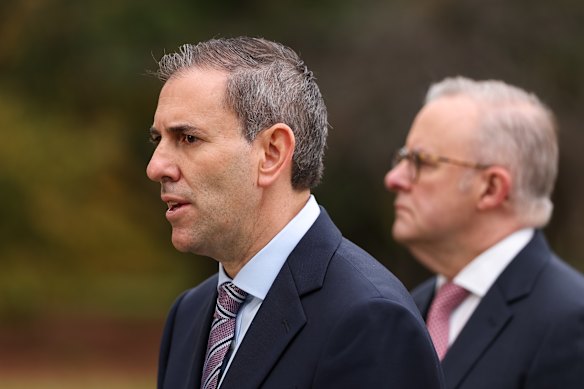
“First of all, that’s not how marginal tax rates work. Second of all, this is a government which is cutting taxes for every Australian worker,” Chalmers said. It was the sort of response usually reserved for someone on the opposite side of politics.
Minns was also lukewarm on Labor’s decision to extend its CGT changes to assets outside housing. He said they were “not my changes” and he refused to back the plan, amid an outcry that changes will sap productivity.
“I bet Jim and Anthony appreciated Chris’ intervention,” Bill Shorten said sarcastically on this masthead’s Inside Politics podcast on Friday.
But both leaders play down any talk of tensions. Minns told this masthead: “I have a lot of respect for Anthony and I know we have a shared focus on delivering for people, who at the moment are doing it tougher than ever. I look forward to continuing to work closely with him.”
Albanese says: “Together we have delivered record public hospital funding, the full funding of NSW public schools and Australia’s world-leading social media age ban that will help to save kids’ lives. We have much more to do together, and I will be working hard towards seeing him re-elected next year along with the rest of the Labor movement in NSW.”
A senior source believes the differences are simply due to competing political priorities of the respective governments.
Minns’ senior ranks felt NSW, the nation’s largest economy, had been consistently shortchanged on GST, infrastructure spending and hospitals. That led to the premier and senior ministers publicly criticising the federal government.
“Anthony is a dealmaker. He doesn’t take well to reading about criticism in the media,” the senior source says.
Before the state election next year, attempts to create some distance from Canberra and pick a fight might just be good politics, another source claims.
Cut through the noise of federal politics with news, views and expert analysis. Subscribers can sign up to our weekly Inside Politics newsletter.

















































