2 months ago
18
2 months ago
18
Opinion
December 18, 2025 — 7.00pm
December 18, 2025 — 7.00pm
Do you believe that magic happens every Christmas Eve? Do you trust that there’s an old man who rewards your belief? Well, I’m 48, and I do.
My Father Christmas doesn’t live at the North Pole. He’s from Victorian London and comes to life every Christmas on page, screen and stage around the Western world. Yes, Scrooge, from Dickens’ A Christmas Carol, is my Santa.
I’ve wanted to be a psychotherapist since around the time I first saw the Muppet Christmas Carol at the cinema. I was 16, taking my little sister along. We both loved it.
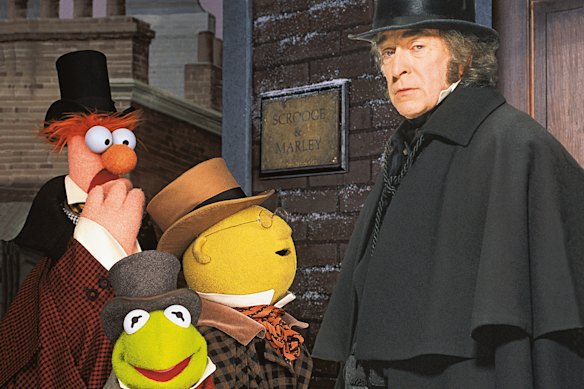
Michael Caine as Scrooge in the Muppet Christmas Carol.Credit:
As my first Ebenezer, Michael Caine’s overnight transformation transfixed me. I still get goosebumps as Christmas morning dawns. There’s still time! It’s not too late! That’s the best Christmas present a pale weedy teen worried about the world could wish for.
I’d learned at school the difference between a tragedy and a comedy – in both the hero realises they’ve messed up, but in the comedy it’s not too late to change. In the tragedy the hero runs out of time. I wanted to believe people can change, that it’s not too late. So I set my sights on psychotherapy as a career.
Do you want to know the secret I’ve learned from 20 years as a therapist? People don’t change. Don’t get me wrong – therapy is the best medical treatment I know. I’ve helped ease more suffering through listening and talking to people in a room with a chair and a sofa than I have with a script pad or in a hospital. But not by changing anyone. Not even by helping them to change.
Because we humans don’t change. We adapt. This is why New Year’s resolutions and most self-help books don’t work. You’re trying to change, but your environment is the same. No nervous system, from worms to humans will change if nothing around it seems different.
Your nervous system needs to believe something has changed, to adapt. It needs a profound experience. Something haunting, perhaps. Most people I know, myself included, have a face seared into their mind from a moment that told them life had changed, that it was time to adapt. A loved one clutching a letter. A mirror reflecting a desperate hangover face. A hospital farewell. “I’ll never forget the look on that face”, people will say.
We’re haunted by faces; the powerful change most likely to get your brain and body to adapt – and therefore grow and heal – is relational. We’re social creatures. Change the who, and we adapt.
Scrooge too is haunted by people, not things; everything that hits home about A Christmas Carol is relational. He is pulled here and there across the night by his longings, regrets, desires and ultimately his hopes for love. The spirits change the who.
Loading
In one night, though? Really? I’m often asked how long good therapy takes. I use a music lesson analogy, thinking of the nervous system as an instrument. In a few hours online you can learn some facts about the instrument and how music works.
But to play music yourself, you need time in a room with another human. And that is what my patients do weekly or fortnightly or monthly. They bring their instrument, we tune up and play together. That is also what Scrooge and the three spirits do together. In their presence he begins to practice an old instrument he’s kept locked away for most of his life. His body remembers how to love again.
Most adults regard Scrooge as a character of fantasy. That’s one heck of a haunting, that can get an old dog to learn new tricks in one night. But I believe in the old dog. The ghosts just help him remember some old tricks he learned long ago. He was loved well enough to begin with, such that he could finish school, work hard and fall in love as a young man. He still has a community to rekindle. His nephew and his clerk haven’t given up on him.
Loading
Some of my patients never got a chance to learn these tricks. They’ve never felt love, they have no community. Christmas is a painful time, with its emphasis on family gatherings and goodwill. The chasm between social expectation and my patients’ lived experience is never wider. Like Scrooge toiling on Christmas Eve, they would rather tomorrow be just another day, than be reminded of their loss and pain by a celebration of what they never had.
These people certainly take more than a winter’s night to heal. But my hope for them is real, because by choosing therapy with me they have answered the door, and let the spirits in. We have a chance to show them a process so powerful it can feel like the magic of a beloved Christmas ghost story. Even though it’s just solid neuroscience at work.
With the passing of fewer Christmases than you might think, people can be ready for the rest of their lives. We know because in between sessions they can conjure the therapy room with us both in it, ask themselves “how would we approach this together?” and find a helpful answer. Even if tune-ups are occasionally needed.
I believe in Scrooge because he can keep waking up to himself every day after that haunted night by conjuring those spirits whenever needed. It’s the best kind of haunting, one that helps him keep adapting, growing, healing. There’s still time. It’s not too late.
Dr Matthew Roberts is a Melbourne-based psychiatrist, psychotherapist, teacher, writer and musician.
The Opinion newsletter is a weekly wrap of views that will challenge, champion and inform your own. Sign up here.
Most Viewed in Lifestyle
Loading